Reimagining Energy Flow with Intelligent Charge-Discharge Logic
Hybrid solar systems are shifting from static energy transfer to intelligent energy orchestration.
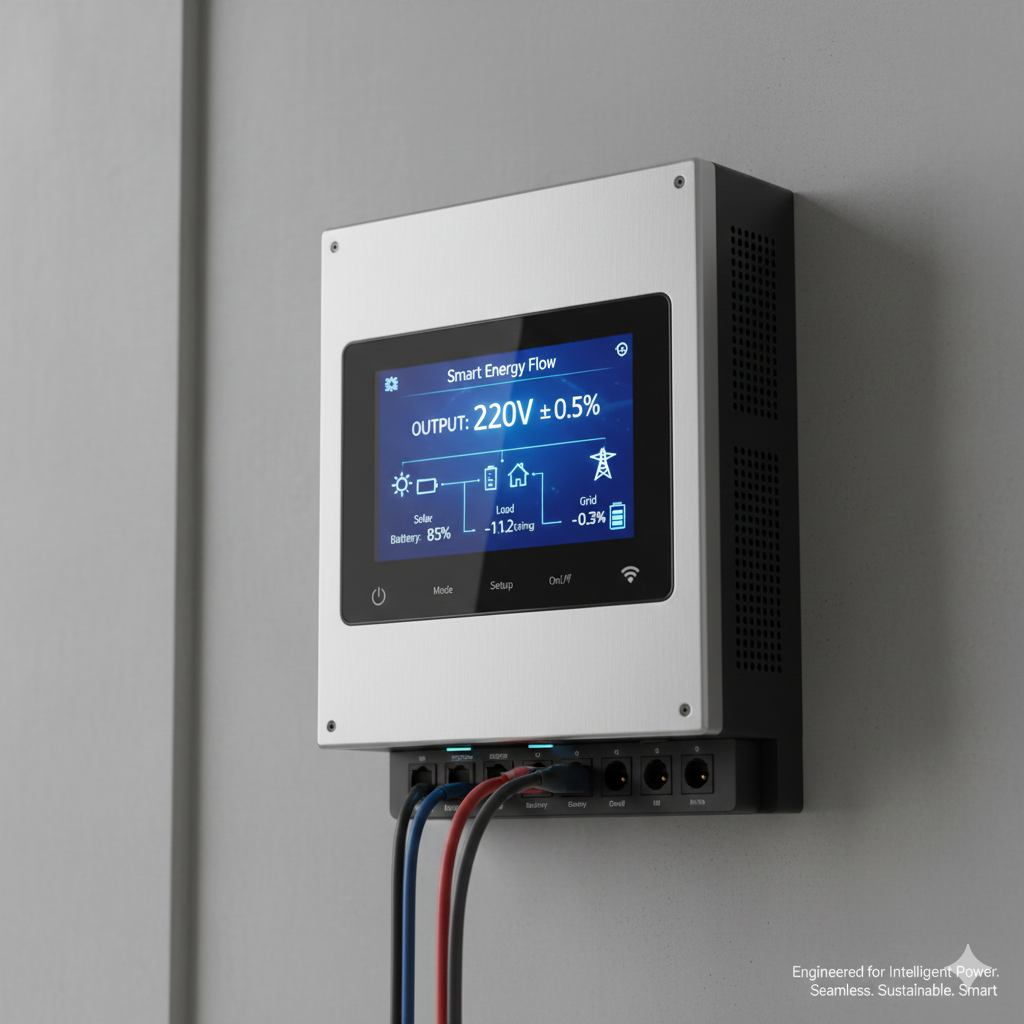
A smart charge-discharge inverter acts as the system’s control brain—analyzing real-time data to decide when to store power, when to release it, and how to maintain grid balance.
Unlike traditional inverters that follow preset charging curves, smart inverters integrate AI-driven control algorithms to optimize each stage of the energy cycle.
According to the International Renewable Energy Agency (IRENA), AI-based charge-discharge management can improve round-trip efficiency by up to 18%, significantly enhancing storage utilization for both residential and commercial systems.
How Smart Charge-Discharge Control Works
The working principle relies on predictive analytics and dynamic feedback across solar generation, load demand, and battery status.
-
Load Forecasting: The system analyzes usage trends to anticipate upcoming energy demand peaks.
-
Smart Charging: When solar generation exceeds consumption, the inverter allocates surplus power to batteries based on predicted storage needs and state-of-charge (SOC).
-
Optimized Discharge: During high demand or low sunlight, the inverter discharges stored energy efficiently to minimize grid dependency.
-
Bidirectional Power Flow: Dual-direction MOSFET architecture allows seamless transition between charging and supply modes.
-
Thermal and Voltage Management: Sensors continuously adjust charge rates to prevent overvoltage and temperature-induced degradation.
Through these intelligent cycles, the inverter not only manages energy flow—it learns from it.
Performance Differentiation: Traditional vs. Smart Charge Systems
| Aspect | Traditional Charge Controller | Smart Charge-Discharge Inverter |
|---|---|---|
| Charging Logic | Fixed voltage/time cycle | AI-based adaptive charge rate |
| Discharge Strategy | Manual or preset | Predictive and automated |
| Efficiency | 85–90% | 96–98% |
| Battery Health | Average degradation | Extended lifespan (20–30%) |
| Grid Interaction | Unidirectional | Bidirectional with feedback |
| Communication | Basic RS232 | IoT, Modbus, CAN, and cloud connectivity |
The shift from static charging to dynamic control transforms an inverter from a conversion unit into a data-driven energy optimizer.
Intelligent Applications Across Hybrid Ecosystems
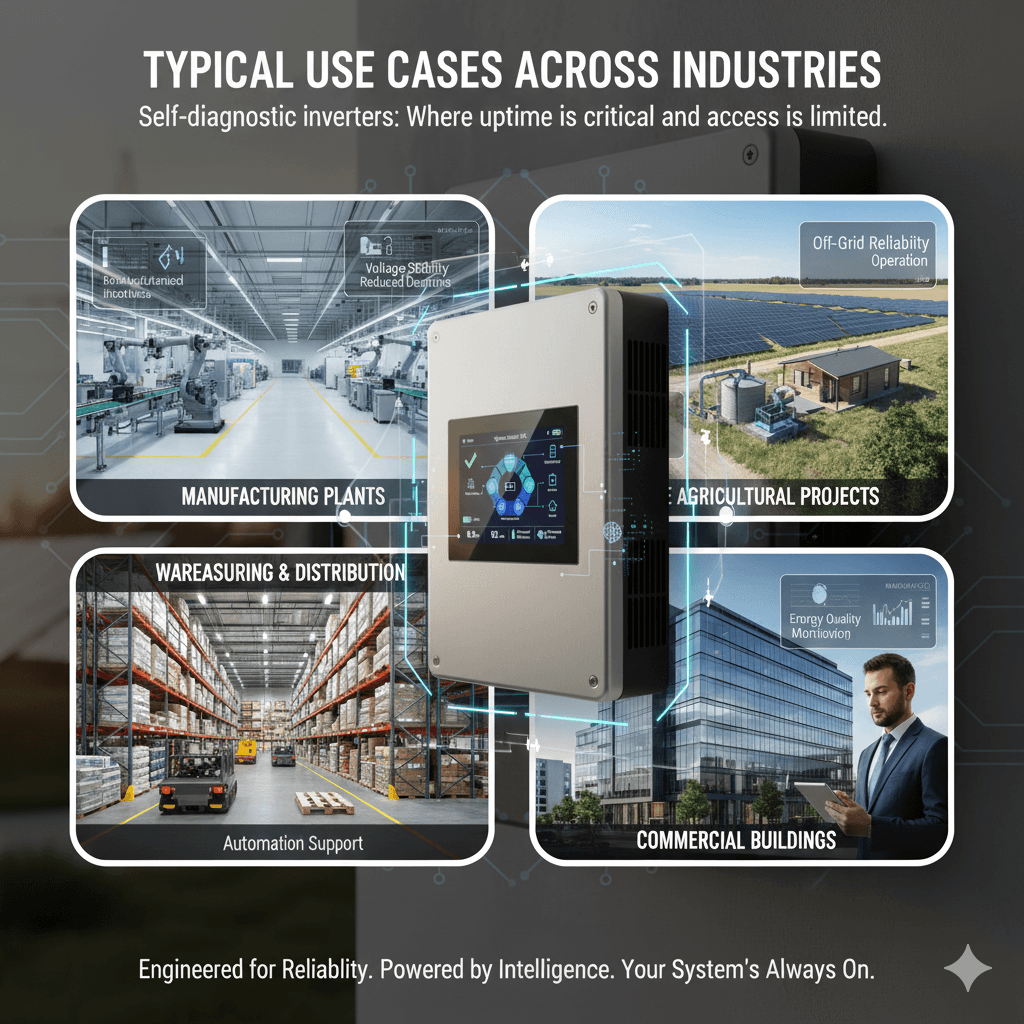
Smart charge-discharge inverters are redefining energy reliability in diverse scenarios:
-
Commercial Facilities: Manage multiple battery strings and demand peaks across HVAC, lighting, and production systems.
-
Residential Smart Homes: Automatically schedule charging during daytime solar peaks and discharging during night tariff hours.
-
Telecom Infrastructure: Balance solar and battery input to stabilize off-grid tower power supply.
-
Industrial Parks: Optimize multi-inverter coordination, reducing strain on local transformers.
-
Microgrid Projects: Enable autonomous balancing between renewable input and storage demand.
In a pilot deployment in Southeast Asia, a logistics hub equipped with smart charge-discharge inverters reduced its grid draw by 32%, while extending battery lifespan by 28% through intelligent cycle regulation.
Advanced Functional Modules That Define Intelligence
Modern systems incorporate several embedded technologies that enhance efficiency and protection:
-
AI-Powered MPPT: Predictive tracking maintains peak solar conversion under variable irradiance.
-
Adaptive Charge Rate Control: Dynamically adjusts current and voltage based on real-time cell temperature.
-
Smart SOC Calibration: Prevents overcharging and deep discharging through machine learning prediction models.
-
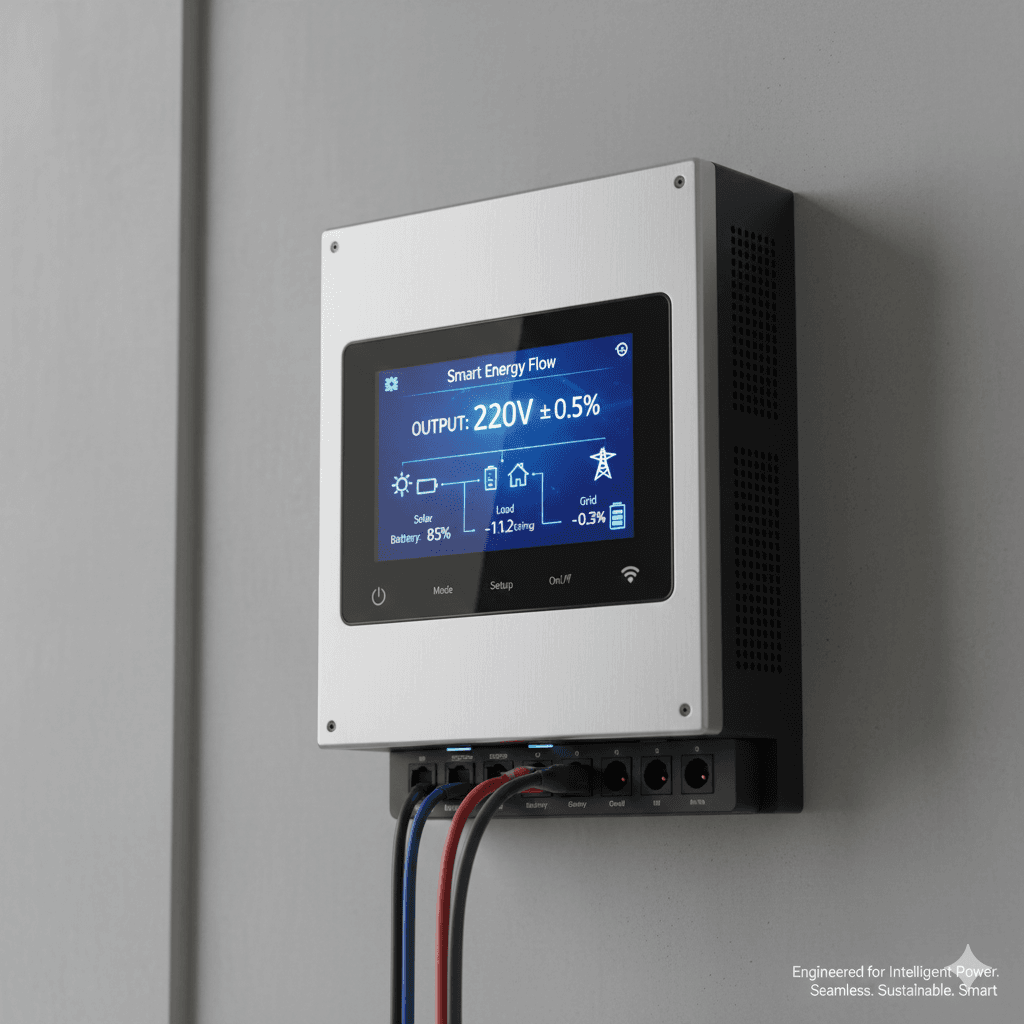
Energy Flow Visualization: Cloud dashboards provide live system analytics for operators.
-
Self-Diagnostic Algorithms: Automated fault isolation ensures uninterrupted operation even under minor system anomalies.
Such innovations make these inverters ideal for businesses adopting ESG-aligned smart energy systems, where efficiency and sustainability are equally prioritized.
Procurement Insights for Project Developers
Selecting a smart charge-discharge inverter requires balancing system intelligence, scalability, and integration compatibility.
Evaluation Checklist:
-
Battery Type Compatibility: Confirm support for LiFePO₄, AGM, and gel-based batteries.
-
Charge Efficiency: Aim for ≥98% with temperature-compensated control.
-
Parallel Operation: Verify synchronization across multiple inverters.
-
Cloud Integration: Ensure API access for remote monitoring and predictive maintenance.
-
Firmware Upgradability: OTA (Over-the-Air) updates for evolving AI models.
-
Warranty Support: 8–10 year standard coverage with post-install analytics support.
For industrial-scale projects, look for multi-layer inverter networks capable of real-time communication between energy storage units—creating unified, scalable microgrids.
Common Technical Questions from System Integrators
Q1: Can a smart charge-discharge inverter operate without grid connection?
Yes. It functions independently in off-grid or hybrid modes, automatically managing solar and storage flow.
Q2: Does AI control require internet access?
Not necessarily. Core logic runs locally, while cloud connectivity enhances predictive analysis and reporting.
Q3: How does it improve battery lifespan?
By adjusting charging rates dynamically and avoiding deep discharges, reducing chemical stress and cycle wear.
Q4: Are these systems suitable for heavy industrial loads?
Yes. Multi-phase smart inverters handle high inrush currents with real-time voltage stabilization.
Energy Intelligence as the New Performance Standard
Energy management is evolving from reactive control to predictive intelligence.
Smart charge-discharge inverters represent this evolution—bridging the gap between renewable generation and dynamic consumption through learning-based optimization.
They don’t just convert energy—they interpret it, adapt to it, and continuously improve system efficiency.
For integration guidance or customized deployment, visit THLINK SOLAR or connect with our engineers for consultation.