Dynamic Power, Steady Output: The Advantages of Auto Power Regulating Inverters
Every industrial power system operates within a delicate balance. When voltage drops or spikes occur, motors slow, sensors misread, and sensitive equipment risks failure. These interruptions may last only seconds—but their impact on productivity and cost can be lasting.
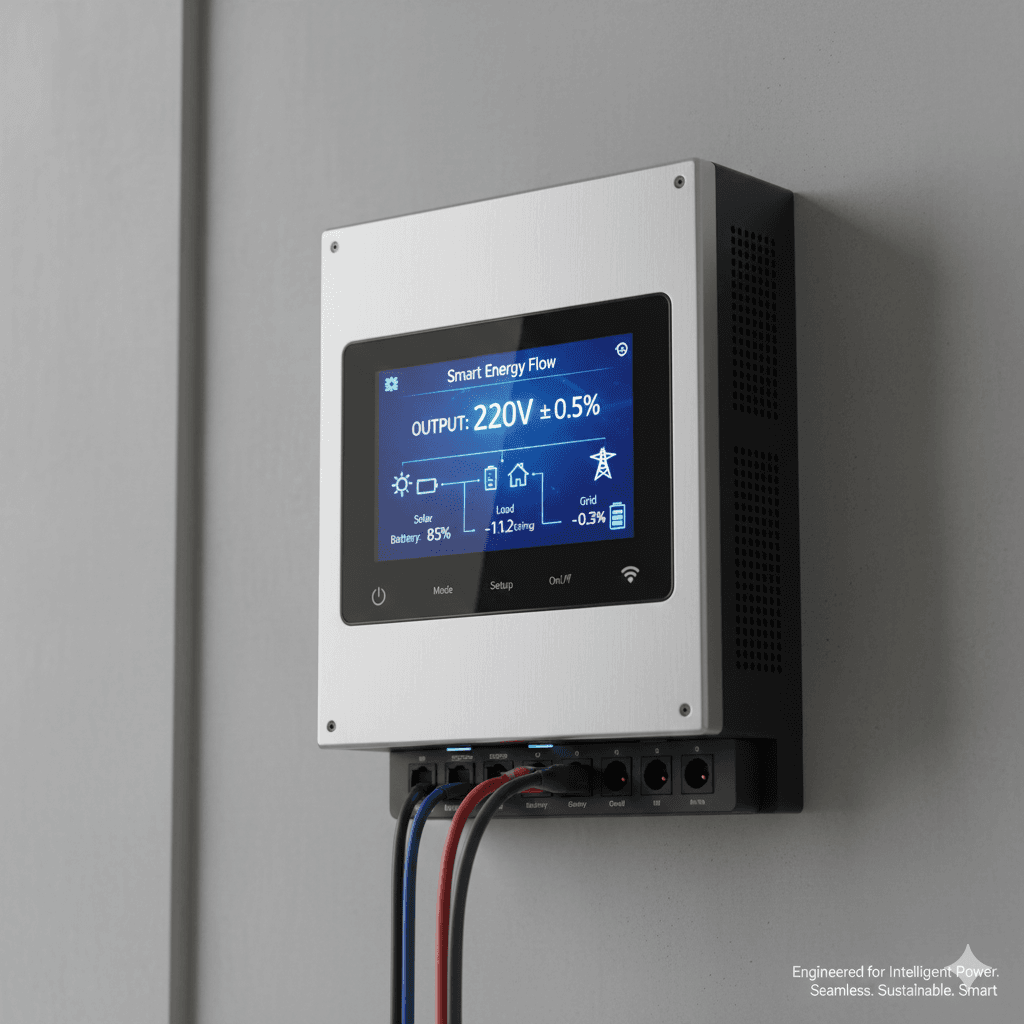
An auto power regulating inverter offers a structural solution. By constantly analyzing voltage, current, and load profiles, it automatically adjusts output parameters to maintain consistent performance. It’s not just an inverter; it’s a dynamic control center ensuring every watt is delivered efficiently and safely.
How Automatic Power Regulation Works in Practice
At its core, an auto power regulating inverter combines real-time signal analysis, closed-loop feedback, and adaptive control algorithms. Unlike conventional units that deliver fixed output, it responds instantly to demand variations.
-
Real-Time Measurement: Embedded digital sensors record voltage, frequency, and load demand several thousand times per second.
-
Intelligent Processing: A microcontroller interprets these readings, identifying whether fluctuations originate from grid instability, solar input, or load variation.
-
Dynamic Adjustment: The inverter modifies its switching pattern, frequency, and modulation depth to balance power flow, ensuring steady output even under uneven demand.
This process happens continuously—transforming unpredictable grids or variable solar generation into clean, usable, and stable electricity.
Advanced Design Features and Their Technical Significance
| Core Function | Technical Description | Operational Benefit |
|---|---|---|
| Auto Voltage Regulation | Monitors line voltage and corrects deviations in real time | Protects motors and control systems from undervoltage stress |
| Frequency Synchronization | Maintains precise output frequency despite grid instability | Prevents resonance and protects downstream devices |
| Reactive Power Control | Adjusts phase angles automatically to improve power factor | Reduces energy waste and enhances efficiency |
| Intelligent Thermal Management | Uses temperature sensors and adaptive fan speed control | Minimizes auxiliary energy use and extends inverter lifespan |
| Multi-Source Input Compatibility | Supports grid-tied, solar, and battery hybrid systems | Provides flexibility for diverse industrial environments |
| Integrated Protection Circuitry | Includes surge suppression and short-circuit detection | Prevents hardware damage during transient events |
Together, these features make the system more than a converter—it’s a stabilizing element that continuously aligns generation with real-world demand.
Why Power Regulation Matters in Industrial Systems
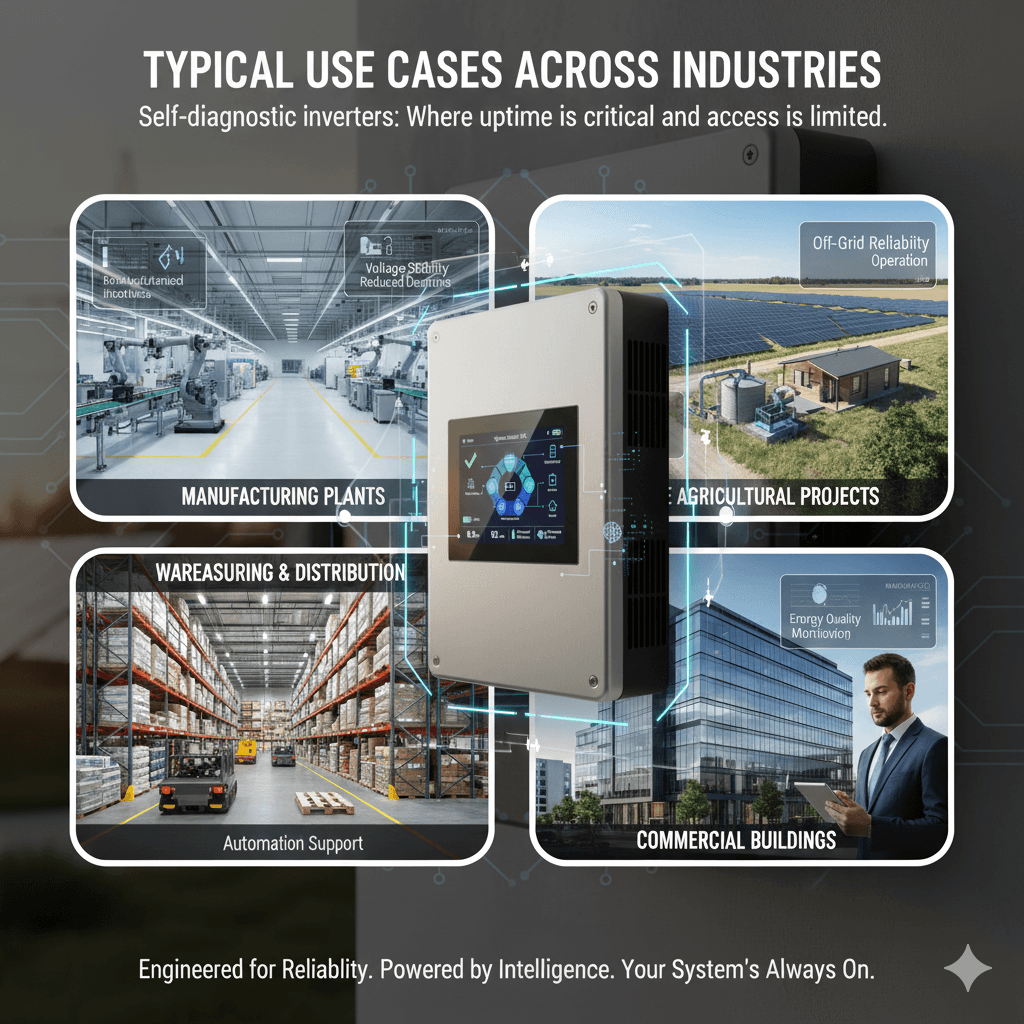
In manufacturing or logistics, a power fluctuation can interrupt a conveyor, reset automation systems, or compromise welding precision. These issues often stem from reactive loads and grid instability. An auto power regulating inverter mitigates such risks by maintaining a constant voltage envelope and balanced current flow, even during startup surges or when connected machinery operates asynchronously.
Moreover, because power quality directly affects equipment aging, stable regulation reduces electrical fatigue in motors, drives, and electronic components. Over a year of continuous operation, this stability translates into lower maintenance frequency, fewer production halts, and measurable cost savings.
System Integration and Smart Control Flexibility
Thlinksolar’s inverter platform is engineered for multi-environment integration. It supports industrial control systems through RS485, CAN, and Modbus interfaces and offers compatibility with SCADA and cloud-based monitoring tools.
For EPC contractors and OEM developers, the inverter’s firmware allows programmable response thresholds, adjustable grid feed-in limits, and region-specific voltage settings—providing adaptability for both developing and mature power infrastructures.
In solar-hybrid setups, the inverter seamlessly coordinates with photovoltaic arrays, battery banks, and diesel generators, automatically balancing energy supply and demand across all input sources.
Key Advantages for Industrial and Commercial Users
-
Operational Stability: Continuous adjustment eliminates the impact of fluctuating loads and poor grid conditions.
-
Energy Efficiency: By optimizing voltage and reactive power, it improves total system efficiency by up to 5–8% over standard inverter systems.
-
Equipment Protection: Constant current regulation minimizes overheating and prolongs lifespan of motors and PLC systems.
-
Lower O&M Costs: Reduced maintenance intervals and fewer electrical faults result in lower lifecycle expenses.
-
Scalability: The system can be deployed as a single unit or modular configuration for factories, renewable installations, and microgrids.
These advantages turn regulation from a technical feature into a financial and operational value multiplier.
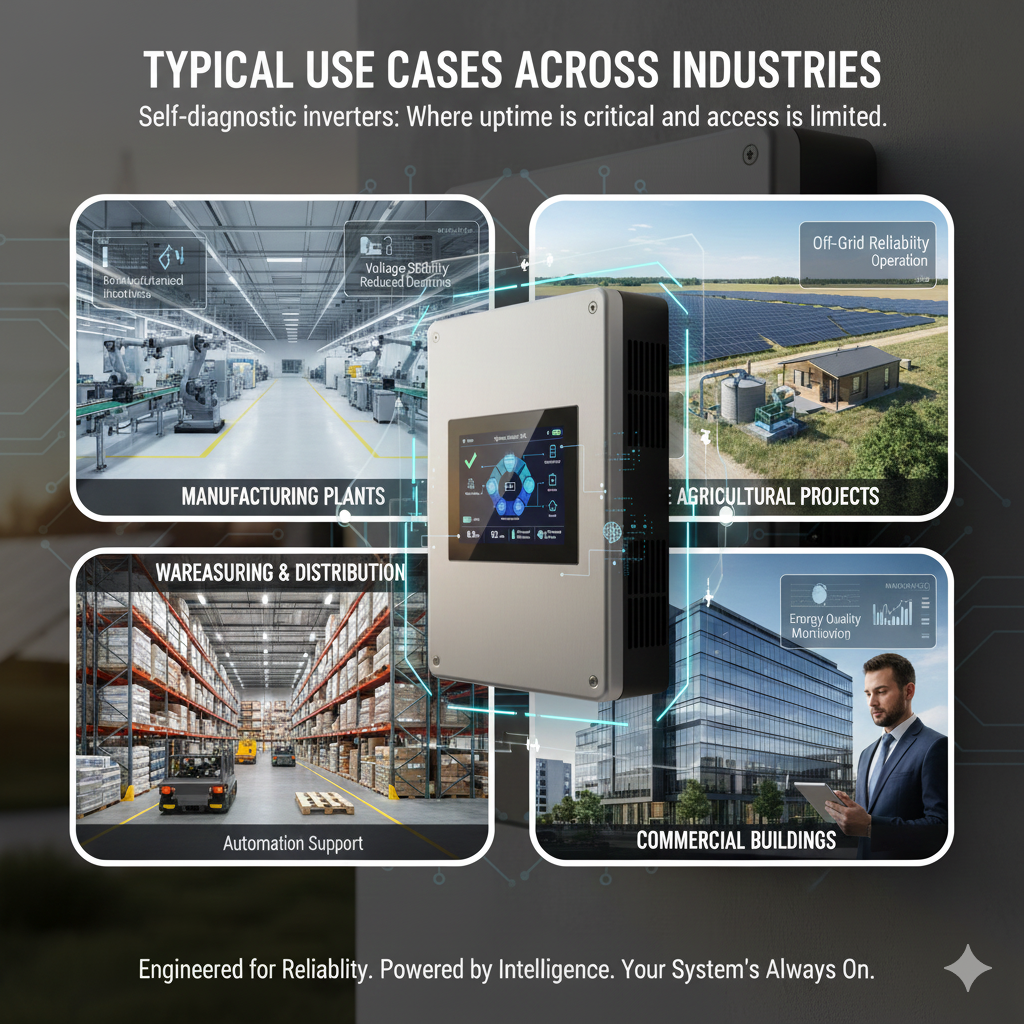
Application Scenarios: Where Power Regulation Makes the Difference
-
Precision Manufacturing: Prevents fluctuations that can cause calibration drift in CNC or robotics systems.
-
Textile and Printing Plants: Maintains color and speed consistency in high-speed machinery.
-
Renewable Energy Farms: Stabilizes inverter-grid synchronization under varying irradiance and temperature conditions.
-
Data Centers: Ensures uninterrupted server uptime and prevents voltage sag-related resets.
-
Urban Infrastructure Projects: Supports smooth operation of elevators, pumps, and HVAC systems under city grid fluctuations.
The inverter’s adaptive control ensures optimal output under any environment where voltage reliability equates to business continuity.
Frequently Asked Questions
Q1: Can an auto power regulating inverter operate under grid and off-grid conditions?
A: Yes. It can seamlessly transition between on-grid, hybrid, and standalone modes, automatically balancing energy flow depending on input sources and system requirements.
Q2: How does it affect long-term operational costs?
A: By stabilizing output and reducing component stress, it extends equipment service life and minimizes downtime, lowering maintenance and replacement costs over time.
Building the Foundation for Smarter Industrial Power
Power regulation is no longer an optional feature—it’s a necessity for reliability and cost control in the modern energy landscape. The auto power regulating inverter transforms how facilities manage electricity: not by reacting to instability, but by anticipating and preventing it.
Through its integration of adaptive control, efficiency optimization, and multi-system compatibility, Thlinksolar provides industries with a stable, intelligent, and future-ready energy foundation.
To discuss technical specifications or project integration requirements, visit Thlinksolar.com or contact our engineering team.