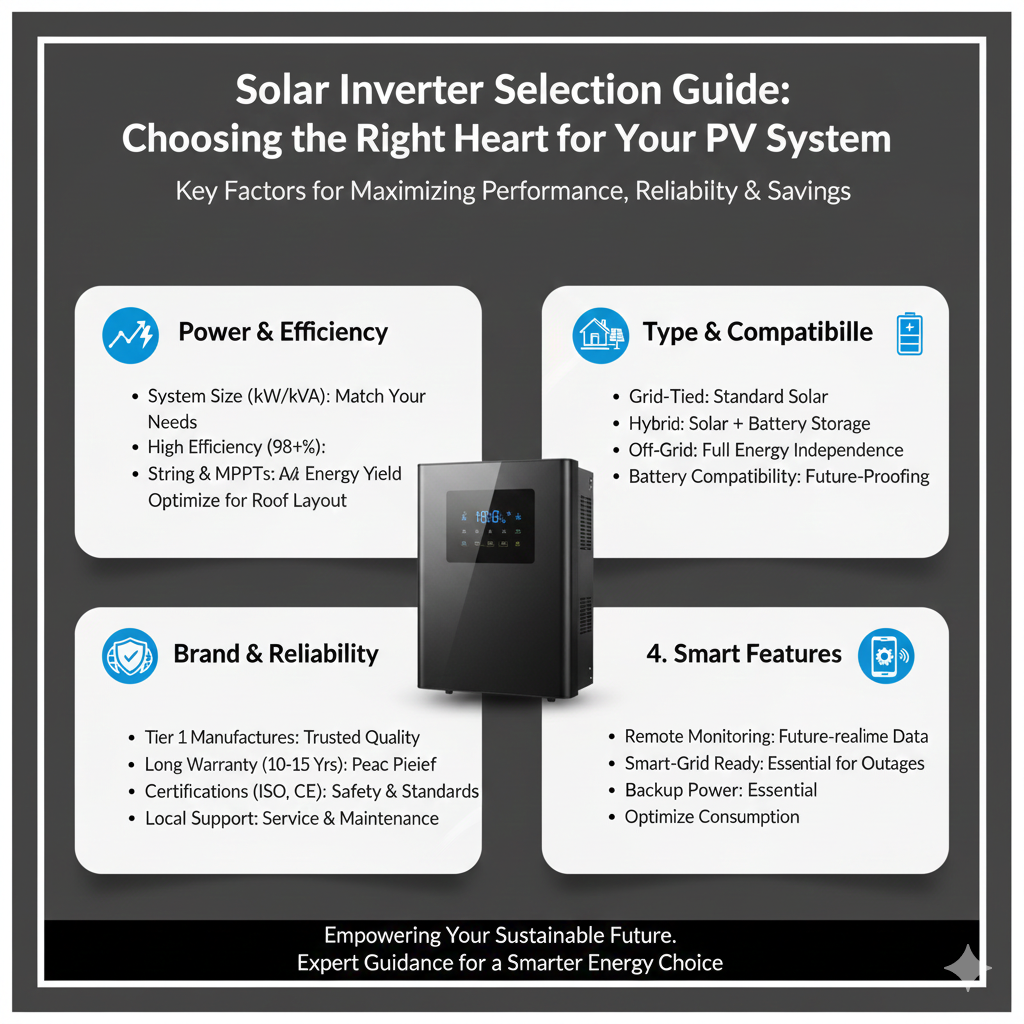
Choosing the Right Solar Inverter: 5kW, 6kW, 8kW, 10kW, and 15kW Systems Explained
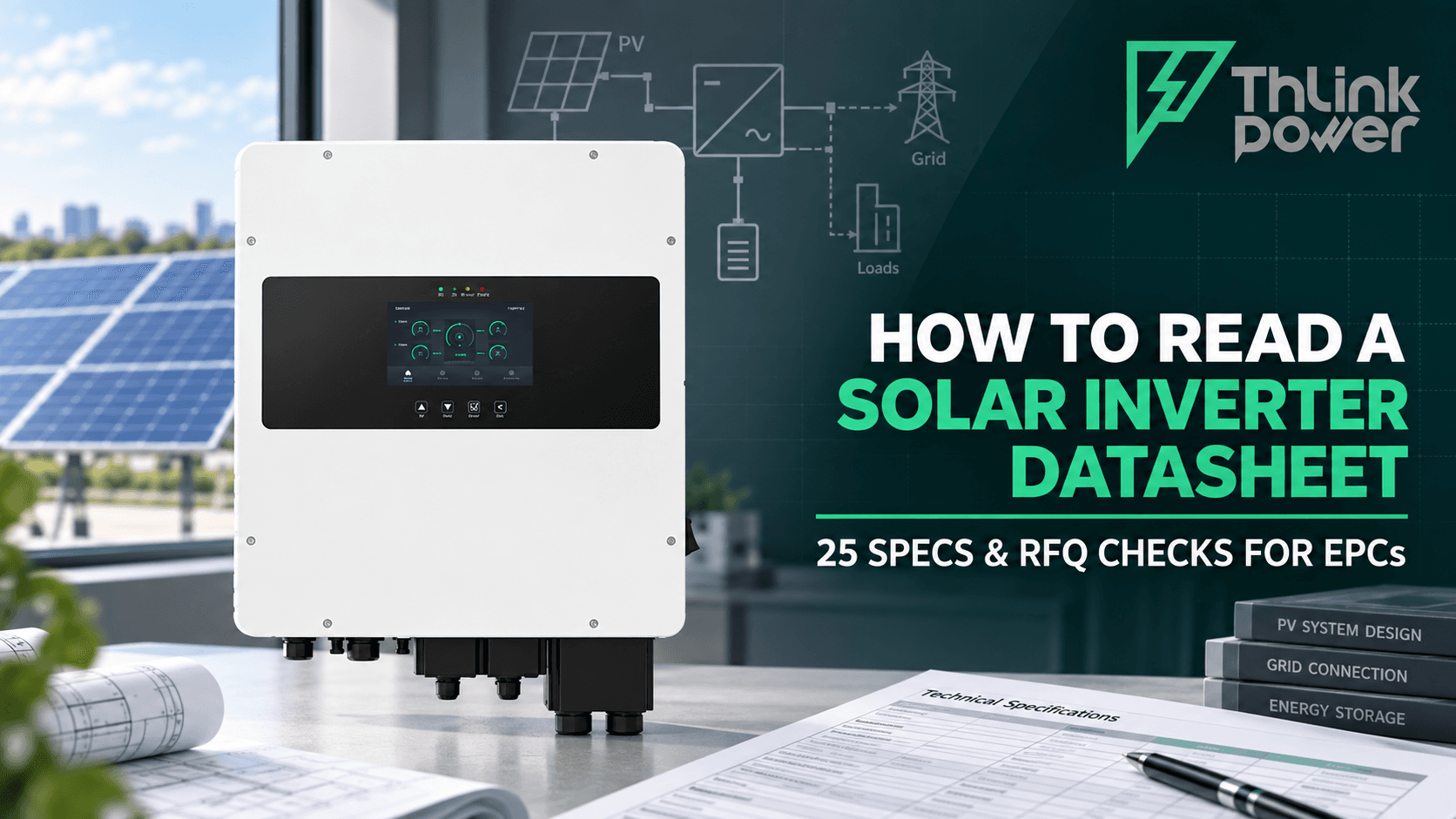
A solar inverter isn’t just a converter—it’s the heart of every photovoltaic (PV) system. Its performance determines how efficiently your panels turn sunlight into usable AC power. Whether you’re installing a residential hybrid system or managing an industrial solar field, selecting the right inverter capacity ensures steady output, optimal ROI, and long-term reliability.
Thlinksolar manufactures a full range of inverters—from compact 5kW models for homes to high-capacity 15kW systems for factories—designed to match diverse grid conditions, climates, and usage needs.
Understanding Power Ratings and Operational Context
Inverter power rating (kW) represents the maximum continuous AC output under nominal solar input. But real-world efficiency depends on environmental and electrical variables such as temperature, panel voltage, and load curve.
According to the International Energy Agency (IEA), oversizing or undersizing inverters by more than 15% can reduce total energy yield by up to 8% annually. Hence, choosing the correct power range is essential not only for performance but also for the inverter’s lifespan.
Thlinksolar’s product lines maintain >97.5% conversion efficiency with low harmonic distortion (THD <3%), ensuring clean and stable current for sensitive appliances and industrial controllers.
5kW Solar Inverter – Efficient Power for Households and Small Shops
The 5kW solar inverter is a standard for home users. It supports up to 20 PV modules, producing around 20–25 kWh per day depending on sunlight exposure.
Use Cases:
-
Detached homes, small offices, and retail stores
-
Powering essential loads (lights, fans, air conditioners, refrigerators)
-
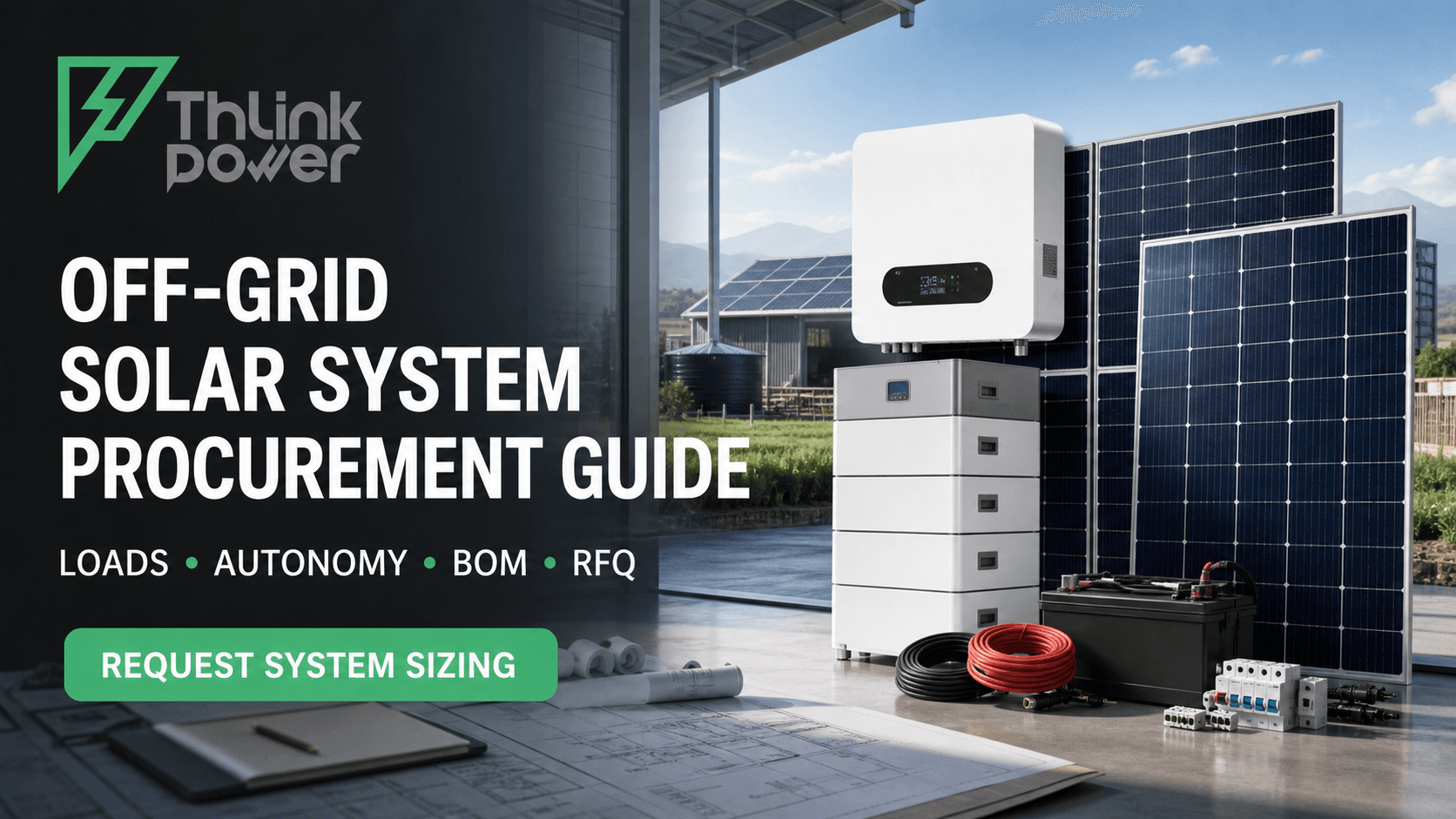
Off-grid or hybrid applications with 5–10 kWh battery packs
Technical Highlights:
-
Single-phase AC output for residential wiring
-
Dual MPPT trackers for diverse roof directions
-
Noise level under 45 dB for indoor or balcony installation
Key Advantage: Combines affordability with reliability, offering fast ROI within 4–6 years under typical residential consumption patterns.
6kW Solar Inverter – For Medium Homes and Expanding Loads
A 6kW solar inverter offers 20% more headroom than a 5kW model, ideal for homes adding EV chargers, water heaters, or small office setups.
Unique Capabilities:
-
Extended MPPT voltage range (125–850V) to optimize cloudy-day performance
-
Smart energy routing to prioritize solar-first consumption
-
Seamless grid transfer during peak load events
With average daily output up to 30 kWh, it ensures both independence and flexibility. For EPC installers, this capacity also fits government-subsidized residential projects and small commercial rooftops.
8kW Solar Inverter – Mid-Tier Hybrid Flexibility
The 8kW solar inverter bridges domestic and commercial usage.
It handles higher surge currents from equipment like water pumps, compressors, or commercial refrigeration units.
Performance Range:
-
Solar Input: Up to 10 kWp
-
Battery Integration: 48–120V DC systems
-
Parallel Operation: Up to 6 units for micro-grid applications
According to the National Renewable Energy Laboratory (NREL), hybrid inverters in the 7–10kW range improve energy autonomy by 70–85% when paired with 10–15 kWh battery banks—making them ideal for small offices or off-grid enterprises.
10kW Solar Inverter – Industrial Reliability for Heavy Loads
The 10kW solar inverter marks the entry into commercial-grade systems.
Designed for continuous operation, it supports simultaneous power supply to HVAC systems, production tools, and data infrastructure.
Core Features:
-
Three MPPT trackers for segmented array control
-
RS485 & Wi-Fi interfaces for remote diagnostics
-
IP65-rated metal housing for outdoor installation
-
Built-in anti-islanding protection for grid safety
This inverter serves as the backbone for community projects, farms, schools, or small factories.
It also complies with IEC and CE safety standards, making it suitable for international deployment.
15kW Solar Inverter – Scalable Power for Industrial and Institutional Use
For large facilities or distributed energy stations, the 15kW solar inverter offers three-phase power output and advanced grid synchronization features.
Industrial Capabilities:
-
Supports load-intensive equipment like motors and compressors
-
Compatible with smart grid feedback systems
-
Integrated surge and temperature protection
-
Modular cooling fans for extended duty cycles
Thlinksolar engineers this inverter for long-hour operation in high-heat zones such as workshops or warehouses, achieving stable thermal balance and <2% power loss under peak output.
Performance Comparison Overview
| Model | Recommended Application | Input Power (kWp) | Efficiency | Output Phase | Distinct Advantage |
|---|---|---|---|---|---|
| 5kW | Home / small office | 6–7 | 97.0% | Single | Compact, cost-efficient |
| 6kW | Medium home / EV user | 7–8 | 97.2% | Single/Hybrid | Future-ready design |
| 8kW | Small commercial | 9–10 | 97.5% | Hybrid | Battery & grid support |
| 10kW | Industrial light use | 12 | 98.0% | Three-phase | High surge capacity |
| 15kW | Heavy commercial / factory | 18–20 | 98.2% | Three-phase | Continuous duty reliability |
Environmental and Installation Considerations
Solar inverter performance depends not just on rated power but also on environmental integration.
Mounting angle, ventilation, and humidity levels influence both heat dissipation and long-term reliability.
Installation Tips:
-
Maintain ≥30 cm clearance for airflow.
-
Avoid direct sunlight exposure if installed outdoors.
-
Schedule annual maintenance to clean vents and check connectors.
-
Use lightning arresters in areas with frequent thunderstorms.
Following International Renewable Energy Agency (IRENA) guidelines, proper installation can extend inverter life by 20–30%.
Selecting the Best Size for Your Project
When deciding between 5kW–15kW models, consider:
-
Load Analysis: Identify total connected load (kW) and daily consumption (kWh).
-
Energy Storage Plan: Pair battery capacity (in kWh) proportional to inverter power × 2.
-
Expansion Flexibility: Choose higher capacity if future solar panel additions are expected.
-
Local Regulations: Check voltage and grid compliance standards for your region.
-
Service Support: Ensure after-sales and firmware update systems are available.
For installers and EPCs, system modeling with PV design software can help simulate yearly yield and cost efficiency before finalizing capacity.
Long-Term Value and ROI Perspective
While larger inverters cost more upfront, they typically offer better efficiency and lower maintenance cost per kWh generated.
The difference in LCOE (Levelized Cost of Energy) between 5kW and 15kW systems can be as high as 12–18%, depending on solar radiation and load profile.
With Thlinksolar’s standardized manufacturing and automated testing process, every inverter achieves consistent voltage regulation, reducing field failures and warranty claims — a key metric for distributors and project developers.
Conclusion: Match Capacity with Purpose
Each inverter capacity serves a specific role:
-
5–6kW: Residential independence and cost efficiency.
-
8–10kW: Small commercial hybrid performance.
-
15kW: Industrial-scale reliability and long-hour operation.
Selecting the right size not only determines system stability but also ensures scalability for future energy demands.
For detailed specifications, OEM cooperation, or technical consultation, visit Thlinksolar.com or contact our engineering team.