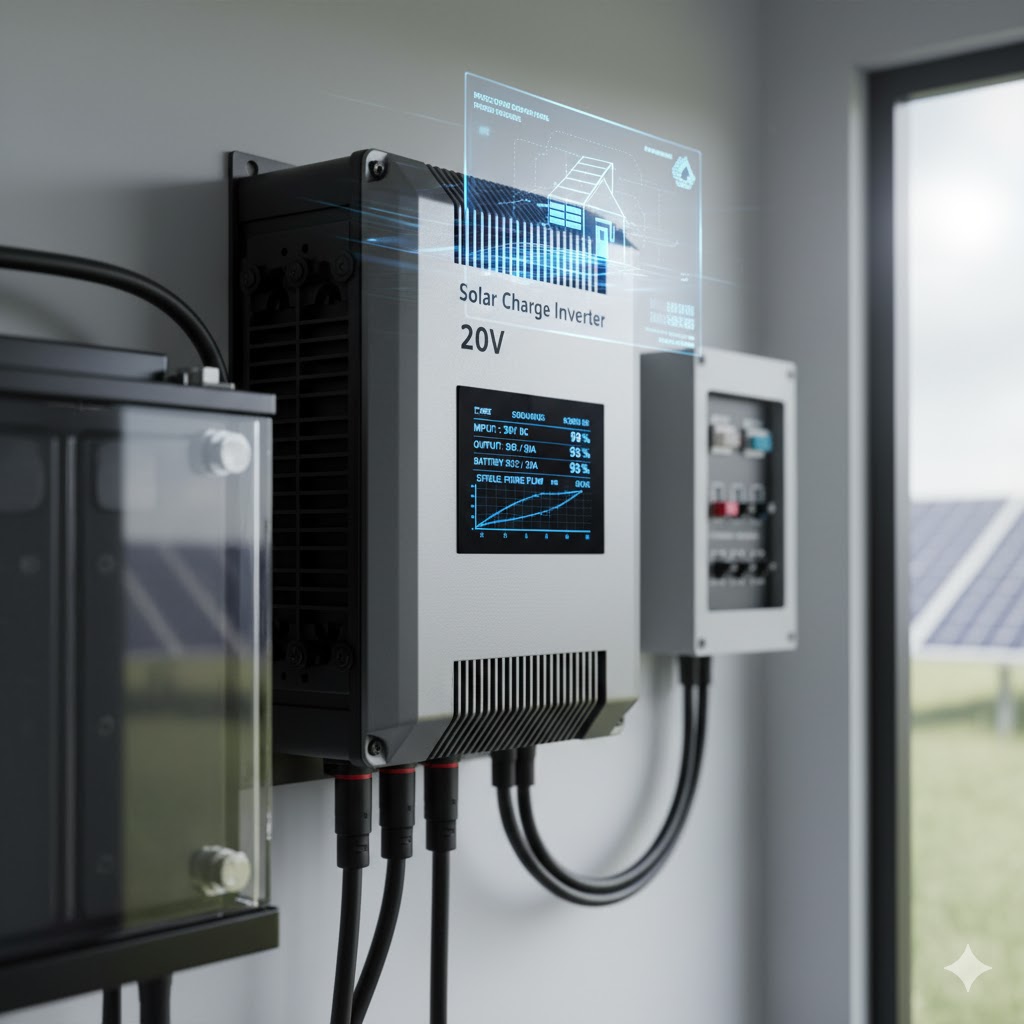
The Role of 20V Solar Charge Inverters in Modern Energy Systems
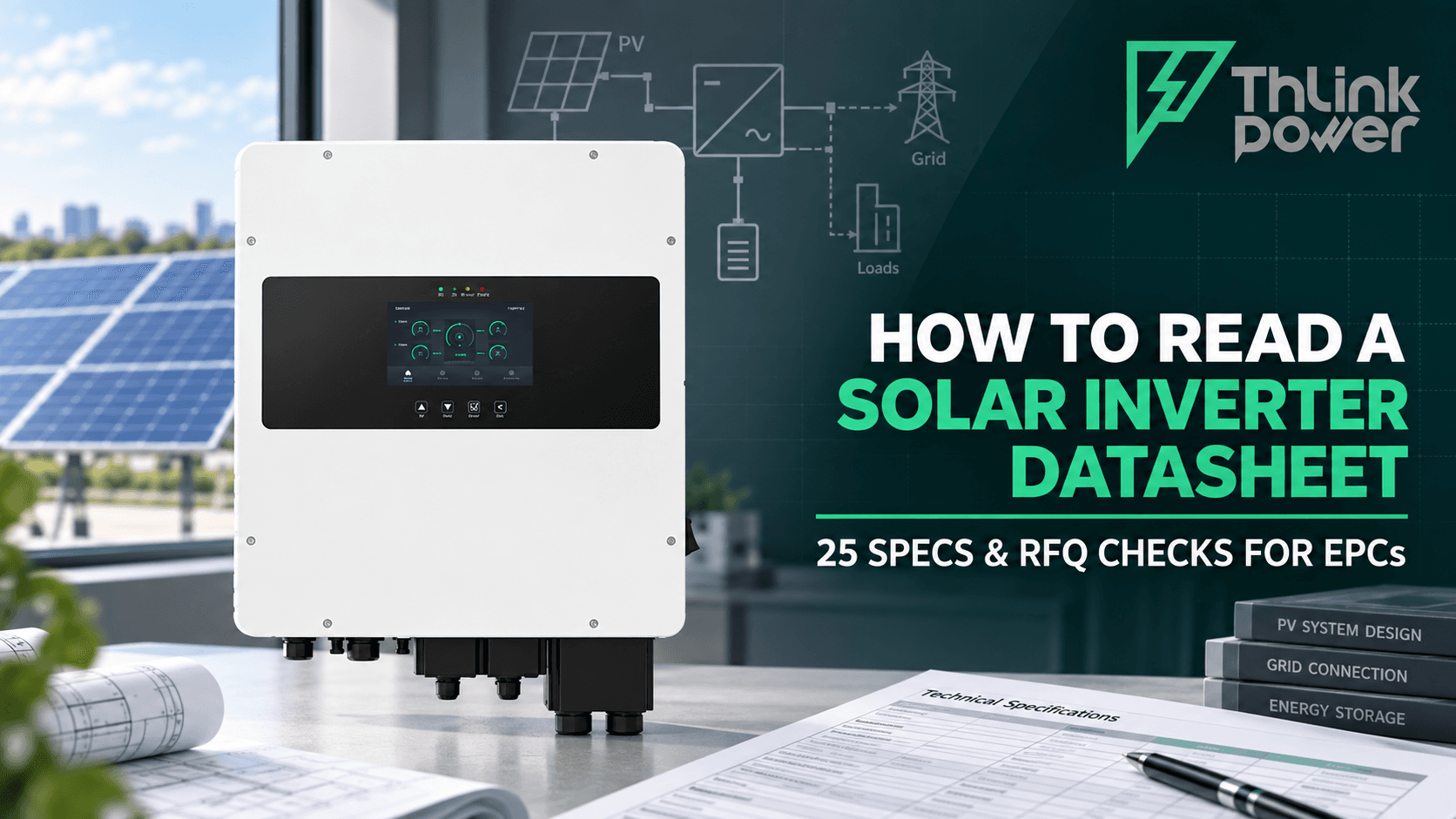
In the distributed energy landscape, solar charge inverters rated at 20V have become the unsung heroes of small-scale, reliable power supply.
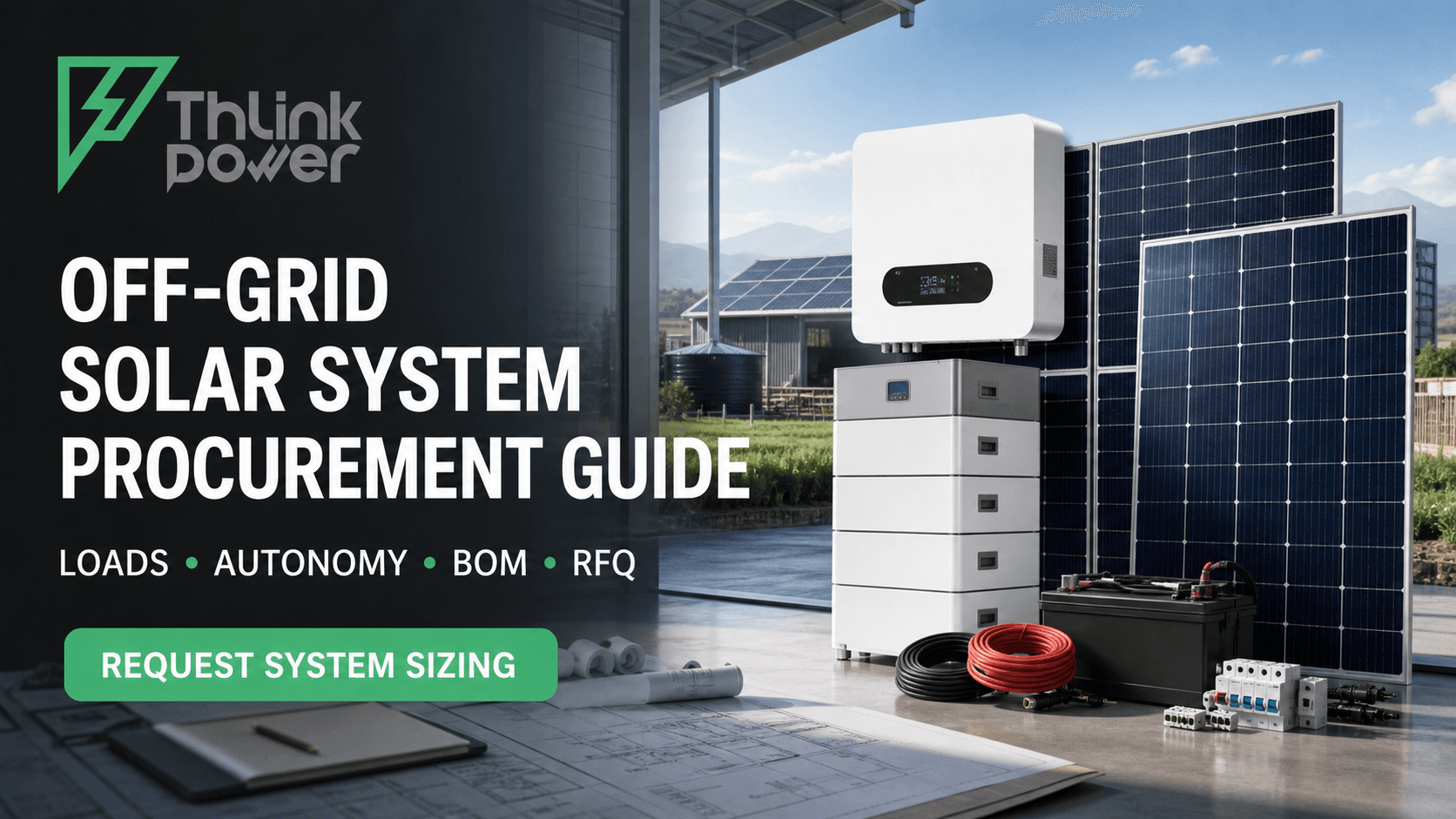
These systems convert low-voltage DC power from compact solar panels into clean, usable AC energy—ideal for rural electrification, portable setups, small greenhouses, and backup lighting systems.
They combine charging control, voltage regulation, and conversion efficiency in one integrated unit, minimizing power loss where every watt matters.
Understanding the Operating Principle: Low Voltage, High Control
Unlike large-scale grid-tie inverters, 20V inverters operate within a narrower DC window, usually between 18V–22V, optimized for compact panels and battery banks.
Their core logic is not about brute power—but about stable charge control and battery protection.
| Parameter | Typical Range | Engineering Purpose |
|---|---|---|
| Input Voltage | 18V–22V | Matches portable or small solar panel outputs |
| Output Power | 150–1000W | Suitable for lighting, fans, pumps, and small tools |
| Conversion Efficiency | 90–95% | Maintains stability under partial sunlight |
| Battery Compatibility | 12V/24V LiFePO4 or lead-acid | Prevents deep discharge |
| Control Method | PWM / MPPT hybrid | Smooth charge transition and protection |
This fine-tuned regulation enables longer battery life and reduces inverter stress—especially important in environments with fluctuating sunlight.
Why Voltage Precision Matters in Real-World Use
The difference between a stable system and one that fails often lies in how precisely the inverter tracks panel voltage.
According to the Energy Storage Association (ESA), minor mismatches between panel voltage and inverter operating points can reduce total system yield by up to 8% annually.
A 20V inverter ensures that the solar input voltage remains aligned with optimal MPPT tracking, delivering consistent charge currents even when the sky is hazy or partially shaded.
In practical terms:
-
Farmers using DC pumps or 12V lighting avoid erratic operation.
-
Off-grid shelters gain smoother charging cycles without overvoltage trips.
-
Technicians benefit from predictable battery behavior, simplifying maintenance.
Environmental Adaptability: Where 20V Systems Perform Best
The 20V range has found surprising versatility in mixed environments.
From tropical agriculture to coastal telecom stations, it serves as the backbone of small but critical energy nodes.
| Application | Key Benefit | Recommended Setup |
|---|---|---|
| Rural Greenhouses | Stable control for irrigation pumps | Hybrid 20V inverter + 12V battery bank |
| Portable Energy Kits | Lightweight + high efficiency | Foldable solar panels + integrated charge inverter |
| Remote Lighting Systems | Prevents overcharging | 20V MPPT inverter with smart load cutoff |
| Small Workshops | Safe low-voltage power tools | Dual-input inverter with LiFePO4 batteries |
As the International Renewable Energy Agency (IRENA) emphasizes in its 2024 report,
“Low-voltage solar systems are critical for expanding universal energy access and reducing reliance on diesel microgrids.”
Source: IRENA Renewable Power Generation Costs 2023
Comparison: Traditional Charge Controllers vs. 20V Solar Inverters
| Feature | Charge Controller | 20V Solar Charge Inverter |
|---|---|---|
| Voltage Range | 12–24V | Fixed 18–22V optimized window |
| Functionality | Battery charging only | Charge + DC/AC conversion |
| Efficiency | 85–90% | 90–95% |
| Use Case | Small DIY solar kits | Integrated systems with AC loads |
| Expandability | Limited | Supports hybrid battery + PV |
According to IEA-PVPS Task 13’s report on new system designs, inverter-level optimization improves lifetime efficiency by 5–8% in compact solar architectures.
Source: IEA-PVPS Task 13: Performance of New PV System Designs
Choosing the Right 20V Solar Charge Inverter
To select an inverter that aligns with your environment, consider:
-
Panel Compatibility: Match inverter voltage range with panel open-circuit voltage.
-
Load Profile: Estimate AC power draw; 150–300W units fit most single-station setups.
-
Battery Chemistry: Ensure inverter supports lithium or gel battery charge curves.
-
Protection Needs: Look for over-temperature, reverse polarity, and surge protection.
Pro Tip: For semi-outdoor conditions, prioritize IP65+ aluminum casing and built-in cooling for longer operational life.
Common Questions
Q1: Can a 20V inverter run without batteries?
Yes, but output may fluctuate with sunlight intensity; best performance occurs with battery buffering.
Q2: How does a 20V inverter differ from a 12V model?
20V systems support higher panel efficiency and reduce wire loss, ideal for mid-range applications.
Q3: Is MPPT worth it for 20V inverters?
Absolutely. MPPT tracking maintains energy yield during voltage fluctuation, often improving daily output by 10–15%.
Q4: What’s the ideal installation location?
Dry, shaded, and ventilated areas—avoid direct sun or confined enclosures that elevate heat beyond 50°C.
The Long-Term View: Scalable Efficiency for Small Systems
In the journey toward universal energy access, 20V solar charge inverters play a crucial but often overlooked role—powering the spaces between microgrids and full off-grid setups.
They exemplify how precise engineering can elevate small systems into reliable, intelligent energy nodes.
At ThlinkSolar, we focus on developing inverters optimized for every voltage class—from compact 20V controllers to high-voltage 1500V industrial systems—ensuring long-term performance and safety for all installation scales.
To explore our inverter range or request a technical consultation, visit ThlinkSolar or contact our team through the Contact Us page.