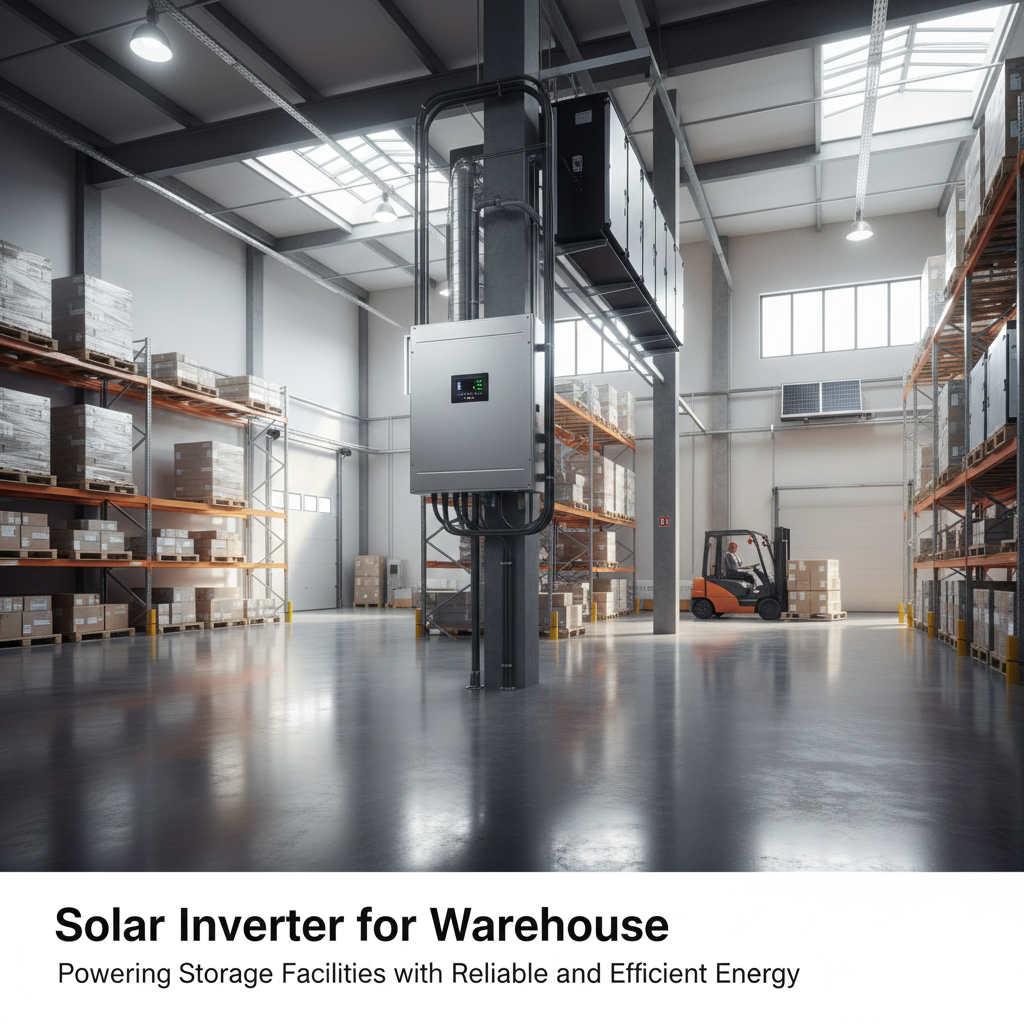
Solar Inverter for Warehouse: Powering Storage Facilities with Reliable and Efficient Energy
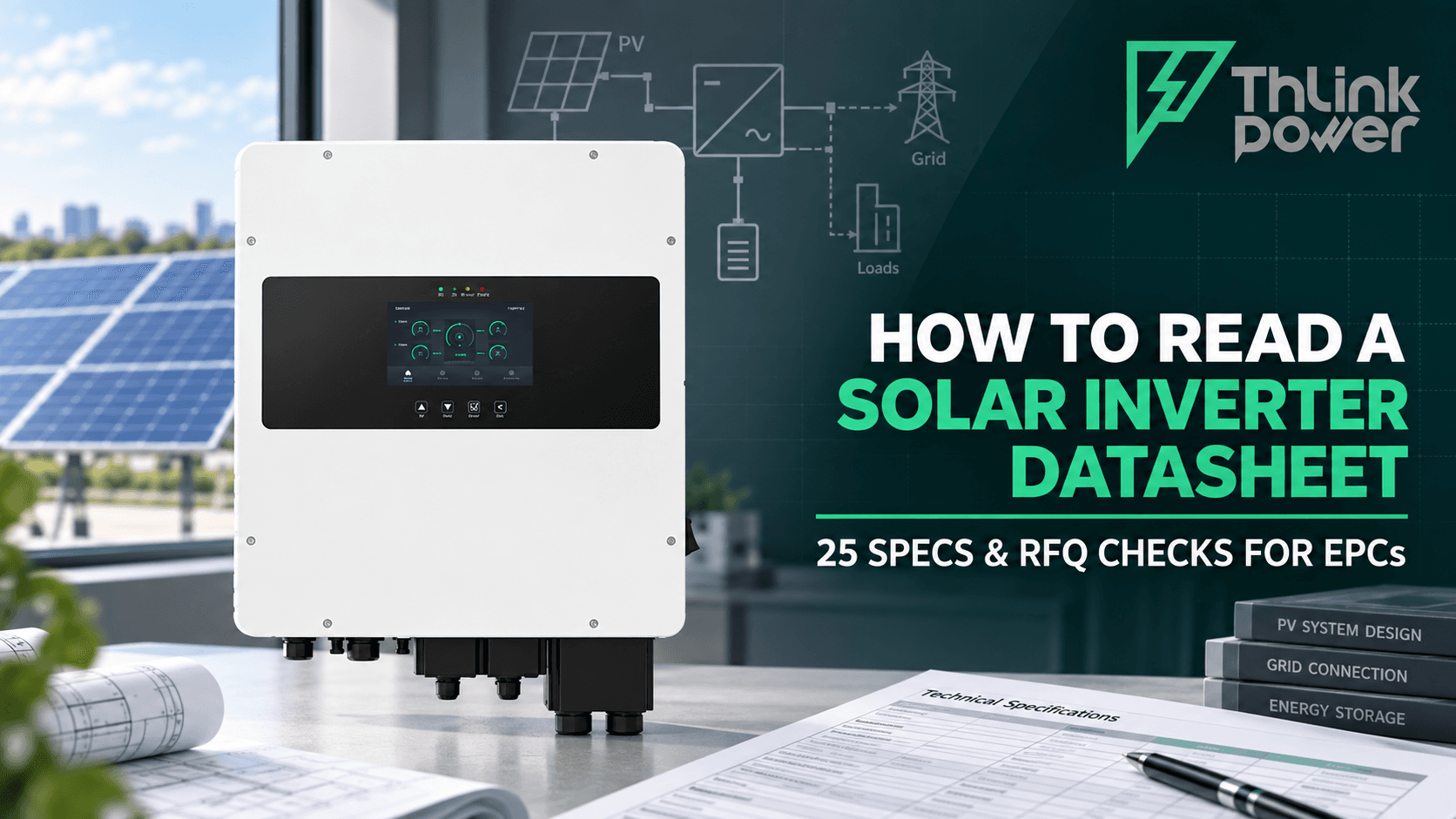
Warehouses are the backbone of modern supply chains—running lighting, refrigeration, conveyors, and machinery day and night. These facilities require stable, cost-efficient, and clean energy to maintain continuous operations. A solar inverter for warehouse transforms solar energy into consistent AC power, helping logistics centers reduce costs and grid dependence while ensuring reliable electricity.
Thlinksolar, a professional inverter manufacturer, designs industrial-grade solar systems tailored to warehouse environments—where uptime, efficiency, and scalability are essential.
Why Warehouses Need Solar Inverters
Warehouses typically consume large amounts of electricity for cooling, lighting, ventilation, and automation.
By integrating solar inverters into their energy systems, warehouse operators gain:
-
Lower operating costs: Offsetting peak-hour electricity bills.
-
Energy resilience: Maintaining power during grid instability.
-
Sustainability compliance: Meeting carbon reduction goals.
-
ROI optimization: Achieving payback within 3–5 years.
According to the International Renewable Energy Agency (IRENA), industrial solar systems can cut electricity expenses by up to 40%, making warehouses a prime sector for renewable deployment.
Thlinksolar’s Warehouse-Optimized Inverter Design
Thlinksolar inverters are purpose-built to handle heavy electrical loads and variable operational environments commonly found in logistics and storage facilities.
Core Design Highlights:
-
High Conversion Efficiency (98.5%) – Maximizes solar power utilization.
-
Voltage Stabilization System – Prevents fluctuation during equipment startup.
-
Advanced MPPT Tracking – Adapts to partial shading on large warehouse rooftops.
-
Thermal Optimization – Intelligent cooling ensures stable 24/7 operation.
-
Cloud Monitoring Integration – Remote system diagnostics and performance tracking.
Each inverter undergoes environmental simulation testing to ensure long-term durability against dust, heat, and humidity.
Ideal Configurations for Warehouse Applications
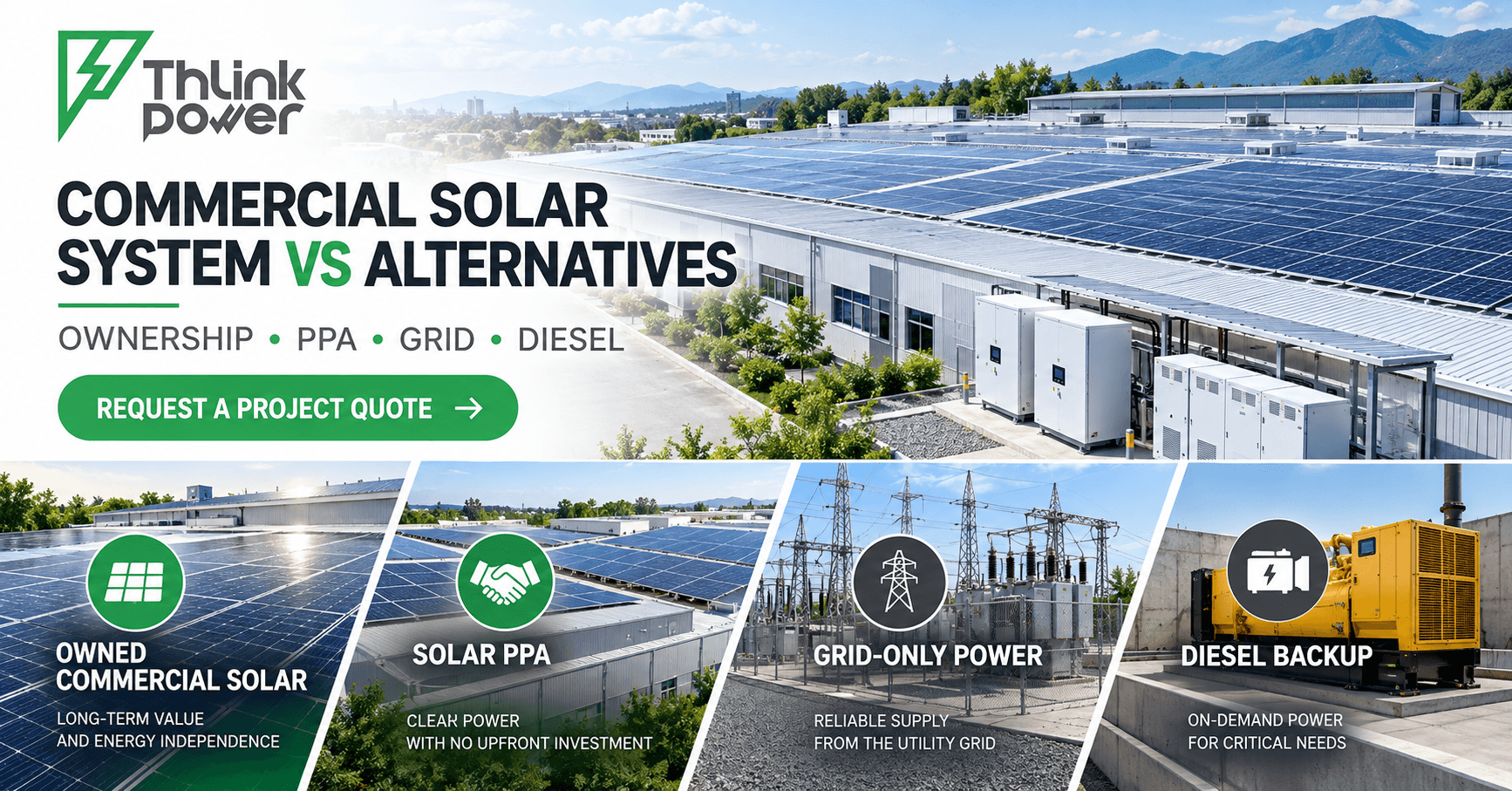
Warehouses can adopt solar inverters in both on-grid and hybrid configurations depending on their operational model.
| Configuration | Description | Ideal Use Case |
|---|---|---|
| On-Grid System | Feeds solar power directly to the utility grid | Urban warehouses with stable grids |
| Hybrid System | Combines solar panels, batteries, and grid | Facilities needing backup power |
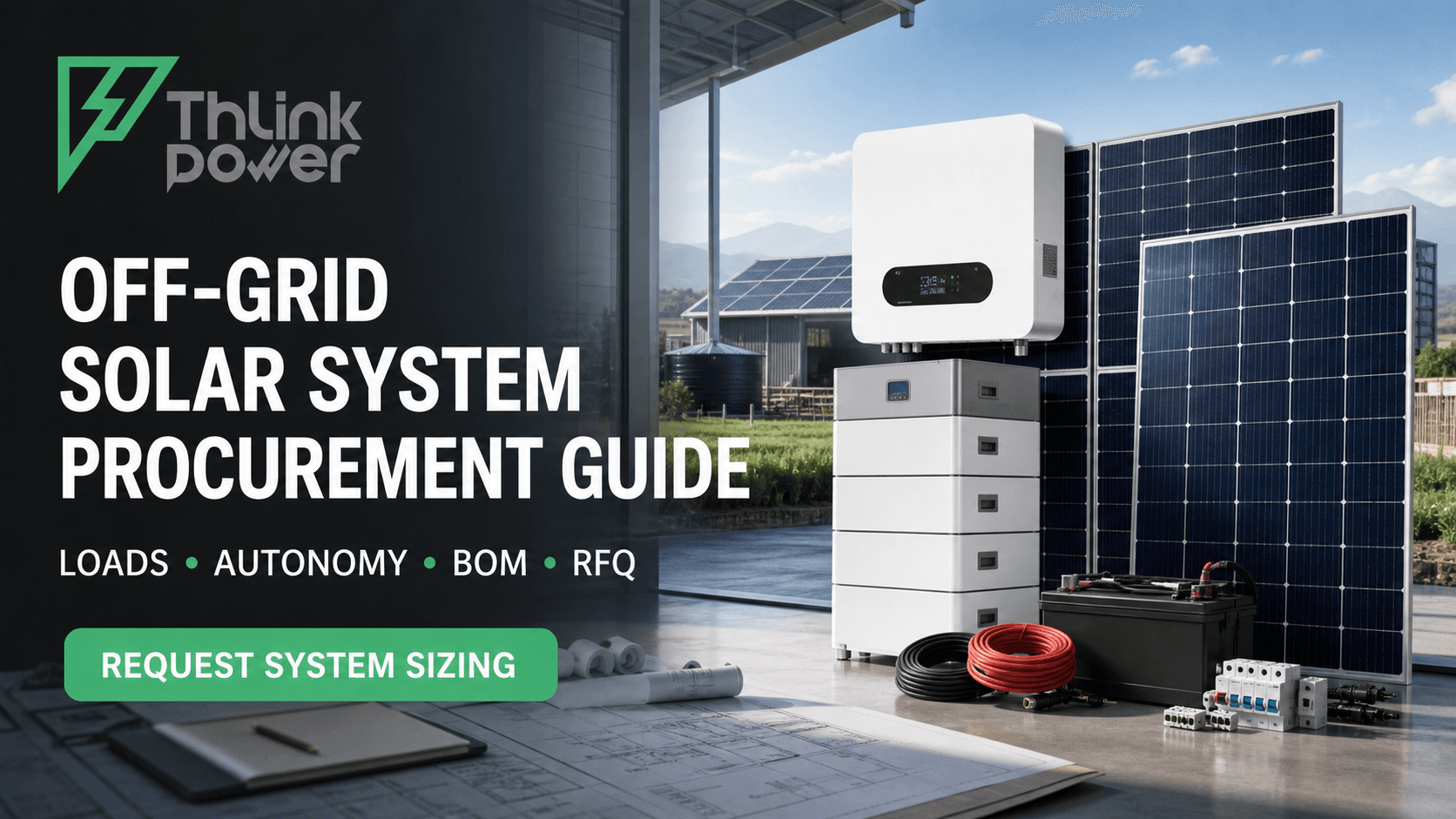
| Off-Grid Setup | Fully independent energy system | Remote logistics hubs |
The hybrid inverter is especially suited for cold storage and automated warehouses, where even brief outages can lead to operational loss.
Key Benefits for Logistics and Storage Operations
| Benefit | Description |
|---|---|
| Continuous Power Supply | Supports critical equipment during grid failure |
| Reduced Energy Costs | Cuts monthly electricity expenses significantly |
| Low Maintenance | Advanced cooling and monitoring reduce servicing |
| Scalable Design | Compatible with multi-roof or distributed setups |
| Smart Management | Cloud-connected monitoring via Thlinksolar platform |
By leveraging Thlinksolar’s intelligent monitoring system, operators can analyze performance metrics, detect inefficiencies, and schedule maintenance proactively.
The Solar Energy Industries Association (SEIA) reports that warehouses adopting smart solar systems experience up to 30% higher operational efficiency due to improved load management and power stability.
Technical Specifications
Standard Warehouse Inverter Range:
-
Power Ratings: 5kW – 250kW (single and three-phase models)
-
Input Voltage Range: 150V – 1000V DC
-
Efficiency: Up to 98.5%
-
Enclosure Rating: IP66 for outdoor installation
-
Cooling: Smart fan + thermal derating control
-
Communication: WiFi, RS485, Ethernet, Cloud App
Thlinksolar also provides customized OEM firmware and branded monitoring platforms for distributors and EPC companies.
Export and OEM Advantages
As a global solar inverter manufacturer, Thlinksolar supports international partners through:
-
OEM/ODM manufacturing for regional distributors.
-
Localized firmware optimized for regional grids.
-
Global logistics and after-sales support.
-
24/7 online cloud service for monitoring and updates.
Its solutions are already powering warehouses across Asia, Africa, and Latin America—regions where grid fluctuation and high energy demand require advanced inverter technology.
FAQ
Q1: Can Thlinksolar inverters handle heavy machinery in warehouses?
Yes. Our industrial-grade inverters are designed with surge tolerance and voltage stabilization for motor-driven equipment.
Q2: Do warehouses need battery storage?
Battery systems are optional but recommended for 24/7 operations, ensuring continuity during grid failure or low solar production.
Conclusion
A solar inverter for warehouse is no longer a luxury—it’s a necessity for operational reliability, cost savings, and sustainability.
With advanced MPPT technology, real-time monitoring, and global OEM support, Thlinksolar delivers high-performance energy solutions for logistics, storage, and industrial operations worldwide.
Learn more about our inverter models at Thlinksolar.com or contact our energy experts via Contact Us for project inquiries.