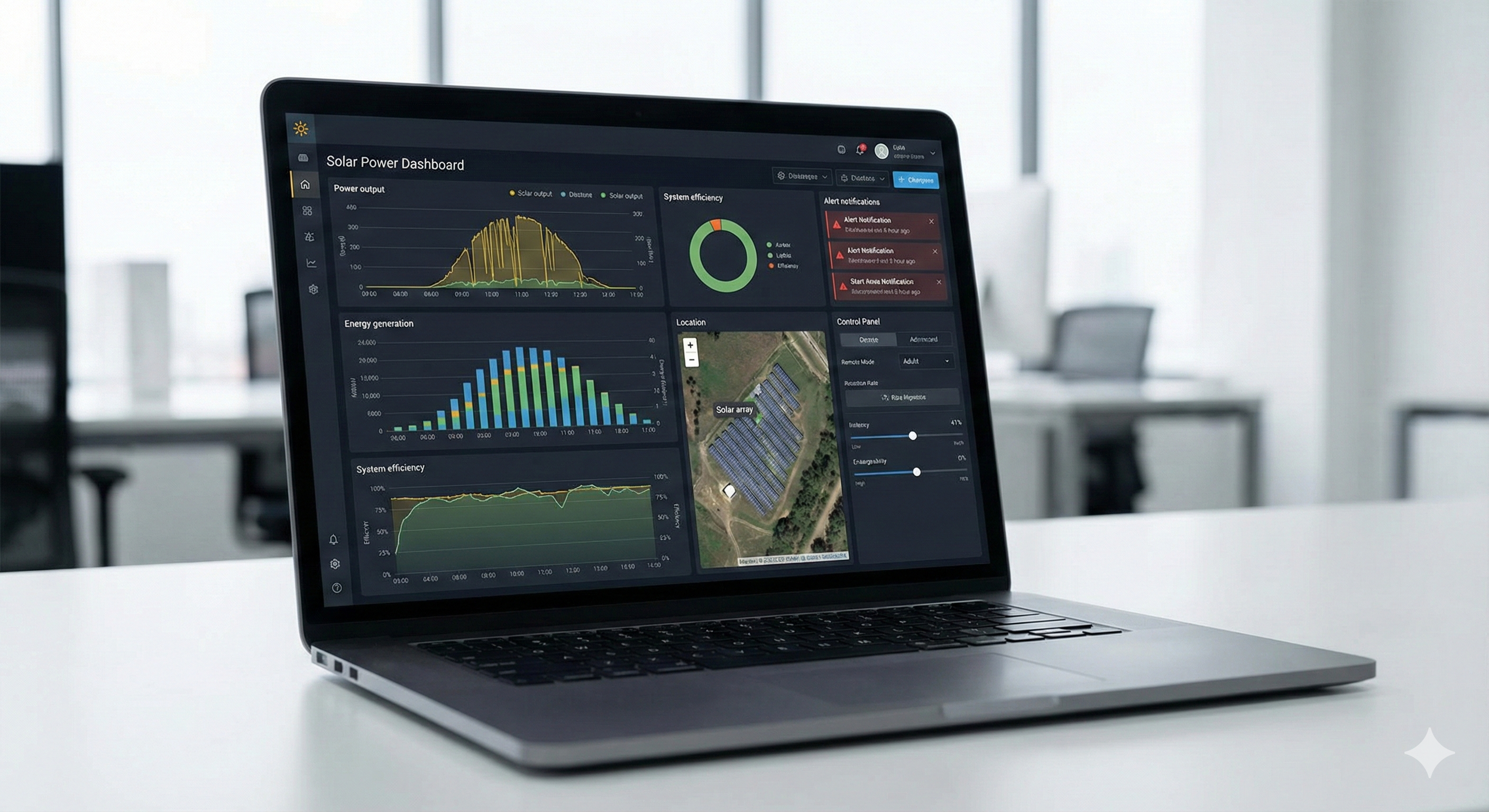
Power at a Distance: Why Remote Monitoring Matters
Modern solar projects don’t just need to generate energy — they need to stay reliable without constant supervision.
For operators managing dozens of rooftop systems or distributed power plants, manual checks are inefficient and expensive.
A remote monitoring inverter solves that problem by bringing intelligence into the energy network. It continuously gathers data, detects anomalies, and allows engineers to take real-time action — from any location.
For decision-makers, this isn’t just about convenience — it’s about turning energy systems into predictable, maintainable, and performance-optimized assets.
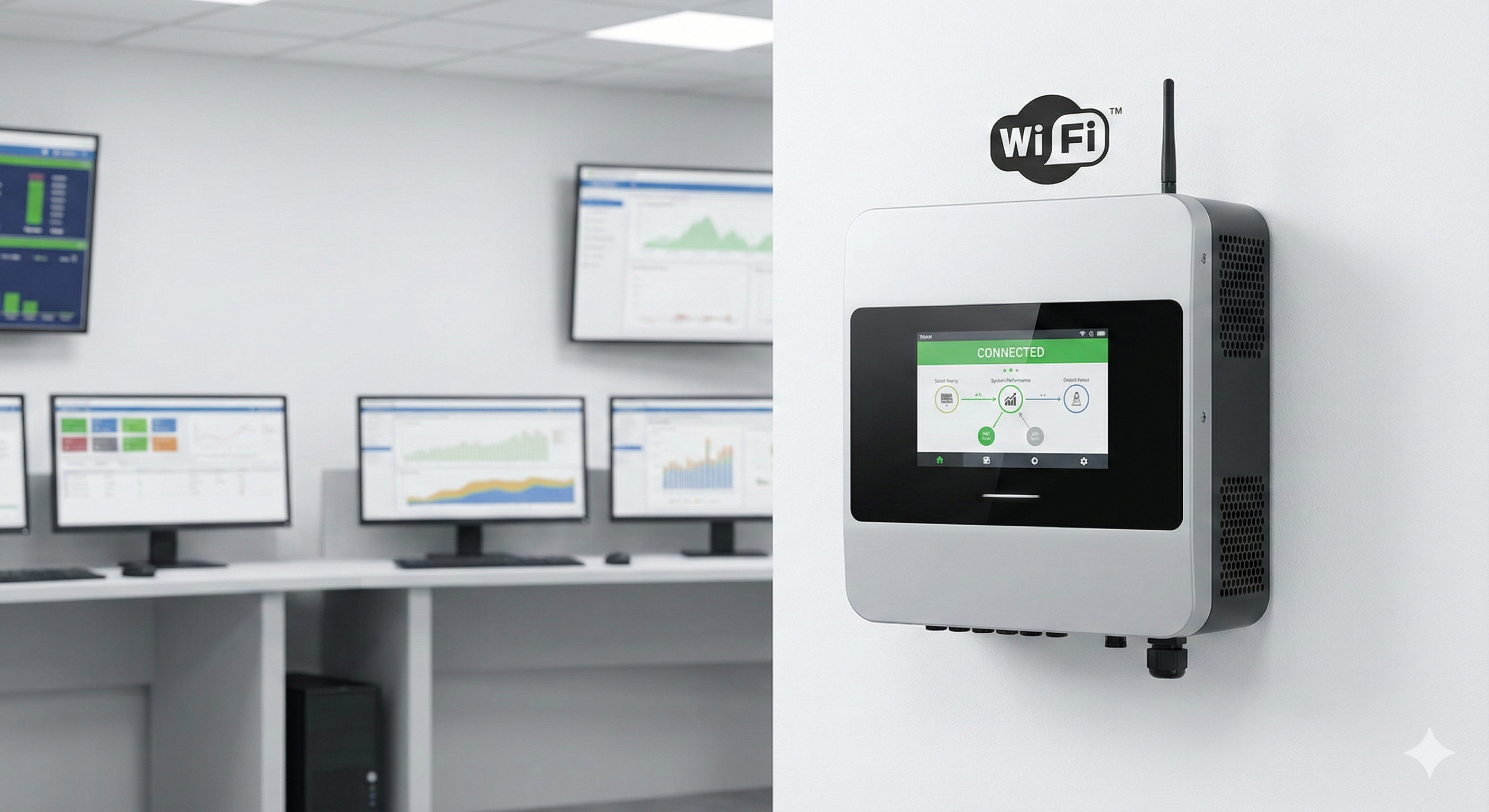
How Remote Monitoring Inverters Work
Remote monitoring inverters combine hardware and software into a single ecosystem.
-
Data Collection – Sensors measure current, voltage, and temperature in real time.
-
Connectivity – WiFi, Ethernet, or GSM modules transmit data securely to the cloud.
-
Analytics – AI algorithms process performance data to predict failures and optimize energy distribution.
-
User Interface – Operators access dashboards or mobile apps to view live status and configure responses.
| Component | Function | Benefit |
|---|---|---|
| IoT Sensor Network | Collects live inverter and PV data | Real-time accuracy |
| Cloud Server | Aggregates and stores system info | Remote accessibility |
| AI Algorithm | Predicts degradation trends | Prevents costly downtime |
| Dashboard App | Visualizes performance metrics | Enables 24/7 monitoring |
According to MDPI Energies (2024), remote monitoring systems reduced inverter-related downtime by up to 37% in commercial solar plants.
Source: MDPI Energies – IoT Monitoring for PV Systems
From Reactive Maintenance to Predictive Efficiency
Traditional inverter maintenance operates on fixed intervals — inspection every few months, replacement when faults appear.
Remote monitoring inverters change this to a predictive model:
-
Detect temperature spikes before overheating.
-
Identify abnormal voltage drift before shutdown.
-
Analyze degradation patterns for proactive maintenance scheduling.
This approach saves both time and capital.
A study by IEA PVPS Task 13 found predictive maintenance could reduce total O&M (Operations & Maintenance) costs by 25% and extend inverter lifespan by three years.
Source: IEA PVPS Task 13 – PV System Reliability Reports
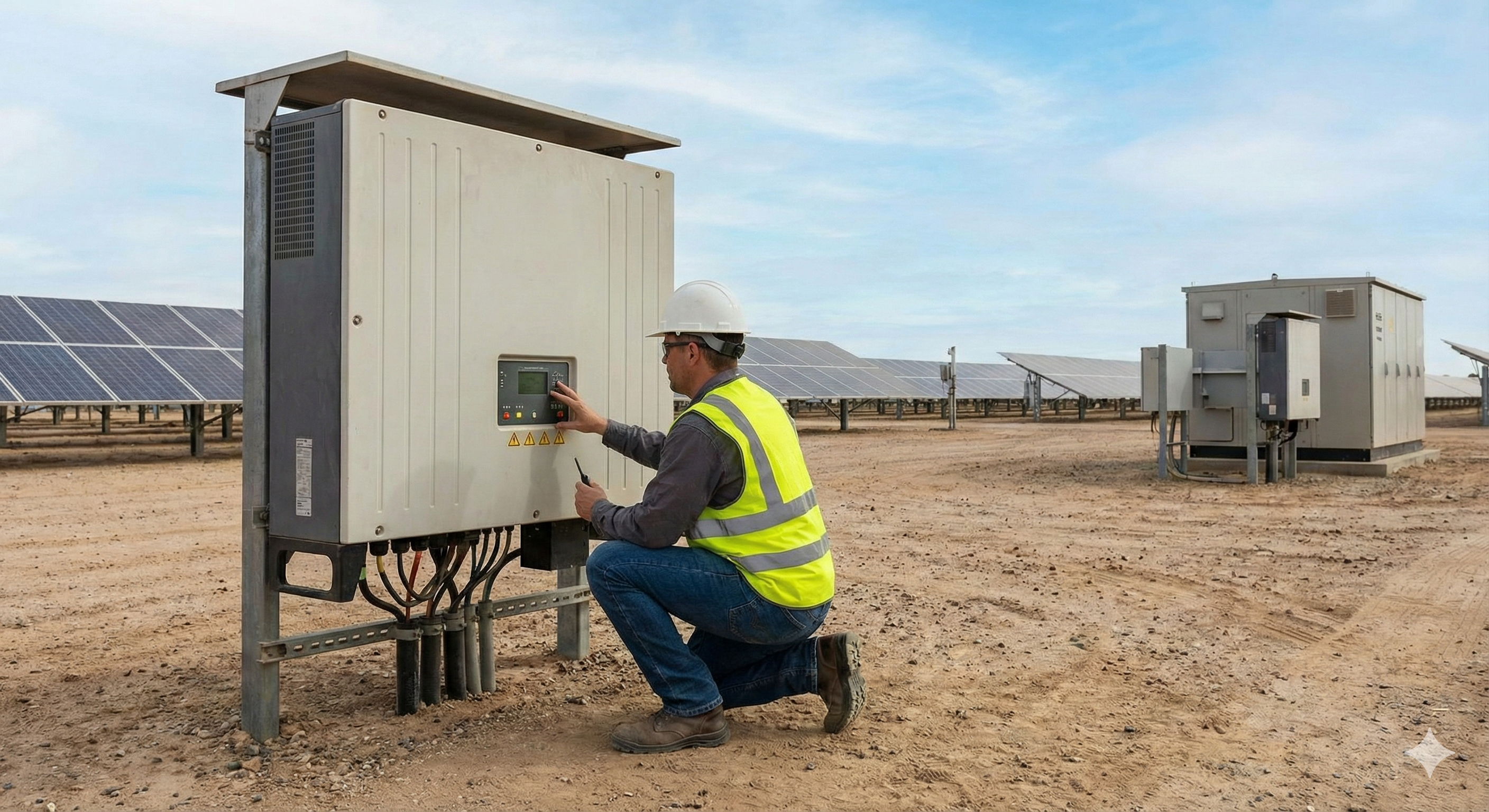
Commercial and Industrial Advantages
For Commercial Buildings:
-
Real-time fault detection prevents energy waste during peak hours.
-
Data integration with BMS (Building Management Systems) improves load distribution.
For Industrial Parks:
-
Enables centralized monitoring of multiple rooftops or warehouses.
-
Reduces downtime caused by dust, vibration, or load variation.
For Energy Developers:
-
Simplifies remote commissioning and performance verification.
-
Supports investor reporting with verifiable, timestamped production data.
| Industry Segment | Key Pain Point | Monitoring Advantage |
|---|---|---|
| Manufacturing | Frequent power fluctuations | Auto alerts & live current balancing |
| Hospitality | 24/7 operation needs | Real-time inverter redundancy control |
| Agriculture | Remote installations | GSM connectivity for off-grid data |
| Utilities | Multi-site management | Centralized dashboard for all stations |
Cost Savings and ROI Insights
Remote monitoring isn’t just a technical upgrade — it’s an economic one.
| Parameter | Conventional Inverter | Remote Monitoring Inverter |
|---|---|---|
| Downtime per Year | 50–70 hours | <15 hours |
| O&M Cost Reduction | – | Up to 25% |
| Payback Period | 6 years | 4.5 years |
| System Lifespan | 10 years | 13+ years |
With real-time alerts and auto-adjustment algorithms, operators can avoid minor faults escalating into full outages — translating into thousands of dollars saved annually for large commercial systems.
Security and Data Reliability
Modern remote monitoring inverters comply with IEC 62443 cybersecurity standards.
Data is encrypted end-to-end, and control access is role-based to prevent unauthorized commands.
ThlinkSolar’s systems, for example, utilize TLS 1.3 encryption and redundant data servers to ensure continuity even if a connection drops.
This security layer builds trust for large-scale energy operators handling confidential data and cross-border monitoring systems.
Practical Selection Guide
✅ Connectivity: Look for WiFi + GSM dual communication for redundancy.
✅ Platform Support: Web + mobile interface preferred for real-time access.
✅ Data Storage: Minimum 12-month historical logs for trend analysis.
✅ Smart Alerts: AI-based predictive notifications instead of fixed thresholds.
✅ Integration: Compatibility with SCADA, Modbus, or MQTT for industrial automation.
When scaling multiple sites, prioritize centralized dashboards capable of merging inverter data, environmental sensors, and load statistics.
Common Questions
Q1: Do remote monitoring inverters need constant internet?
Not necessarily. GSM fallback ensures data sync even in low-connectivity regions.
Q2: Can I monitor different brands of inverters in one platform?
Yes, many systems use open protocols like Modbus or API integration for multi-brand networks.
Q3: How secure is cloud-based control?
Top-tier models employ 256-bit encryption and two-factor authentication to safeguard control functions.
Q4: Can this system alert technicians automatically?
Yes. Automated SMS/email alerts can trigger when temperature or voltage exceeds safe limits.
Intelligent Oversight, Tangible Results
The remote monitoring inverter transforms how energy systems are managed — from reactive maintenance to predictive precision.
It gives business owners and engineers control, reliability, and cost predictability across every site they manage.
At ThlinkSolar, we engineer smart inverter systems that pair high conversion efficiency with IoT connectivity, ensuring 24/7 visibility across your energy network.
Discover more at ThlinkSolar or connect directly via our Contact Us page.