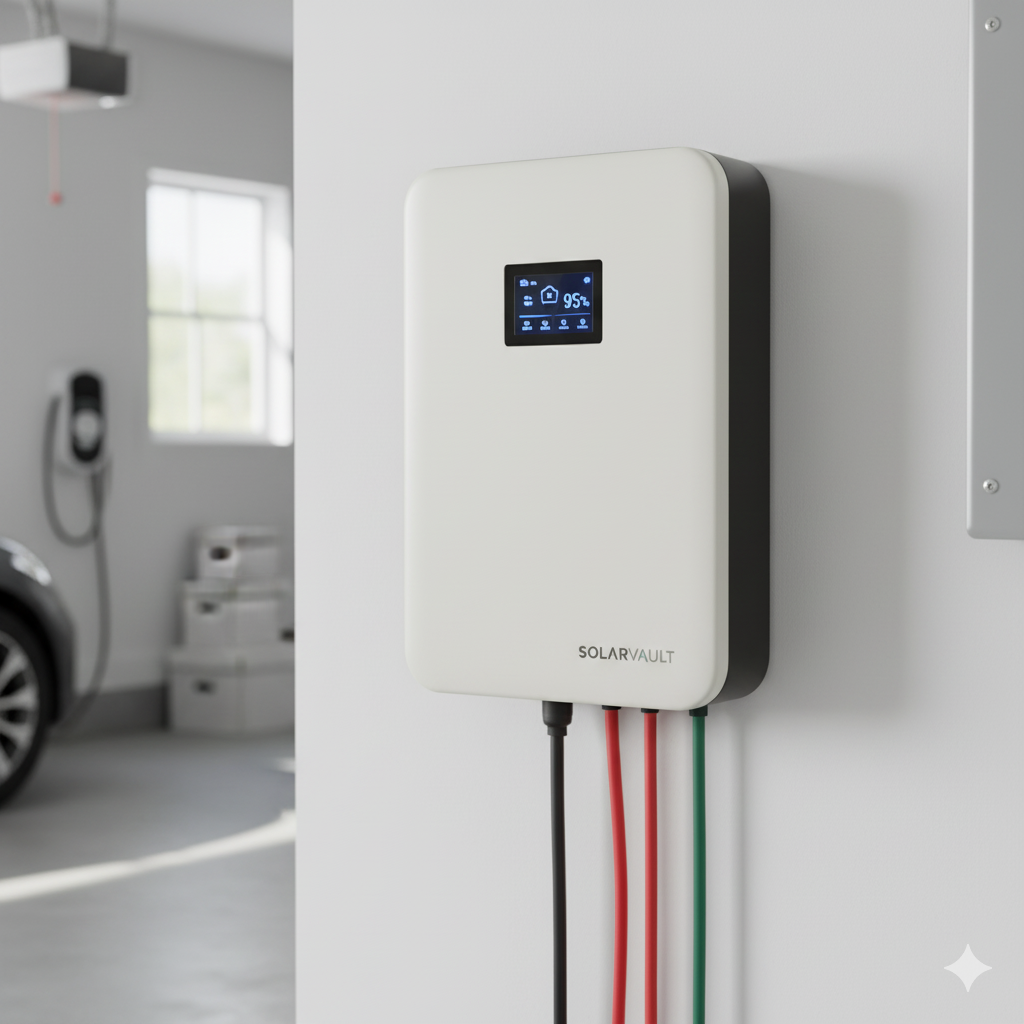
The Shift Toward Smarter, Space-Saving Energy Storage
Energy storage is no longer confined to large racks or floor-standing cabinets.
As demand for decentralized power grows, businesses and homeowners are moving toward wall-mounted lithium battery systems — sleek, modular solutions that store solar energy efficiently without occupying valuable space.
These batteries use LiFePO₄ (Lithium Iron Phosphate) chemistry, known for safety, high cycle life, and thermal stability. The result is an energy storage unit that performs reliably in small offices, residential buildings, and even commercial facilities where compactness and design matter as much as endurance.
How Wall-Mounted Lithium Batteries Work Within Solar and Hybrid Systems
A wall-mounted lithium battery connects directly to a solar inverter or hybrid power controller, enabling bidirectional energy flow between generation, storage, and consumption.
| Component | Function | Interaction |
|---|---|---|
| Solar Panels | Generate DC electricity | Feeds power to inverter or battery |
| Hybrid Inverter | Converts DC ↔ AC | Manages grid and storage transition |
| Wall-Mounted Battery | Stores excess DC energy | Supplies power during peak or outage |
| EMS (Energy Management System) | Optimizes power routing | Ensures efficiency and longevity |
When sunlight is abundant, excess power is stored; when night falls or loads spike, the inverter draws from the battery. This continuous, intelligent balancing act maximizes renewable usage while keeping the grid connection stable.
Advantages That Go Beyond Space Saving
While the compact form is a headline feature, the performance architecture defines the real advantage:
-
High Energy Density: LiFePO₄ cells provide up to 6,000+ charge cycles with 95% efficiency.
-
Safety Assurance: Built-in BMS (Battery Management System) prevents over-charge, over-current, and overheating.
-
Modular Scalability: Multiple wall units can be paralleled to reach industrial capacities.
-
Low Maintenance: Closed design eliminates acid leaks or ventilation requirements.
-
Aesthetic Integration: Designed for interior installation — ideal for offices, villas, or commercial corridors.
-
Quick Deployment: Lightweight casing allows one-person wall mounting with plug-and-play wiring.
In recent field studies from IRENA, properly managed lithium systems extended storage efficiency by 18–25% compared to legacy lead-acid arrays — underscoring how chemistry and design combine to redefine performance.
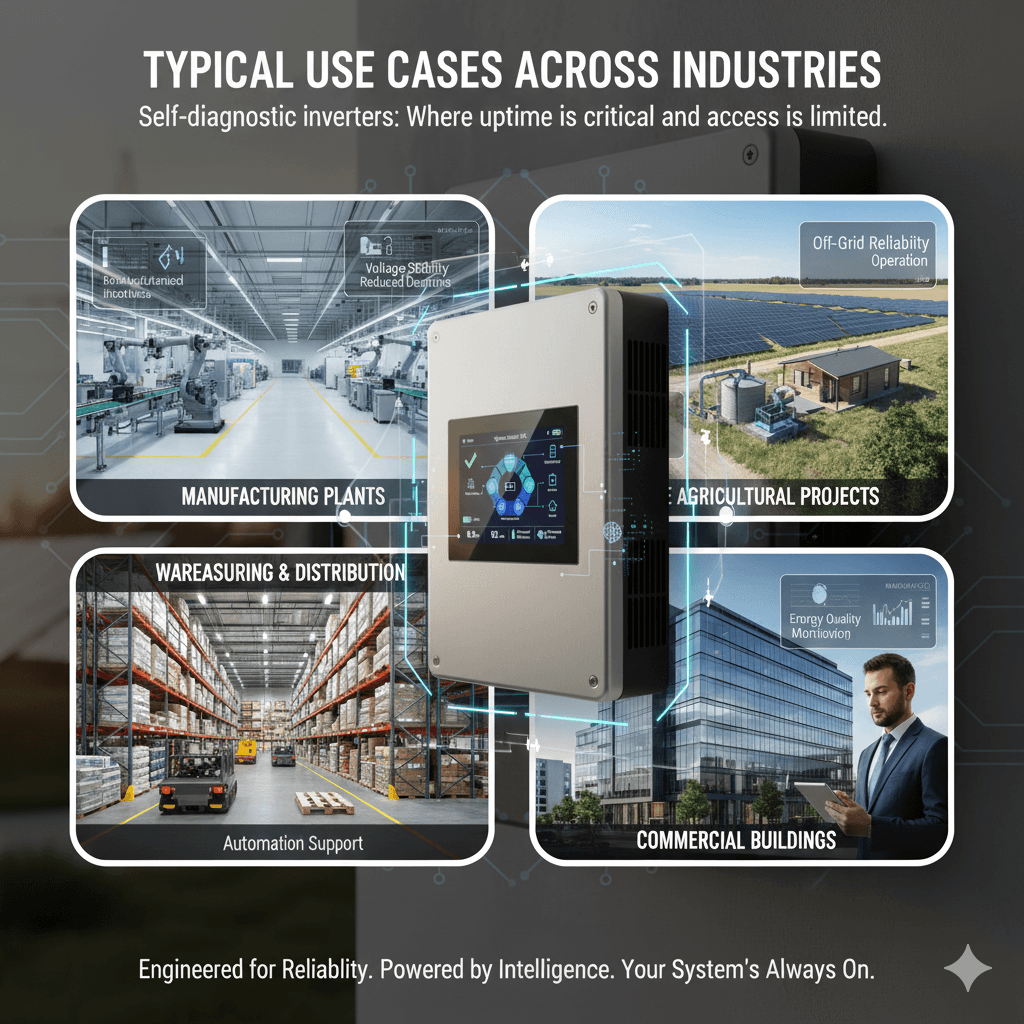
Use Cases Across Industries
Wall-mounted lithium batteries have proven their adaptability in multiple energy scenarios:
-
Telecom Base Stations: Maintain power continuity during unstable grid conditions.
-
Retail & Hospitality: Enable backup for lighting, POS terminals, and security systems.
-
Industrial Facilities: Support hybrid microgrids for factory machinery during load peaks.
-
Remote Homes or Farms: Work with off-grid solar inverters to provide 24-hour autonomy.
-
Data Rooms & Control Centers: Stabilize voltage for sensitive electronics.
Each environment demands different capacity and voltage configurations — typically 48V or 51.2V modules in 5–15 kWh units — yet the underlying advantage remains the same: compact reliability.
Technical Considerations Before Selection
| Parameter | Recommended Range | Reason |
|---|---|---|
| Rated Voltage | 48V / 51.2V | Common inverter compatibility |
| Capacity Options | 5 kWh – 15 kWh | Match daily load consumption |
| Installation Height | 1.2 – 1.5 m | Improves ventilation & access |
| Cycle Life | ≥ 6,000 cycles | Reduces lifetime cost |
| Operating Temperature | –10 °C – 50 °C | Suitable for global climates |
Tip: Always verify inverter-battery communication protocol (CAN/RS485). Proper integration allows synchronized charge-discharge and extends service life.
Frequently Asked Questions
Q1: Are wall-mounted lithium batteries safe for indoor use?
Yes. LiFePO₄ chemistry ensures thermal stability and zero gas emissions, making it safe for home or office walls.
Q2: How long does installation take?
Typically under two hours for standard setups, thanks to plug-and-play connectors and lightweight design.
Q3: Can multiple batteries be connected in parallel?
Absolutely. Most models support parallel expansion up to 16 units for larger systems.
Q4: What maintenance is required?
Minimal — periodic inspection of terminals and firmware updates via the BMS interface are sufficient.
Q5: Is the battery compatible with existing inverters?
Yes, as long as your inverter supports 48 V communication protocols such as CAN or Modbus.
Powering a More Flexible Energy Future
The wall-mounted lithium battery represents more than just convenience; it’s a strategic step toward distributed, intelligent energy networks. Compact, scalable, and efficient, it supports both sustainability goals and practical business continuity.
At ThlinkSolar, our wall-mounted lithium battery systems are engineered for reliability and global compliance — integrating seamlessly with solar inverters, hybrid controllers, and energy storage systems. Whether for commercial offices or residential energy independence, our solutions help you build power stability that lasts.
Explore our full range of products on the homepage or connect with our team via the contact page.