Introduction
As energy costs rise and sustainability becomes a key focus, more businesses are turning to solar energy to power their operations. Commercial solar systems are scalable, cost-effective, and environmentally friendly, making them ideal for businesses of all sizes. In this guide, we’ll discuss the advantages of solar energy for commercial use, its applications, and how to customize a system for your business needs.
1. Why Solar Energy Is Ideal for Businesses
1.1 Cost Savings
- Solar energy significantly reduces electricity bills by offsetting a business’s reliance on the grid.
- Excess energy can be sold back to the grid in regions with net metering programs, further reducing costs.
1.2 Sustainability Goals
- Solar energy helps businesses reduce their carbon footprint and meet sustainability targets.
- Many consumers prefer eco-friendly businesses, enhancing brand reputation and customer loyalty.
1.3 Energy Independence
- Solar systems reduce reliance on unpredictable grid electricity prices, providing more control over energy costs.
- Hybrid systems with battery storage ensure a reliable energy supply during outages.
1.4 Tax Incentives and Grants
- Governments worldwide offer financial incentives such as tax credits, rebates, and grants for commercial solar installations.
- Many countries provide accelerated depreciation benefits for solar equipment, allowing businesses to recover costs faster.
1.5 Long-Term Investment
- Solar panels typically last 20–25 years, providing long-term savings and a high return on investment (ROI).
2. Key Components of a Commercial Solar System
2.1 Solar Panels
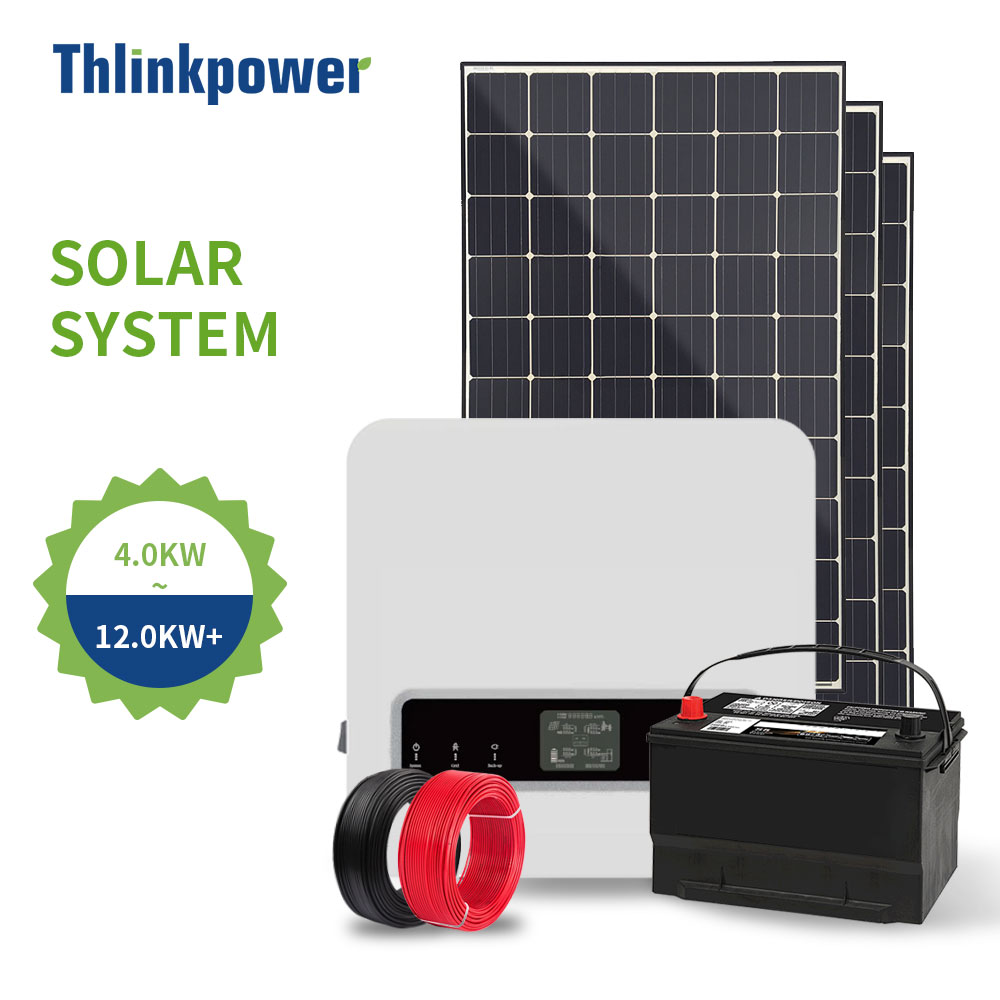
- Capture sunlight and convert it into electricity.
- Choose high-efficiency monocrystalline panels for optimal performance.
2.2 Inverters
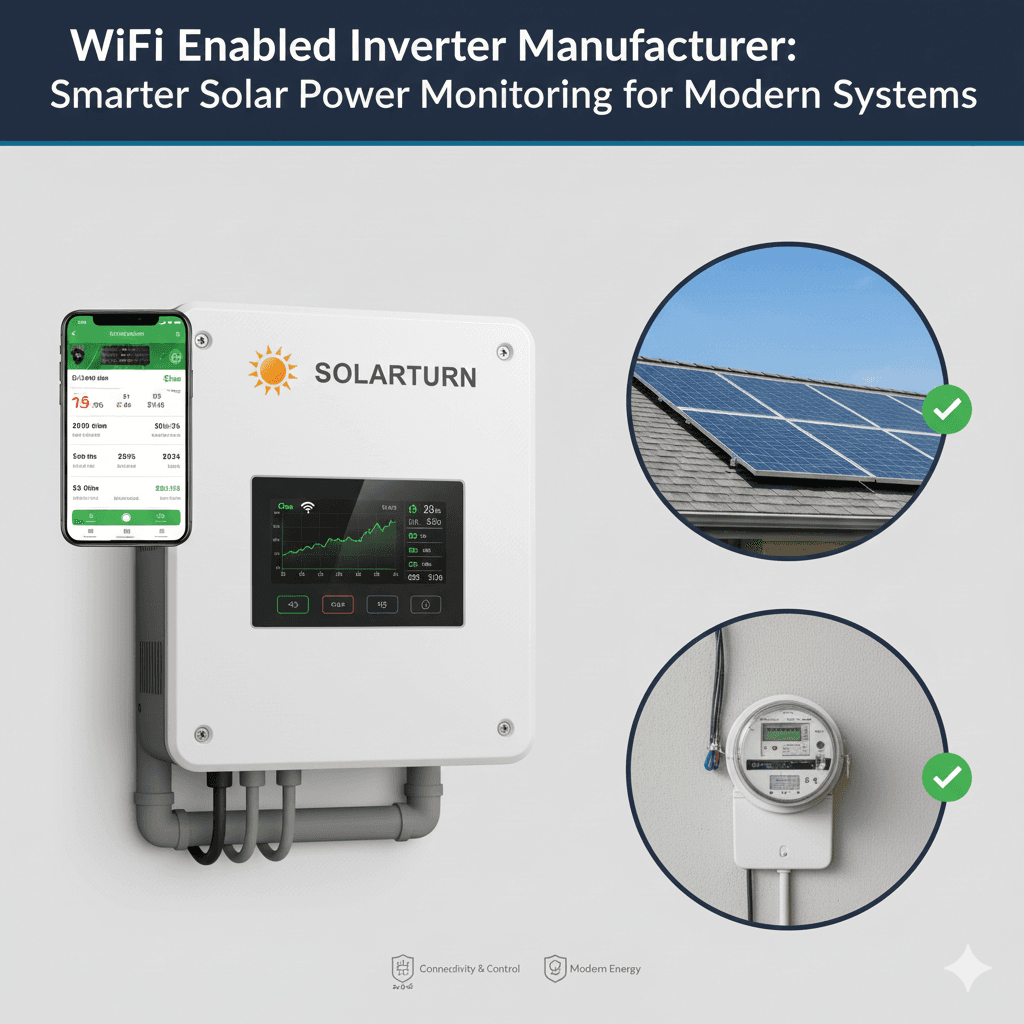
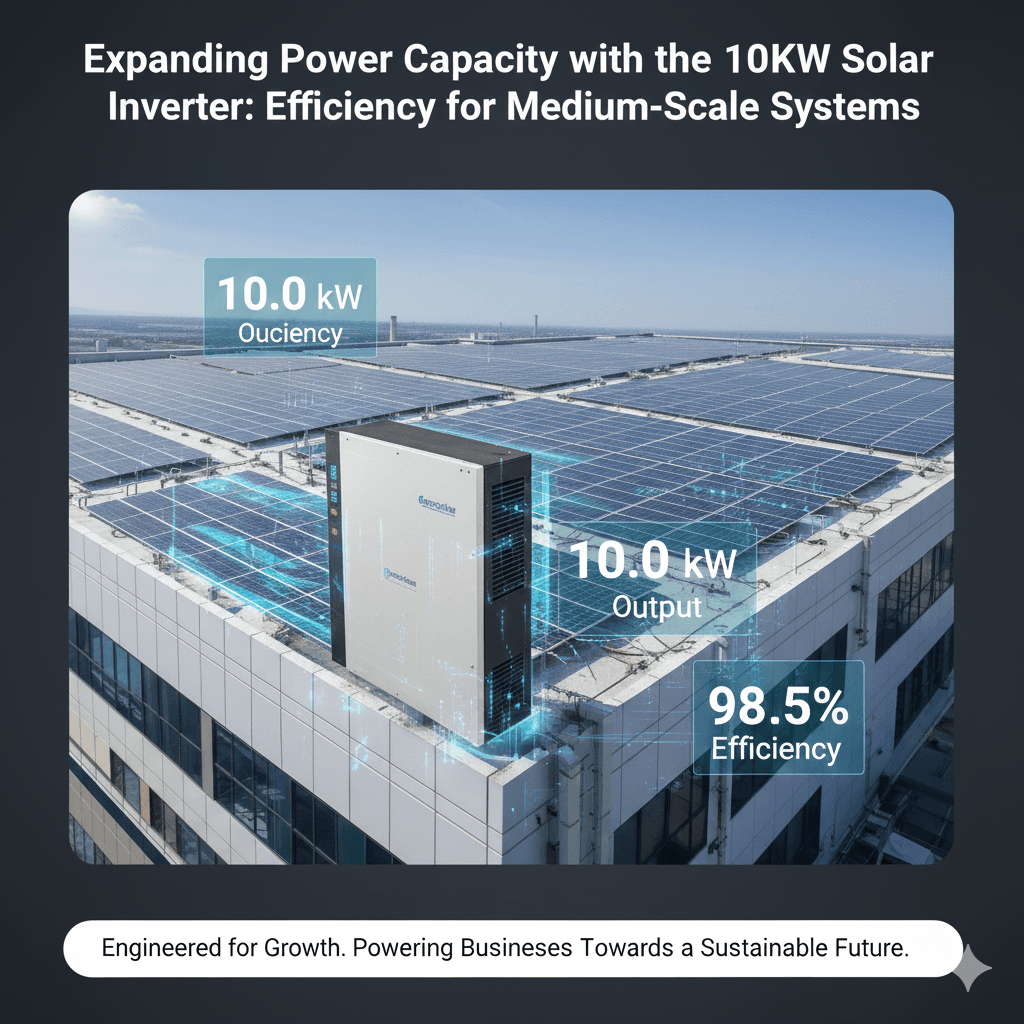
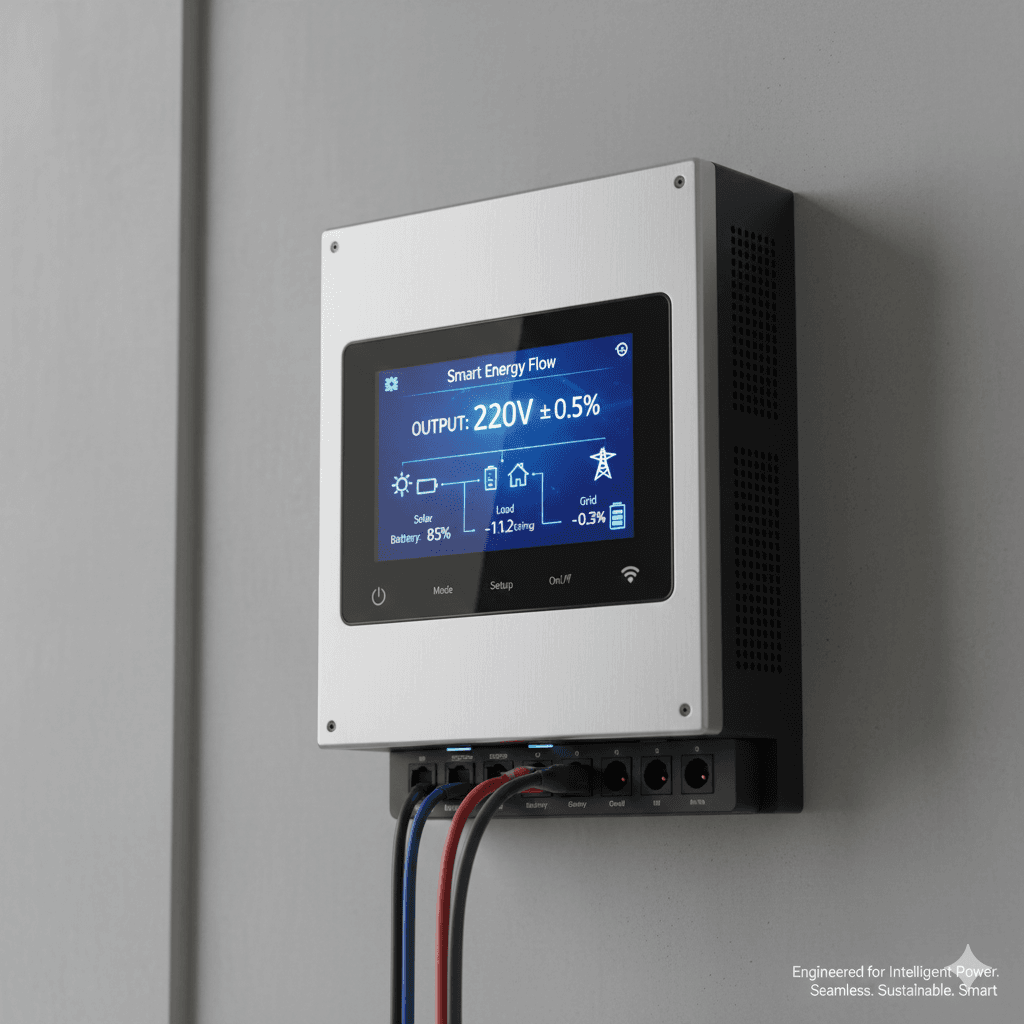
- Convert direct current (DC) electricity from the solar panels into alternating current (AC) for use in appliances and machinery.
- Central inverters or microinverters can be used depending on the system’s complexity.
2.3 Battery Storage (Optional)
- Stores excess energy for use during peak demand periods or power outages.
- Lithium-ion batteries are the most efficient and reliable option for commercial use.
2.4 Monitoring System
- Tracks energy production, usage, and system performance in real-time.
- Helps businesses identify and address inefficiencies.
2.5 Mounting Systems
- Roof-mounted systems are common for urban offices and retail stores.
- Ground-mounted systems are ideal for factories, warehouses, and agricultural operations with ample land.
3. Applications of Solar Energy in Businesses
3.1 Office Buildings
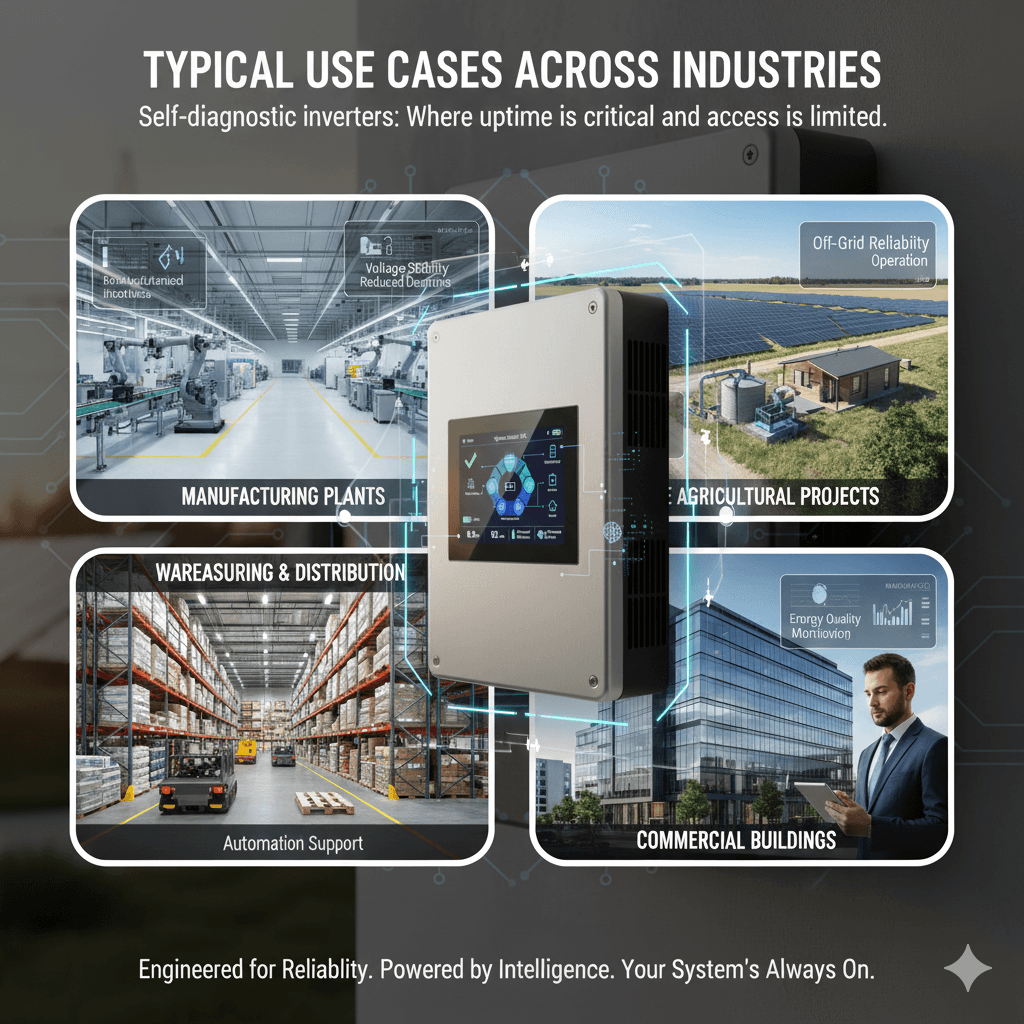
- Example: A 100kW solar system powers an office building, reducing electricity costs and supporting sustainability goals.
- Benefits: Lower operational costs and a greener public image.
3.2 Retail Stores
- Example: A retail store installs a 50kW solar system with battery storage to manage peak demand charges.
- Benefits: Reliable energy supply and reduced energy bills.
3.3 Manufacturing Facilities
- Example: A factory installs a 500kW solar system to offset energy costs for heavy machinery.
- Benefits: Stable energy supply and significant cost savings.
3.4 Agricultural Operations
- Example: A farm uses a 30kW solar system to power irrigation pumps, refrigeration units, and lighting.
- Benefits: Sustainable energy for essential farming equipment.
3.5 Hotels and Resorts
- Example: A resort installs a hybrid solar system to ensure uninterrupted power for guests and offset energy costs.
- Benefits: Reduced operational expenses and increased customer satisfaction.
3.6 Schools and Universities
- Example: A university installs a solar system to power classrooms, laboratories, and dormitories.
- Benefits: Lower energy costs and an opportunity to educate students about renewable energy.
4. Financial Incentives for Commercial Solar Systems
4.1 Tax Credits
- Many countries offer tax credits for solar installations, covering up to 30% of the system cost.
4.2 Depreciation Benefits
- Businesses can claim accelerated depreciation on solar equipment, reducing taxable income.
4.3 Grants and Rebates
- Local governments and energy providers often provide rebates or grants to encourage solar adoption.
4.4 Feed-in Tariffs and Net Metering
- Businesses can sell excess energy back to the grid or earn credits to offset future bills.
4.5 Green Business Certification
- Solar-powered businesses may qualify for green certifications, enhancing their marketability.
5. How to Design a Solar System for Your Business
5.1 Assess Energy Needs
- Analyze your business’s electricity consumption to determine the size of the solar system required.
5.2 Evaluate Available Space
- Assess roof or ground space for solar panel installation.
- Consider shading, orientation, and tilt for maximum sunlight exposure.
5.3 Choose the Right Components
- Invest in high-efficiency panels, reliable inverters, and optional battery storage for peak performance.
5.4 Factor in Financial Incentives
- Research applicable tax credits, rebates, and grants to reduce upfront costs.
5.5 Plan for Future Expansion
- Design a scalable system to accommodate future energy needs as your business grows.
6. Benefits of Partnering with Thlinkpower for Commercial Solar
At Thlinkpower, we specialize in designing and installing high-quality solar energy systems tailored to your business needs.
Our Advantages
- Custom Solutions: Systems designed for businesses of all sizes, from retail stores to industrial facilities.
- High-Performance Components: Efficient solar panels, durable inverters, and reliable battery storage.
- Certified Quality: TÜV and CE-certified products for safety and reliability.
- Comprehensive Support: From consultation to installation and maintenance.
Popular Products
- Thlinkpower Commercial Solar Kits: Complete systems for businesses.
- Thlinkpower High-Efficiency Panels: Ideal for maximizing energy output.
- Thlinkpower Hybrid Systems: Seamlessly integrate grid power and battery storage.
7. Frequently Asked Questions
Q1: How much does a commercial solar system cost?
- Costs vary based on size and components. Systems typically range from $50,000 to $500,000, with incentives available to reduce costs.
Q2: How long does it take to recover the investment in solar?
- Most businesses achieve payback within 5–7 years, depending on energy savings and incentives.
Q3: Can solar systems power large industrial operations?
- Yes, commercial systems can be scaled to meet the energy demands of heavy machinery and industrial processes.
Q4: Are commercial solar systems eligible for tax credits?
- Yes, most countries offer tax credits and other financial incentives for commercial solar installations.
Q5: Can I add battery storage to my system later?
- Yes, with a hybrid inverter, batteries can be added to an existing system.
8. Contact Us
Ready to install a solar energy system for your business? Thlinkpower provides expert advice and high-quality solutions tailored to your commercial energy needs.
- Phone: +86-18157449065
- Email: thlink5@thlinkpower.com
- Address: Lijiaqiao Village, Gulin Town, Haishu District, Ningbo City, Zhejiang Province
- Website: [https://xl-b.pinshop.com/contact-us]