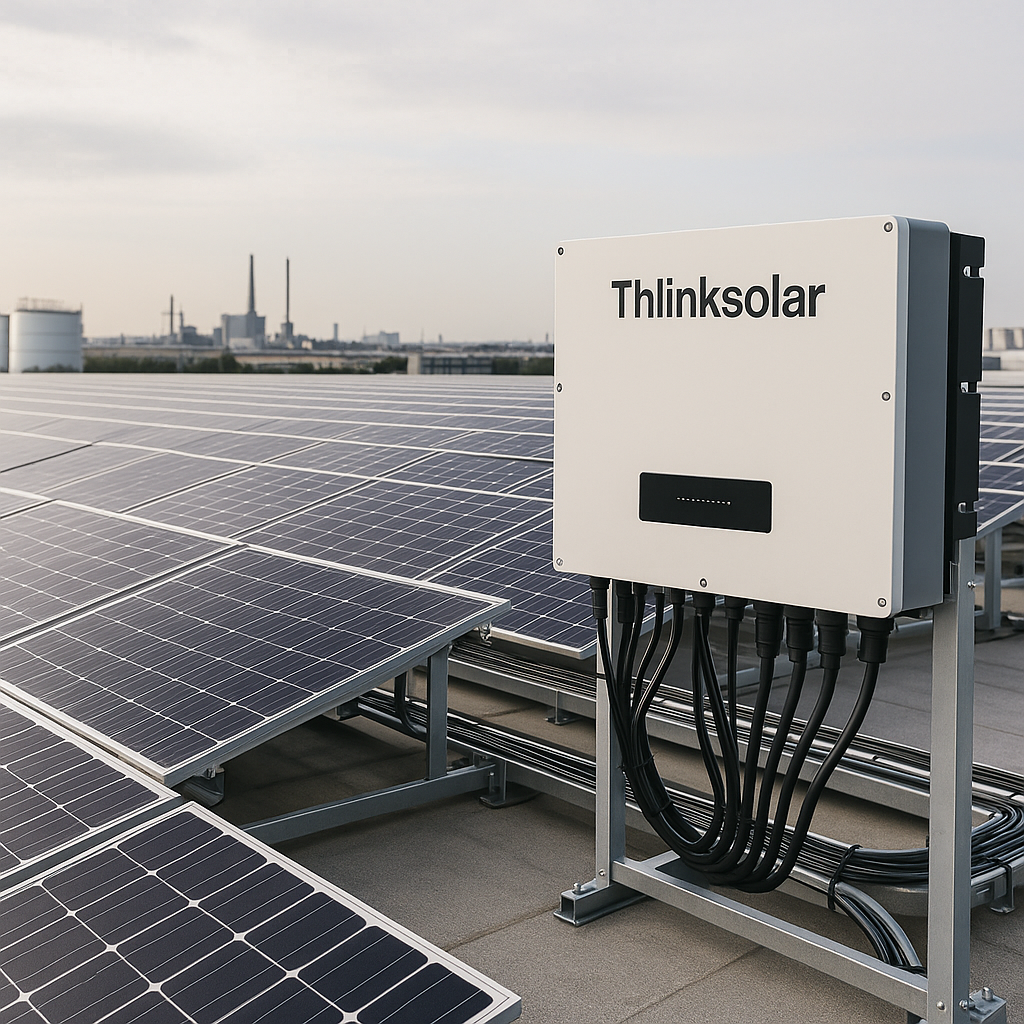
From Compliance to Customization: What Sets China Solar Inverter Manufacturers Apart
China has become the backbone of the global solar inverter supply chain. While low cost was once the defining factor, today’s leading China solar inverter manufacturers combine strict international compliance, advanced engineering, and tailored customization to meet complex project demands. This evolution has made them indispensable partners for developers, EPCs, and integrators worldwide who require both speed to market and long-term reliability.
Certification as the Passport to Global Solar Markets
For international projects, compliance is the passport to entry. Chinese factories have invested heavily in maintaining certifications that allow seamless integration across continents. CE and IEC approvals remain essential in Europe, while UL 1741 and IEEE 1547 define the U.S. market. TÜV testing adds another layer of trust, especially for utility-scale projects.
The value of compliance is not abstract—it saves time and money. Projects approved without delays can secure faster financing, avoid redesigns, and enter service months ahead of schedule. Manufacturers that consistently update their certification portfolios prove their commitment to helping partners navigate strict grid codes and evolving regulations.
Inside the Factory: Precision Processes That Secure Long-Term Performance
Compliance is the foundation, but precision manufacturing is what sustains long-term performance. China solar inverter manufacturers now operate automated SMT lines, selective soldering systems, and AOI/ICT testing platforms that minimize defects. In-house R&D pushes efficiency higher through SiC and GaN components, advanced MPPT algorithms, and adaptive cooling designs.
This shift from “volume production” to “high-precision assembly” delivers measurable results: fewer warranty claims, longer system uptime, and better energy yields. For buyers, it translates into reduced O&M costs and stronger total cost of ownership (TCO) performance.
Standardization Meets Flexibility: OEM/ODM as a Strategic Edge
One of the strongest differentiators of Chinese suppliers is their ability to combine standardized production with OEM/ODM flexibility. Instead of one-size-fits-all models, leading factories offer:
-
Voltage and power range adjustments for local grid requirements.
-
Firmware tuned to utility-specific reactive power and ride-through profiles.
-
Interface modifications such as Modbus/TCP, RS-485, or CAN for EMS and BMS integration.
-
Environmental adaptations, from IP65 enclosures to salt-mist protection.
The ability to customize without breaking compliance is what gives developers confidence to scale projects in diverse regions.
Tailored Designs Across Residential, Commercial, Industrial, and Utility Projects
Different projects highlight different strengths. In residential rooftops, compact size and quiet cooling are prized, while commercial buildings need reliable grid support to reduce downtime. Industrial parks demand tolerance for fluctuating loads, and remote hybrid projects require lightweight systems that integrate smoothly with batteries and backup generators.
Application Focus
| Scenario | What Matters Most | How China Manufacturers Deliver |
|---|---|---|
| Residential Rooftops | Easy installation, rapid shutdown, efficiency | Compact designs with smart monitoring apps |
| Commercial Buildings | Grid integration, downtime reduction | Advanced communication & load balancing |
| Industrial Facilities | Fluctuating loads, harsh environments | Reinforced casing & robust EMC protection |
| Utility/Hybrid Systems | Scale, hybrid integration, SCADA support | Modular designs with EMS/BMS compatibility |
This adaptability explains why “china solar inverter manufacturers” remain top-of-list in procurement searches for both distributed and centralized energy systems.
Addressing Buyer Concerns: Cost, Reliability, and Grid Adaptability
Energy developers consistently raise three concerns:
-
Cost Control: While advanced inverters may be more expensive upfront, lifecycle savings come from reduced installation labor, higher energy yields, and fewer service visits.
-
Reliability: Harsh conditions such as desert heat or coastal humidity demand reinforced designs and thorough stress testing.
-
Adaptability: Grid codes vary by country, and manufacturers that can configure settings within certified ranges eliminate costly redesigns.
By addressing these challenges head-on, China solar inverter manufacturers transform potential risks into long-term performance advantages.
Buyers’ Key Questions About Partnering with China Manufacturers
Q1: Can China solar inverter manufacturers really meet international reliability standards?
Yes. With certifications like CE, UL, and TÜV, plus advanced burn-in and stress testing.
Q2: Do they support small orders or only large-scale projects?
Many factories can start with pilot runs, allowing validation before scaling to mass production.
Q3: How do they provide value beyond low prices?
Through innovation, efficiency, customization, and after-sales service that lower total project costs over time.
Partnership for Performance: Why Leading Manufacturers Drive Renewable Growth
The rise of China solar inverter manufacturers shows how the industry has matured. By blending compliance, manufacturing precision, and customization, they provide partners with both the scale and flexibility needed for renewable expansion.
At Thlinksolar, we embody this approach: offering certified products, OEM/ODM adaptability, and full lifecycle support to ensure your solar projects deliver maximum performance. To explore our solutions, visit our homepage or connect directly through our contact page.