Warning: Don't Miss These Solar Market Opportunities In Asia & Africa
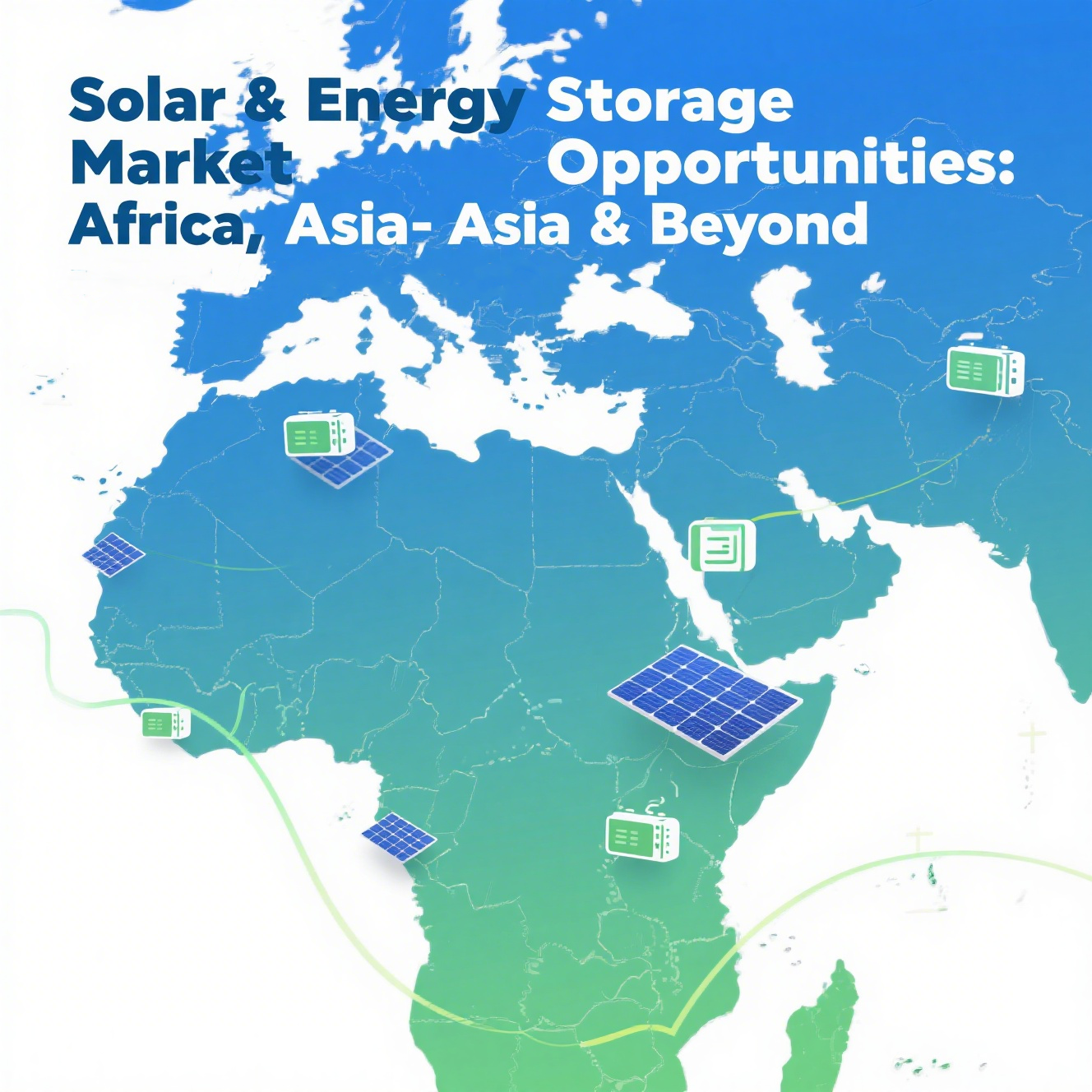
1. African Market
South Africa is the primary market for photovoltaic (PV) and energy storage in Africa, with main demand coming from residential, commercial and industrial, and power station sectors. The profit margin for residential products in the South African market is relatively high, reaching up to 50%. However, due to policy and economic factors, the development of the PV and energy storage markets in other African countries outside South Africa is relatively slow. It is projected that South Africa's PV installed capacity will exceed 10 GW, while the energy storage installed capacity is expected to be around 1.5 GW. The PV and energy storage markets in South Africa are supported by national policies and subsidies, and the demand for energy storage is expected to gradually increase.
2. Southeast Asian and Central Asian Markets
The demand for PV installations in Southeast Asia and Central Asia is surging, especially in countries such as Uzbekistan, Indonesia, Malaysia, Pakistan, and Thailand, with an expected installed capacity of 7 to 12 GW by 2030. Governments in Southeast Asian countries are planning to increase their PV installation targets, which are expected to significantly exceed the original goals. The Southeast Asian PV market is growing rapidly, and domestic companies have begun to regard the Southeast Asian market as a major battleground to maintain growth. Due to the dependence of the power structure in Southeast Asia on traditional energy sources and the severe problem of power shortages, governments are promoting the development of PV and energy storage.
3. Middle East Market
The Middle East PV and energy storage market is growing rapidly, with a pipeline of 45 to 50 GW expected over the next two years. The Middle East market is primarily driven by governments and sovereign funds, with high power demand, mainly concentrated in projects combining energy storage and PV. The Middle East energy storage market faces significant price and cost pressures, and domestic companies are competing by reducing costs and improving quality. It is projected that the cost of energy storage systems can be controlled at around 0.6 yuan per watt, with a gross margin expected to remain above 25% in the future.
4. Investment and Market Outlook
The PV market in Africa, Asia, and Latin America is expected to reach an installed capacity of 600 GW by 2050, with sustained high growth over the next few decades. The Southeast Asian market is expected to maintain high growth over the next decade, especially in the context of large populations, high electricity prices, and poor power infrastructure. The African market has significant growth potential, with an expected PV installed capacity of 400 GW by 2030. The PV penetration rate in the Southeast Asian market is expected to increase from the current single-digit level to 70%, with a market size reaching 900 GW.
5. Market Barriers and Competition
The main barriers in the Southeast Asian market are product cost control and quality assurance. Domestic companies maintain competitiveness by reducing costs, improving product quality, and after-sales service. The Middle East market has higher competitive barriers, mainly in product quality and supply chain management. Domestic companies occupy the market by improving product quality and accelerating project execution speed.
|
Region |
Expected PV Market (GW) |
Expected Energy Storage Market (GW) |
|
Africa |
4 - 5 |
4 - 5 |
|
United States |
40 |
40 |
|
Europe |
18 |
18 |
|
Asia (excluding China) |
10 |
9 |
|
Middle East |
15 |
15 |
|
Latin America |
3 |
3 |
|
China (domestic) |
250 |
- |
Q&A
Q: What is the upper limit of the solar and energy storage market space in Africa, Asia, and Latin America? Where are the market barriers? How is the sustainability of demand?
A: The African market is mainly concentrated in South Africa, where the PV market space is expected to exceed ten GW. The energy storage market in South Africa is also growing rapidly, with an expected grid connection of over 1.5 GW this year and an annual energy storage demand of more than 1 GW in the future. The residential demand in other African countries is also increasing, and the overall energy storage market space in Africa is close to 1 GW. In the Southeast Asian region, countries such as Indonesia, Malaysia, and Thailand are also experiencing rapid growth in the PV market, with an expected early achievement of PV installation targets by 2030 and possible upward adjustments of targets. The Indian market is expected to install more than 40 GW of PV this year, and even with policy adjustments in the coming years, the installation volume will not be lower than 20 GW. The overall PV market in Southeast Asia is expected to be between 60 and 80 GW this year, with a future growth rate not lower than 30%.
Q: What are the reasons for the rapid growth of the Southeast Asian PV market?
A: There are two main reasons for the rapid growth of the Southeast Asian PV market: First, domestic companies are targeting the Southeast Asian market as a major battleground to maintain growth. Second, Southeast Asian countries have long-term power shortages, high power demand, and rising electricity prices. The poor grid infrastructure in Southeast Asian countries and the high expansion costs of traditional power generation make the transition to new energy a solution for power generation and grid issues. Additionally, the high electricity prices in Southeast Asian countries make PV and energy storage economically viable.
Q: What is the outlook for the Southeast Asian energy storage market?
A: The Southeast Asian energy storage market currently has a good outlook, but it is mainly concentrated in the power station and commercial and industrial sectors. The residential energy storage market may slow down. If there are no targeted policies or subsidies from the government, the growth of the residential energy storage market will depend on the push from domestic manufacturers. Overall, there is demand for the Southeast Asian energy storage market, but more policy support is needed.
Q: What are the price and quality requirements for PV products in the Southeast Asian market?
A: The Southeast Asian market is a low-price market, focusing mainly on product prices rather than quality. Generally, as long as a five-year warranty is provided and products can be repaired if they fail within five years, it is sufficient. Therefore, for the Southeast Asian market, it is necessary to launch competitively priced low-cost products while maintaining a certain gross margin. For example, Sungrow has a high market share in the Southeast Asian market because it has a large production capacity in India and Vietnam, with good cost control.
Q: What are the selling prices and costs of PV products in the Southeast Asian market?
A: Taking PV inverters as an example, the selling price of domestic leading enterprises is about 0.12 to 0.13 yuan, while the second tier is around 0.09 yuan. In Southeast Asia, the selling price is approximately between 0.07 to 0.08 yuan. If costs are well controlled, they can be reduced to around 0.05 yuan.
Q: What are the selling prices and costs of energy storage products in the Southeast Asian market?
A: The selling price of energy storage products is around 0.50 yuan and will not exceed 0.55 yuan. In terms of costs, if based on domestic standards, a selling price of around 0.56 yuan would leave little profit. However, by replacing batteries and controlling other costs, the cost can be reduced to around 0.40 yuan, with a selling price reaching 0.50 yuan.
Q: What is the overall size of the Southeast Asian market?
A: The current overall size of the Southeast Asian market is approximately 3 to 4 GW, with the main growth coming from Indonesia and Malaysia. Together, Indonesia and the Philippines can reach about 2 GW, and India is also expected to have several tens of MWh growth this year.
Q: What is the scale of the energy storage market in the Middle East?
A: The Middle East energy storage market is very large, with a significant increase in the recent pipeline. Originally, the pipeline for the next 30 years was estimated to be 25 to 30 GWh, but now the pipeline for just two years has reached 45 to 50 GWh. This growth is mainly driven by government-led energy transition projects. Since last year, more and more Chinese companies, such as Power Construction Corporation of China, Energy Investment Corporation, and Shanghai Electric, have participated, leading to a rapid increase in market demand.
Q: What is the price and cost situation in the Middle East market?
A: Previously, the selling price in the Middle East market was between 1.4 and 1.6 yuan, but now due to intense competition, the price has dropped to around 11 cents (about 0.8 yuan). This price is exclusive of tax. In terms of costs, the Middle East market has high requirements for product quality, such as cell and PCS quality, because the region is characterized by high temperatures and humidity, and projects near the coast also require high corrosion resistance. Despite this, the gross margin in the Middle East market is expected to reach 30%.
Q: Why can the Middle East market maintain a gross margin of 30%?
A: The Middle East market can maintain a gross margin of 30% mainly due to the advantages of the Chinese supply chain. Despite the lower prices, the high supply chain efficiency and good cost control allow the gross margin to remain at a high level. Moreover, even if prices continue to decline in the future, the gross margin is expected to remain above 25%.
Q: What are the main customers and market share in the Middle East market?
A: The Middle East market is primarily composed of seven or eight major customers, who cover approximately 90% of the market demand. These are mainly local power grids and sovereign funds. This indicates a relatively concentrated market with relatively stable demand from major customers. The above Q&A content is compiled based on the meeting records and is hoped to be helpful for your investment decision.
Q: Do domestic state-owned companies have plans to participate in overseas projects?
A: Currently, state-owned companies are relatively cautious about participating in overseas projects and are in the evaluation process, with no confirmed projects yet. Some previous projects, such as several projects by Shanghai Electric, led to early compensation claims, making state-owned companies more cautious now.
Q: What is the specific electricity cost?
A: The lease cost is between 0.36 and 0.42 yuan, which is close to the electricity price in the Middle East, with an average of about 0.44 yuan. Although the electricity price is not a driving factor, it is mainly the result of government-led transformation.
Q: Besides price, what other barriers are there in the market?
A: The barriers in the Southeast Asian market mainly lie in the awareness and control of products. Some companies in Southeast Asia have low gross margins, while DEYE can achieve a gross margin of over 30%. The key lies in cost control and technical control capabilities. With severe product homogenization, competition mainly focuses on product reliability and after-sales service.
Q: What are the special requirements during the tendering process in the Middle East market?
A: There are some special requirements during the tendering process in the Middle East market, such as warranty periods, which are usually proposed by the project owners, while sovereign funds will compile some key points.
Q: What are the main driving factors in the African market?
A: The driving factors in the African market include the large influx of domestic small factories and the rapid growth of market demand. The South African market declined in the first half of the year due to the general election, but it is expected to rebound in the second half. Other African countries are experiencing rapid market growth with quick channel establishment.
Q: What is the planned capacity for energy storage in the African market?
A: The planned capacity for energy storage in other African countries is in the range of several hundred megawatt-hours, potentially reaching 1 gigawatt-hour. The South African market is expected to have a capacity of 2 gigawatt-hours in the second half of the year, with a PV capacity of about 2 gigawatts, and the overall planned capacity could reach 15 to 20 gigawatts.
Q: What are the expectations for electricity demand and PV growth in the African market?
A: By 2030, the PV capacity in the African market is expected to reach 400 gigawatts. Assuming an annual GDP growth rate of 6% and an increase in the share of PV power generation from 30% to 60%, the demand is expected to increase significantly.
Q: What are the current and future expected shares of PV power generation in Southeast Asia and the Middle East?
A: Currently, the share of PV power generation in Southeast Asia is around 2% to 3%, which is still at a relatively low level. It is expected that by 2030, Malaysia and Indonesia will have a PV power generation share exceeding 80%, with the entire Southeast Asian region's PV power generation approaching 900 gigawatts. The share of PV power generation in the Middle East is also relatively low, but the government's guidance is very conservative, and it is expected that the target will be achieved next year. With the region's excellent solar conditions, the cost per unit of electricity may drop below 0.2 yuan, providing strong self-motivation.
Q: What are the market shares of the top three PV and energy storage players in the Middle East market?
A: In the Middle East market, in the PV sector, Sungrow holds nearly half of the market share, at about 47% to 48%; Huawei accounts for 15% to 16%; and Sangon Electric has approximately 10% of the market share. In the energy storage sector, Sungrow is also the market leader, especially when not considering Huawei's 1.3 GWh Red Sea project. BYD and Huawei also hold certain shares, and it is expected that CATL and Envision will also capture part of the market share in the future, but Sungrow will still dominate.
Q: What is the sustainability and competitive landscape of the large-scale and residential energy storage markets in Africa, Asia, and Latin America?
A: In the Africa, Asia, and Latin America regions, the sustainability and competitive landscape of the large-scale and residential energy storage markets differ. The large-scale energy storage market has stronger sustainability and is mainly dominated by large companies such as Sungrow, BYD, and Huawei, with CATL and Envision also expected to participate in the future. The residential energy storage market is more competitive and may experience price wars, leading to unstable profits and market shares for some companies. Overall, the large-scale energy storage market has a relatively stable structure, while the residential energy storage market requires careful selection, focusing on companies that can maintain stable profitability.
Q: What is the main competitive landscape of the PV market in Africa, Asia, and Latin America?
A: In the PV market of Africa, Asia, and Latin America, Sungrow's position is hard to shake, while Huawei, due to its strategic abandonment of the Southeast Asian market, may drop out of the top ten. Sangon Electric is growing rapidly in the Africa, Asia, and Latin America market, adopting a mid-to-low-end strategy and binding with major distributors or channel partners, and is expected to rise to the second position. Jinlong Technology and Goodwe are also improving their rankings, while DEYE and Shouhang, as emerging companies, especially DEYE, due to its early layout, are also expected to grow rapidly.
Q: What is the future development trend of the PV and energy storage markets in Africa, Asia, and Latin America?
A: The development trend of the PV and energy storage markets in Africa, Asia, and Latin America is similar to that in Europe and China, and is expected to go through three stages: ground-mounted power stations, commercial and industrial, and residential. The PV market is expected to have a high annual growth rate and will continue to grow over the next few decades. In the energy storage market, Sungrow and Huawei dominate the large-scale energy storage field, followed by BYD and CATL. In the residential energy storage sector, companies such as Huawei, all-in-one machines, Goodwe, and Growatt have advantages, but the market demand explosion will still take a few years.
Q: What are the demand and profit prospects for residential energy storage in emerging markets?
A: The demand for residential energy storage in emerging markets is expected to continue to grow, especially in Southeast Asia. With a population ten times that of Europe and higher electricity prices and reliability needs, Southeast Asia is expected to maintain high growth over the next decade. The grid structure in Southeast Asia is different from that in China, making it more suitable for the promotion of distributed PV and energy storage, and it is not expected to face policy restrictions similar to those in Europe.
Q: What are the short-term and medium-term growth expectations for the Southeast Asian PV market?
A: It is difficult to accurately predict the short-term growth of the Southeast Asian PV market, but if this year's target can be achieved, next year's growth is expected to at least double. Governments in Southeast Asian countries are adjusting policy guidance, which is expected to further drive market growth.
Q: What are the expectations for global PV and energy storage installations this year?
A: Specific expectations for global PV and energy storage installations this year have not been provided yet, but it can be anticipated that installation volumes in various regions will increase, especially in emerging markets such as Southeast Asia, Africa, and the Americas.
Q: What are the expectations for the global PV and energy storage markets this year?
A: The global PV market this year is expected to reach around 500 GW, while the energy storage market is projected to be between 160 and 170 GW. Specifically, the African PV market is about 4 to 5 GW, the United States about 40 GW, Europe about 18 GW, Asia (excluding China) about 10 GW, the Middle East about 15 GW, Latin America about 3 GW, and China domestic about 250 GW. For energy storage, Africa is about 4 to 5 GW, the United States about 40 GW, Europe about 18 GW, Asia (excluding China) about 9 GW, the Middle East about 15 GW, Latin America about 3 GW, and China domestic.
Q: What is the growth rate of the PV and energy storage markets in the third and fourth quarters?
A: The third quarter usually sees a growth of about 40% compared to the second quarter. The fourth quarter typically doubles compared to the second quarter, and this is the case for both the PV and energy storage markets.
Q: What is the situation in the Ukrainian market?
A: There has always been demand in the Ukrainian market, but channel construction is relatively difficult. Currently, DEYE and Jinlong have entered the Ukrainian market through several channel partners in Europe. If there is support from European channel partners, other companies also have the opportunity to enter this market. The Ukrainian market has great potential and is expected to be comparable to the Polish market.
Q: What is the grid structure and new energy market situation in Southeast Asian countries?
A: The grid structure in Southeast Asian countries is relatively backward, with chaotic power system operation and data management, and it is difficult to build traditional power infrastructure. Therefore, new energy has become the main solution to power generation, transmission, and consumption issues. The deployment of PV in the Southeast Asian market is mainly focused on medium and large-scale power stations, with commercial and industrial accounting for 20% and residential only 10%. In the future, with the implementation of national policies, the residential market is also expected to grow gradually. The energy storage market is currently small in scale, but the PV market is already very large, and it is expected that the PV market will focus on medium and large-scale power stations this year and next year.

For more information on photovoltaic technology, please visithttps://youtu.be/JB56vgBNr6E?si=48ZjW1I9exvg7s-ofor detailed content.