Inverter Sizing for PV System: Engineering Accuracy for Reliable Solar Performance
Designing a photovoltaic (PV) system is not only about choosing panels—it is about ensuring the inverter is sized correctly. Inverter sizing defines the stability, efficiency, and economics of every solar project, from a 5kW residential rooftop to a multi-megawatt utility farm. For manufacturers and project developers alike, proper sizing means fewer failures, higher energy yields, and lower lifecycle costs.
Why Proper Sizing Defines System Reliability
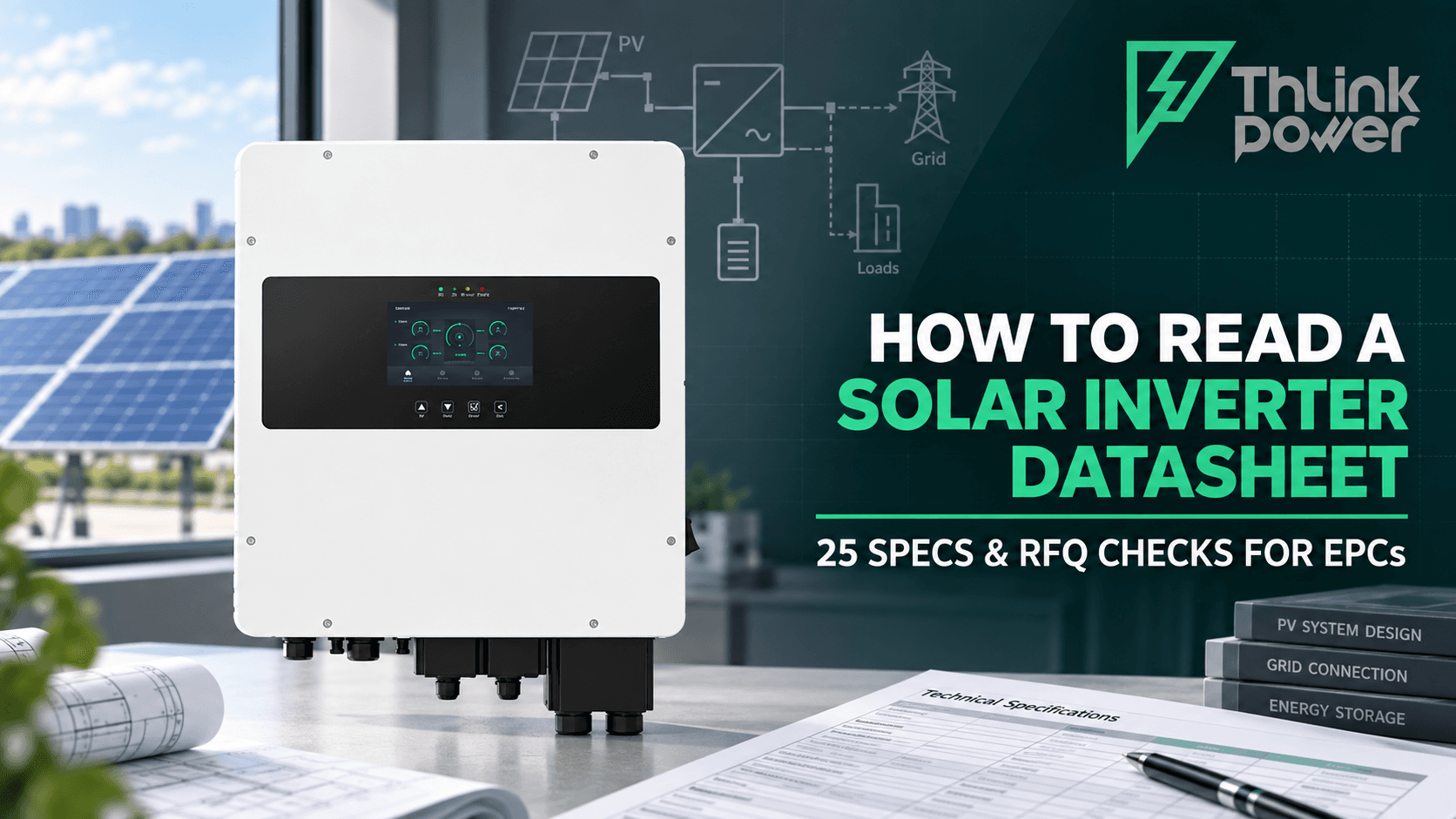
The inverter is often described as the brain of a solar system. Its role goes beyond converting DC to AC power—it regulates power flow, ensures grid compliance, and protects both equipment and end users.
-
Undersized inverters throttle system performance, especially during peak sunshine hours, wasting valuable solar energy.
-
Oversized inverters inflate upfront costs and often run below optimal efficiency, reducing long-term ROI.
-
Well-sized inverters balance load curves, weather patterns, and expansion plans, delivering reliable output year after year.
Studies by the International Energy Agency (IEA) highlight that systems with properly engineered inverter sizing achieve up to 8–12% higher lifetime energy yields, compared to poorly sized ones.
Common Pitfalls in PV Inverter Sizing
Many projects fail not because of solar panels, but because of mismatched inverters. Manufacturers often see these recurring issues:
-
Panel-to-inverter mismatch – Ignoring DC/AC ratio and panel degradation rates, leading to underperformance over time.
-
Neglecting climate impact – In hot climates, inverters derate their capacity; in cold regions, sudden surges can overload equipment.
-
Overlooking expansion needs – Systems planned only for current load without leaving headroom for battery integration or future panel additions.
-
Improper grid consideration – Large-scale projects often fail to meet grid codes when reactive power and voltage ride-through are overlooked.
Sizing Solutions Across Different Project Scales
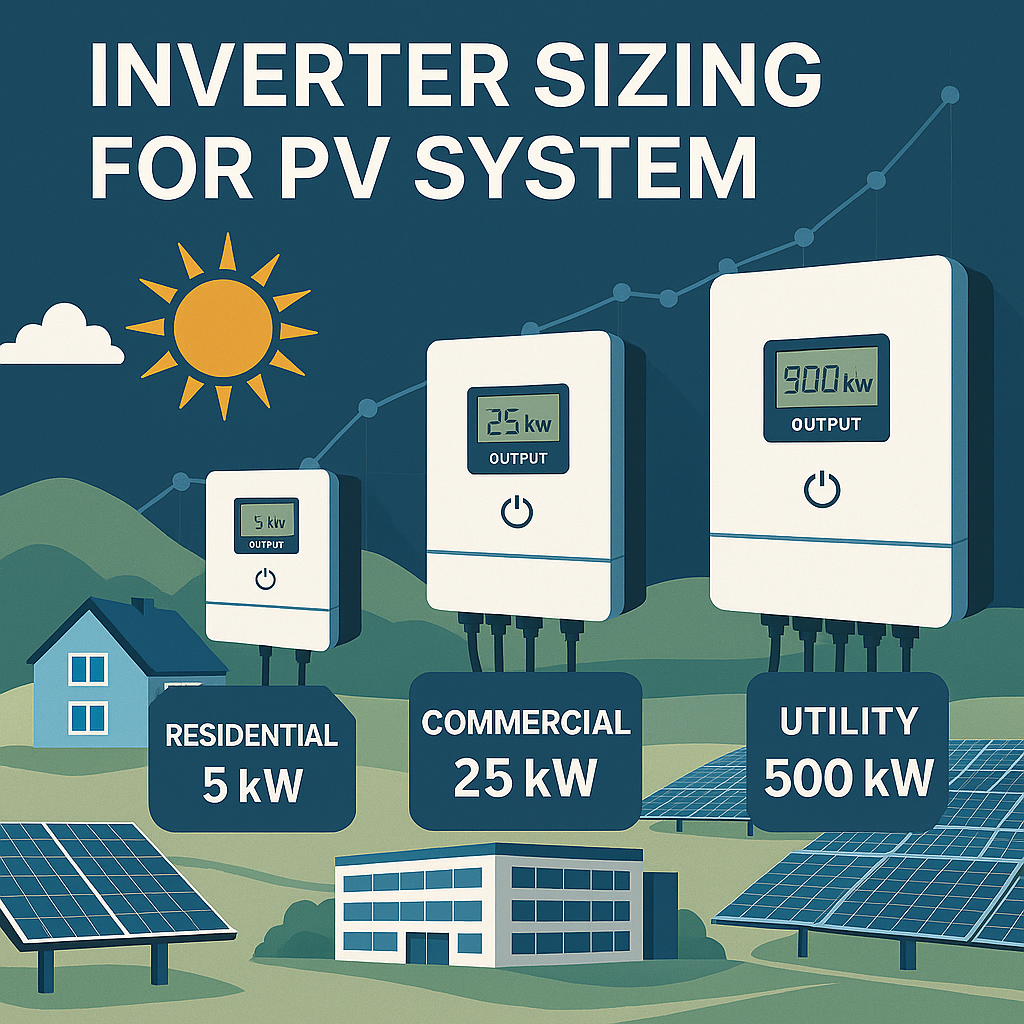
1. Residential Rooftops (3–10kW Systems)
Homeowners need stability at low irradiance in mornings and evenings. A 5kW inverter is common, but correct sizing means accounting for panel tilt, shading, and future battery storage. Smart inverters with MPPT tracking ensure higher yield in partial shading conditions.
2. Commercial Buildings (10–50kW Systems)
Small businesses often face variable load profiles—air conditioning, machinery, or lighting surges. Manufacturers recommend multi-string inverters with modular scalability so that load shifts don’t affect entire systems. Proper sizing also includes factoring in weekend vs weekday consumption.
3. Industrial and Utility Projects (100kW–MW Scale)
Factories, data centers, and utility plants demand robust engineering. High-voltage inverter cabinets, liquid-cooled solutions, and parallel inverter configurations ensure redundancy and compliance with strict grid codes. Manufacturers add remote monitoring platforms, so operators can adjust settings and detect underperformance early.
Manufacturer and Factory-Level Contributions
PV inverter manufacturers are not just suppliers; they are engineering partners. The most competitive factories contribute at every stage:
-
Load curve analysis & simulation – Using digital tools to match inverter specs with real demand data.
-
Flexible product portfolios – Offering string inverters, central inverters, hybrid and battery-ready designs.
-
OEM/ODM services – Allowing partners to tailor branding or integrate niche functions (e.g., for telecom towers or agricultural sites).
-
Durability testing – Ensuring every inverter model survives heat, dust, and humidity in regions like the Middle East, Africa, and Southeast Asia.
Practical Recommendations for Sizing Engineers
-
Use the DC/AC ratio rule of thumb (1.1–1.3), then adjust for climate and load specifics.
-
Factor in panel degradation (~0.5% per year) when projecting inverter life cycles of 10–15 years.
-
Simulate scenarios with and without storage, as battery adoption is rising rapidly in both residential and C&I sectors.
-
Prioritize manufacturers offering remote monitoring, which reduces downtime and service costs.
Engineering Accuracy Secures Long-Term Value
Inverter sizing for PV systems is far more than a calculation—it is a design philosophy. For homeowners, commercial operators, and industrial investors, precise sizing secures energy stability and long-term profitability. For manufacturers and factories, providing expertise and robust product lines cements their role as trusted partners in the global energy transition.
For project-specific consultation and tailored PV inverter solutions, feel free Contact Us .