
How to Size a Solar System for Your Warehouse or Factory
If you run a warehouse, processing unit, or manufacturing shop, switching to solar can drastically reduce your power costs. But there's one question that always comes first:
“How big does my solar system need to be?”
At thlinksolar, we’ve seen many business owners underinvest and suffer power shortages—or overspend on oversized systems with poor returns. Proper sizing isthe foundationof your solar ROI.
Let’s break it down clearly.
Real Problems When Solar Systems Are Sized Wrong
1.System Too Small
-
Frequent inverter overload shutdowns
-
Battery drains too fast
-
Forced reliance on grid or diesel backup
-
Frustration during peak production hours
2.System Too Large
-
Wasted panel output
-
Higher investment for unused energy
-
Payback period stretches beyond 5+ years
-
Unused battery capacity degrades faster
“I bought a 50kW system but only needed 25kW. Half my roof space is wasted.” — Factory owner in Vietnam
Step-by-Step: How to Size a Solar System for Your Business
Step 1: Know Your Daily Energy Use
Check your utility bills or use a meter. What matters iskWh/day, not just power rating.
Example:
If your warehouse uses1200 kWh/month, that’s40 kWh/dayon average.
Step 2: Understand Your Load Profile
Not all energy use is equal. Identify:
-
Peak hours(e.g., 9AM–5PM vs night shifts)
-
High-load equipment(compressors, motors, HVAC)
-
Constant vs intermittent loads
A textile factory with machines running 8am–6pm needs more daytime generation than a warehouse with lights and fans.
Step 3: Estimate Solar Output Based on Location
Sunlight varies by region. Usesolar peak hours (SPH):
| Location | Avg SPH/day |
|---|---|
| Nairobi, Kenya | 5.5 |
| Mumbai, India | 4.8 |
| Manila, Philippines | 5.0 |
| Lagos, Nigeria | 5.2 |
Formula:
Panel Capacity (kW) = Daily Load (kWh) ÷ SPH × 1.2 (buffer)
For 40 kWh/day in Ghana:
→ 40 ÷ 5.2 × 1.2 ≈9.2 kWsolar system
Step 4: Inverter Sizing – Think Ahead
Your inverter must handle:
-
Peak simultaneous load
-
Panel input capacity
-
Future expansion (if planned)
Rule of thumb:
Inverter size ≥ 80–100% of panel array capacity
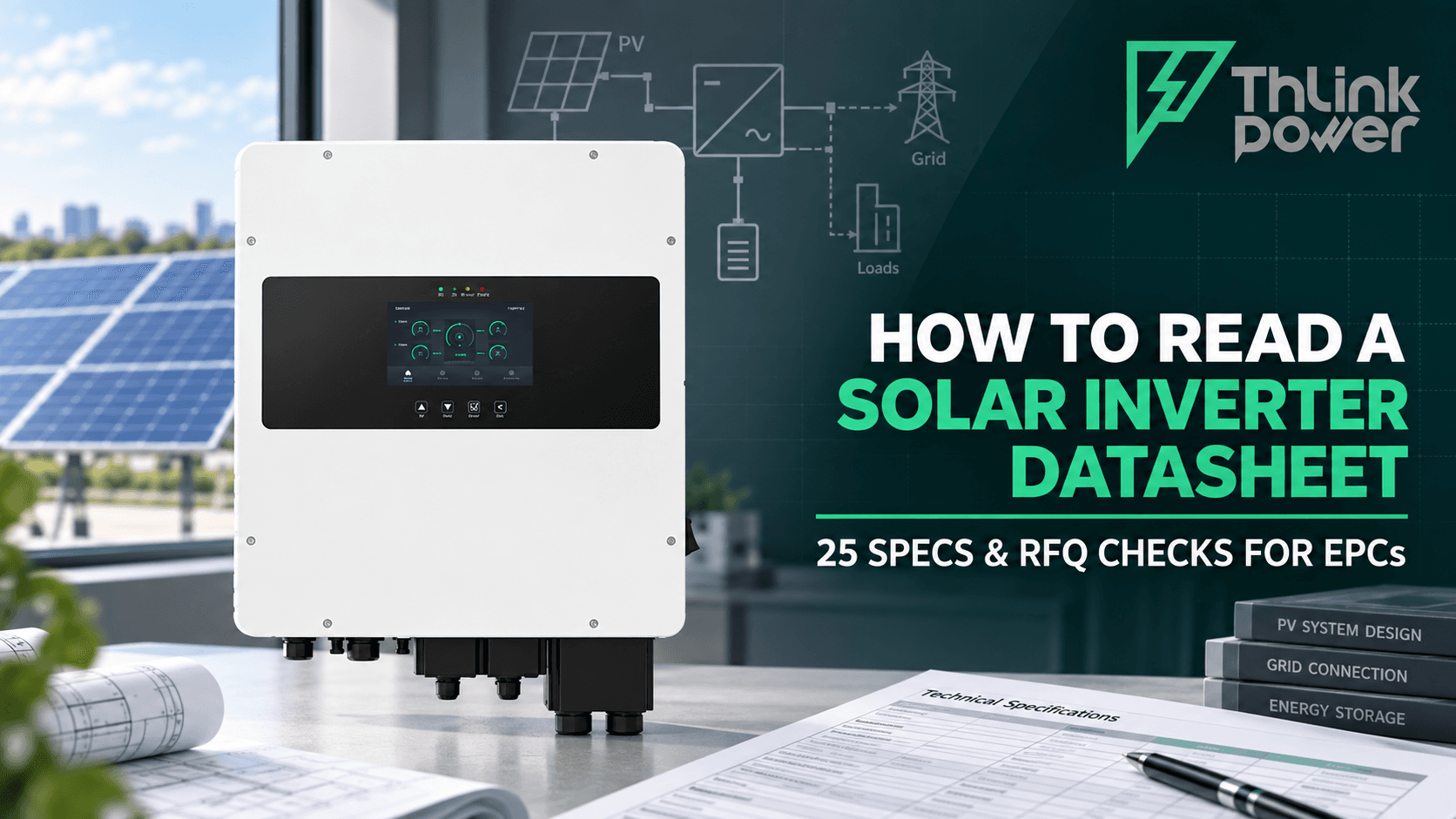
Use ahybrid inverterif you plan to add batteries now or later.
Step 5: Battery Sizing (Optional but Powerful)
If blackouts are frequent or grid tariffs are high, storage is worth it.
Battery sizing depends on:
-
Backup hours required
-
Critical loads only or full load?
-
Daily usage vs emergency-only
Example:
To back up 10 kWh for 5 hours → need 50 kWh battery (or ~42 kWh usable after 80% DOD)
Real Case: Mid-Sized Food Warehouse in South Africa
The warehouse operated 10 cold rooms and lighting from 7AM–9PM.
Their old 5kW system only covered lighting—not refrigeration. They were paying $1,200/month in grid and generator use.
After aproper system redesign by thlinksolar, we implemented:
-
25kW hybrid inverter
-
60-panel array (430W) = 25.8kW
-
30kWh lithium battery bank
-
Smart controller for peak-hour shifting
Results:
-
Generator usage cut by 90%
-
Monthly energy cost down to $440
-
ROI projected at 26 months
Avoid These Common Mistakes
-
Relying on "average consumption" without profiling peak load
-
Ignoring inverter MPPT input limits
-
Using cheap panels with low efficiency in commercial zones
-
Not separating essential loads for battery backup
-
Forgetting to account for equipment upgrades next year
Thlinksolar’s Commercial Sizing Services Include:
-
Free load profiling template
-
Custom PV + inverter + battery matching
-
Rooftop layout plan & cable diagram
-
Long-term expansion plan
-
TUV/CE-certified commercial-grade components
Whether you're building a system for 10kW or 250kW, we engineer it forreliability, cost-efficiency, and growth.
Build It Right the First Time
Sizing your solar system isn’t just a math exercise—it’s a strategic business decision. With the right setup, you protect your operations, lower long-term costs, and avoid regrets down the road.
Explore sizing-compatible hybrid inverter options on ourhomepage.
To get a professional sizing consultation or quote, contact ushere.