Solar Inverter ESS: The Intelligent Link Between Solar Power and Energy Storage
In today’s renewable energy landscape, stability is just as important as generation. A solar inverter ESS (Energy Storage System) bridges that gap—coordinating solar input, battery storage, and grid interaction within one intelligent platform.
For energy developers, system integrators, and industrial users, ESS-ready inverters unlock smarter energy flow, balancing solar generation with real-time consumption.
Thlinksolar has been advancing ESS inverter technology to improve reliability, storage utilization, and scalability in hybrid solar projects worldwide.
How Solar Inverters and ESS Work Together
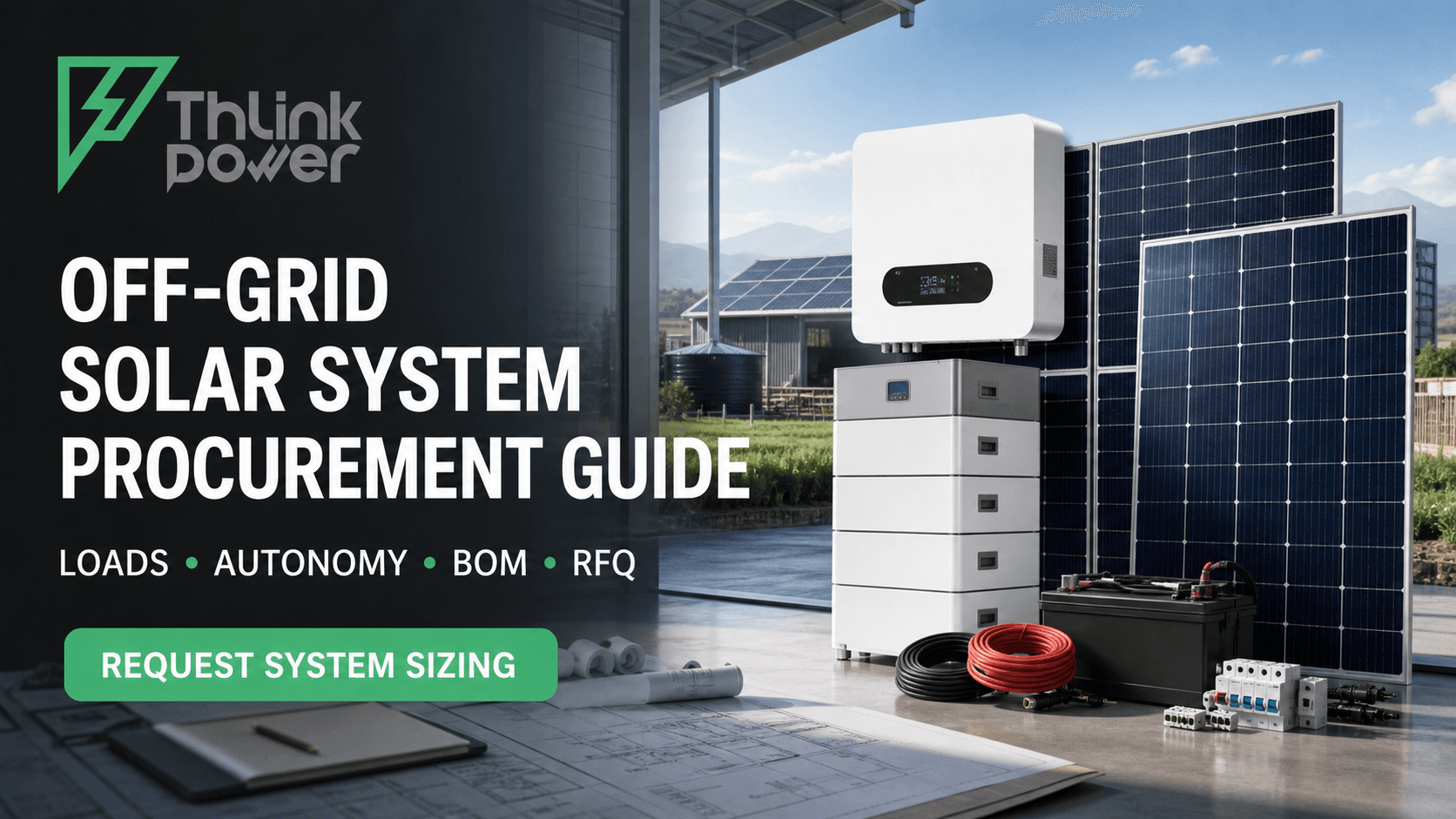
At its core, a solar inverter ESS connects three major energy nodes:
-
Solar array (DC source) – Converts sunlight into electricity.
-
Battery storage (DC buffer) – Stores excess energy for later use.
-
Grid or load (AC output) – Distributes power to consumers or utility lines.
The inverter manages bidirectional power flow—charging batteries when generation exceeds demand and discharging stored power when solar input falls short.
According to the International Energy Agency (IEA), energy storage integration can increase solar self-consumption by up to 60% in distributed systems, making it a cornerstone of future-ready grids.
System Architecture: A Smart Energy Hub
The solar inverter ESS acts as the “brain” of the hybrid system, with hardware and control logic enabling multiple operational modes.
System Configuration Overview:
| Component | Function | Connection Type |
|---|---|---|
| Solar Panels | Primary DC generation | DC input |
| Battery Bank | Energy storage buffer | DC bidirectional |
| Inverter | Power conversion & control | DC/AC |
| Grid | Backup & export interface | AC |
| Load | Consumption circuit | AC output |
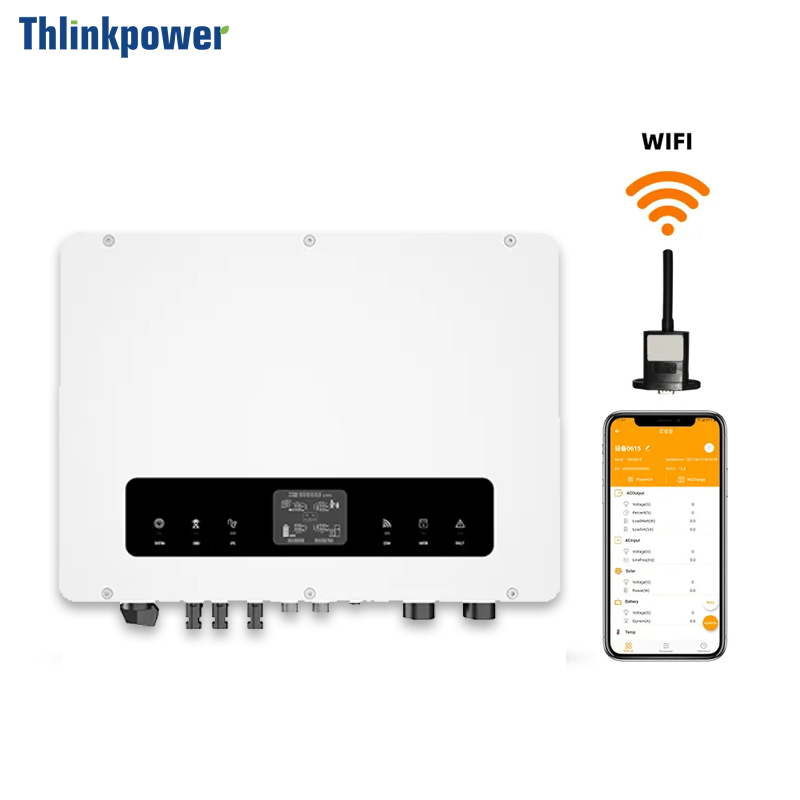
Thlinksolar’s ESS-ready models integrate bidirectional DC-DC converters and intelligent MPPT controllers, ensuring seamless energy routing between all components.
Control Logic: Intelligent Power Flow
Inverter control systems use real-time algorithms to determine the optimal power direction and balance:
-
Daytime: Prioritize solar to supply loads and charge batteries.
-
Evening: Discharge stored energy to reduce grid reliance.
-
Peak Tariff Hours: Offset utility costs via time-of-use optimization.
-
Blackout: Automatically switch to backup battery mode with zero interruption.
With Thlinksolar’s DSP and MCU co-control architecture, switching times are under 20 ms—imperceptible to connected equipment.
The National Renewable Energy Laboratory (NREL) reports that inverter-based ESS control can reduce overall grid load variance by 25%, improving network reliability.
Hybrid Operation and Grid Interaction
Unlike traditional inverters, the solar inverter ESS operates in hybrid mode—combining grid-tied and off-grid functions.
It can export excess power to the grid when full and isolate itself when grid conditions fluctuate.
Hybrid control firmware supports:
-
Grid-forming and grid-following modes
-
Reactive power compensation
-
Anti-islanding protection
-
Voltage and frequency regulation
These features enable compliance with modern smart grid standards such as IEC 62109 and IEEE 1547.
Benefits of Solar Inverter ESS Integration
| Feature | Description | Real-World Benefit |
|---|---|---|
| Energy Autonomy | Independent power operation | Reduces dependence on unstable grids |
| Efficiency | Intelligent DC-AC conversion | 97.6% peak conversion rate |
| Cost Savings | Off-peak charging and load shifting | Cuts utility costs for commercial users |
| Scalability | Modular design supports parallel units | Suitable for residential to MW-scale projects |
| Reliability | Seamless switchover and smart protection | Zero power interruption |
Through ESS integration, Thlinksolar enables both small and large systems to operate like flexible microgrids—adapting instantly to changes in demand or weather.
Industrial and Commercial Applications
ESS-ready inverters are now standard in sectors where uptime and load balancing are mission-critical:
-
Factories: Smooth power supply for continuous production lines.
-
Data centers: Uninterrupted backup during grid outages.
-
Telecom base stations: Hybrid systems maintaining network reliability.
-
Smart buildings: Automated energy distribution via IoT control.
The International Renewable Energy Agency (IRENA) highlights that commercial ESS deployments using hybrid inverters can improve power quality by 35% and reduce diesel generator runtime by over 50%.
Future Trends in Solar-ESS Integration
With global energy storage capacity expected to exceed 700 GWh by 2030, the role of solar inverter ESS systems will continue to expand.
Emerging innovations include:
-
AI-based load prediction and dispatch
-
Cloud-based inverter fleet management
-
Vehicle-to-grid (V2G) integration
-
Solid-state battery compatibility
These advancements align with Thlinksolar’s focus on scalable, grid-interactive, and resilient energy architectures that redefine how renewable energy is managed and stored.
Conclusion
The solar inverter ESS is more than a piece of equipment—it’s the core intelligence of modern hybrid power systems. By synchronizing solar generation, energy storage, and grid connectivity, it delivers stability, flexibility, and independence.
Thlinksolar continues to innovate in this space, empowering businesses and communities with reliable, adaptive, and high-efficiency energy control.
Explore Thlinksolar’s full range of hybrid and ESS-compatible inverters at Thlinksolar.com or reach our engineering support team via Contact Us.