Hybrid vs Off‑Grid vs Grid‑Tied Inverters: What’s Best for SMEs in the Philippines?
SMEs across the Philippines—whether in Metro Manila, Cebu, or provincial cities—need reliable power and efficient energy use. Choosing theright inverter type(hybrid, off‑grid, or grid‑tied) is a critical decision that affects cost, system resilience, and ROI. This guide helps business owners make the right choice based on real-world needs.
Grid‑Tied Inverters: Best for Stable Power and Low Initial Cost
What It Is
A grid‑tied inverter connects your solar system directly to the utility power grid, exporting unused energy and reducing electricity bills through net metering.
Pros
-
Lowest upfront cost—no battery needed
-
Simple setup and maintenance
-
Ideal for daytime business loadsin urban areas with stable power
Cons
-
No backupduring power outages
-
Limited export capacity in some regions
-
ROI depends entirely on daytime consumption and rate policies
Ideal For
Retail stores, offices, or workshops in well-served grid zones without frequent brownouts.
Off‑Grid Inverters: Total Independence, But High Investment
What It Is
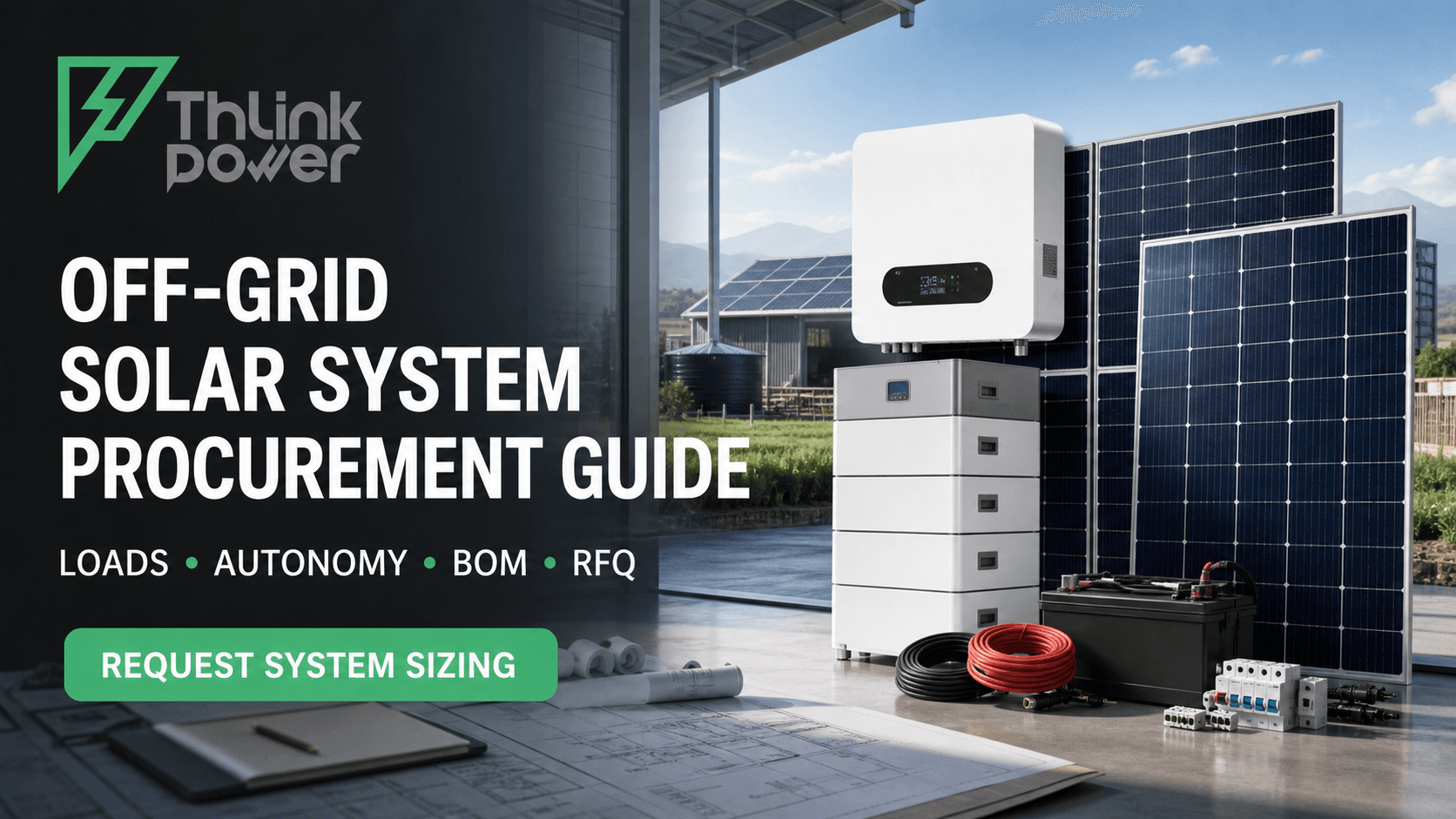
Off‑grid systems include solar panels, battery storage, and an inverter that operates independently of the grid.
Pros
-
100% power independence—no utility required
-
Customizable for remote areas with no grid access
Cons
-
High upfront costdue to large batteries
-
Requires careful load planning to prevent outages
-
Maintenance-heavy, especially for battery care
Ideal For
Remote manufacturing sites, rural clinics, or island SMEs with no reliable grid access.
Hybrid Inverters: The Middle Path for Reliability and Flexibility
What It Is
Hybrid inverters combine solar, battery, and grid-tied capabilities, offering automatic switchover during outages and net metering when the grid is available.
Pros
-
Uninterrupted operationsduring blackouts
-
Savings from grid and solar mix
-
Scalable—add batteries or panels in phases
-
Supportsload prioritization(e.g., lighting, POS, refrigeration)
Cons
-
Higher initial costthan grid‑tied setups
-
Slightly more complex installation
-
Needs compatible battery and panel sizing
Ideal For
Philippine SMEs that experience frequent outages but want the flexibility to grow and save on energy costs.
Side‑by‑Side Comparison
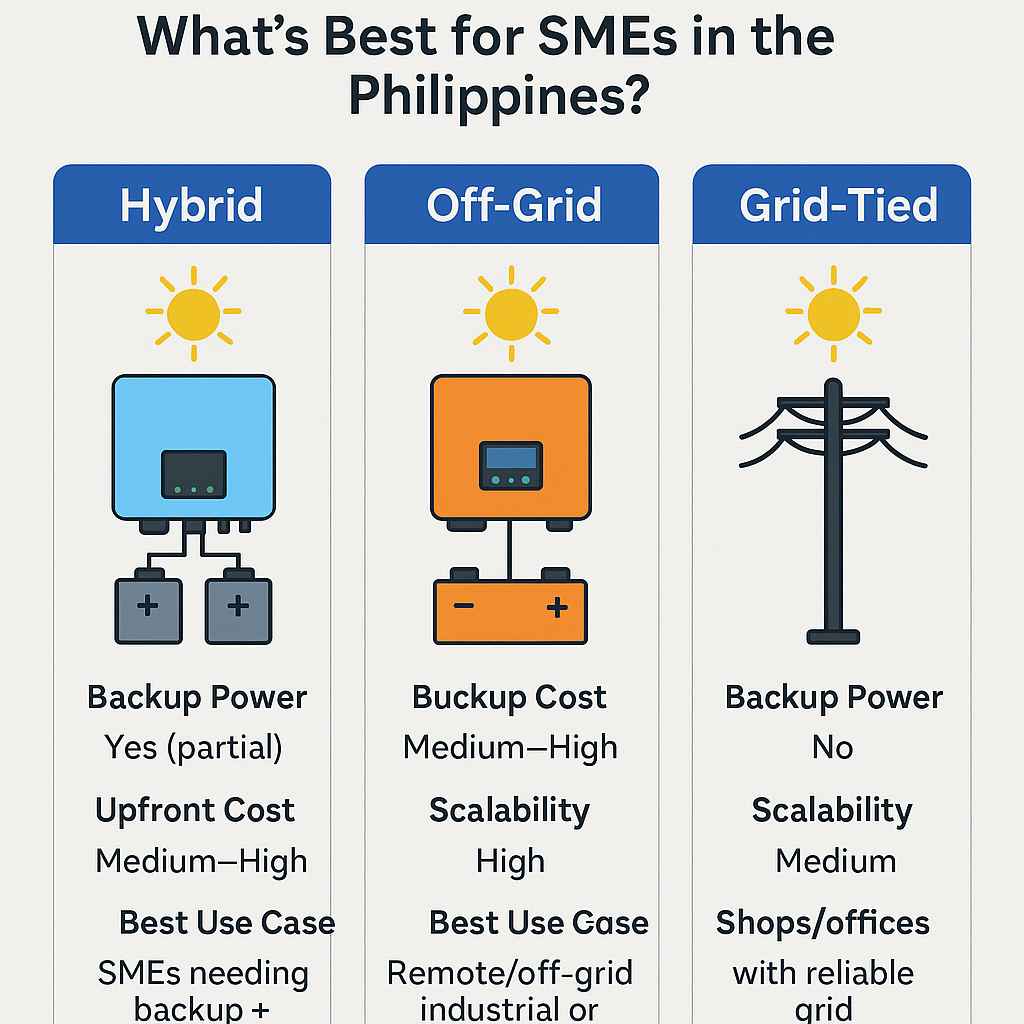
| Inverter Type | Backup Power | Upfront Cost | Scalability | Best Use Case |
|---|---|---|---|---|
| Grid‑Tied | No | Low | Medium | Shops/offices with reliable grid |
| Off‑Grid | Yes (full) | High | Low | Remote/off‑grid industrial or rural sites |
| Hybrid | Yes (partial) | Medium–High | High | SMEs needing backup + energy savings |
Make the Right Choice: A Step‑by‑Step Checklist
-
Assess power reliability
If you face 3+ outages/month, grid‑tied alone isn’t enough. -
Measure your load
Document peak and average kW demand to estimate inverter and battery specs. -
Evaluate budget and ROI
Hybrid systems typically recover cost in 3–5 years thanks to consistent utility savings. -
Plan for growth
Choose systems (hybrid or grid‑tied with battery path) that allow scaling. -
Check compliance and service
Ensure certifications (CE/TÜV) and after-sales support—thlinksolar has Philippines-based partners.
Hybrid Inverters Offer the Best Fit for Philippine SMEs
For most small businesses in the Philippines,hybrid inverters strike the optimal balance—providing backup during outages, energy savings during the day, and room for future expansion. With proper system sizing and installation, SMEs gain resilience, cost-efficiency, and peace of mind.
To find a hybrid, off‑grid, or grid‑tied solution tailored for your SME, visit ourhomepageorcontact usto schedule a free system design consultation.