Commercial Solar System D
Send Your Load and Site Data for a Commercial Solar Proposal
esign and Cost: A Buyer’s Working Guide
Two suppliers can study the same factory and send back systems that differ by hundreds of kilowatts. One may size against annual electricity use. Another may focus on the noon demand and export limit. A third may have counted every square metre on a drawing, including walkways and shaded roof edges. Their prices are not yet competing answers; they are answers to different questions.
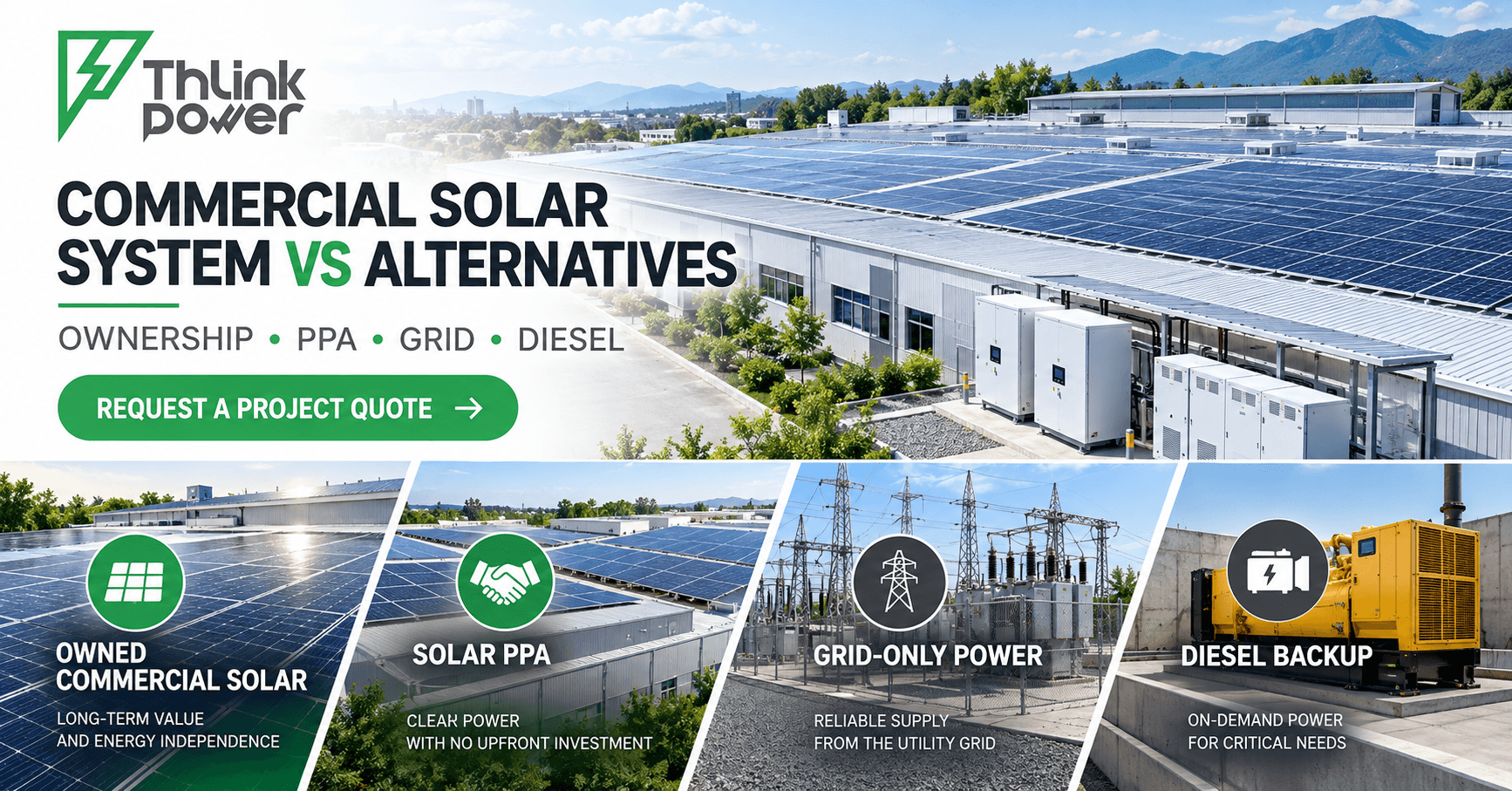
The price question can wait one page. First, give the commercial solar system a job. Perhaps it should cut purchases during the day. Perhaps it must hold a demand peak below a limit, keep a small group of loads alive, serve a site with no utility, or support an internal energy target. Those are different assignments. They will not produce the same array, inverter arrangement, battery schedule, controls, or contract price.
The work below starts with an electricity bill and ends at handover. Factory owners, developers, EPC buyers, importers, and distributors can use it to make competing quotations speak the same language. Site engineering and local approval still belong to the qualified people responsible for them. What this guide offers is a map of the information, checks, and pauses that belong between the first enquiry and a signature.
Start with a sentence that describes the business problem
Write one sentence before opening a product catalogue. For example: “Reduce grid purchases during the plant’s 07:00–18:00 production shift without exporting power.” Another project may say: “Keep the cold room, controls, lighting, and communications running for four hours when the grid fails.” A remote operation may need fuel savings while keeping a generator available for long cloudy periods.
That sentence becomes a design filter. A grid-tied system built for self-consumption can be simple and economical, but it normally shuts down when the grid is absent unless a permitted backup architecture is installed. A battery can supply backup, yet its energy rating alone does not tell you whether it can start motors or carry the required power. An oversized PV array may produce more annual energy while exceeding a site’s export permission at midday.
Now decide how success will be judged. One owner may watch self-consumption; another watches the monthly peak. Elsewhere, the important numbers are outage hours covered, litres of fuel avoided, or years to recover the investment. Rank the measures. Calling all of them “top priority” merely postpones the argument until equipment has already been chosen.
Record constraints next. These include budget, available roof or land, structural limits, interconnection capacity, export cap, operating hours, target completion date, and any required brands or approvals. A constraint that is discovered after equipment selection is usually expensive.
Build a project data pack that an engineer can use
A year of utility bills is the starting folder, not the finished load study. Add meter exports if the site can provide them. Values recorded every fifteen minutes reveal the morning start-up, the lunch dip, the night shift, and the brief peak that a monthly total hides. If interval data is unavailable, collect whatever operating logs can rebuild the daily pattern and label the remaining uncertainty.
Keep two columns in the discussion: kWh and kW. The first accumulates energy; the second catches a moment. A plant can use a great deal of energy after sunset, when PV contributes nothing. It can also set its billed demand during a ten-minute production start. The proposal must say which column it is trying to change.
Give the designer something better than a pin on a map. A recent roof plan or land survey should travel with photographs and notes on parapets, vents, drains, skylights, trees, neighbouring buildings, access, and fire paths. Add the roof age, waterproofing type, available structural drawings, and any replacement plan. In a second folder, place the electrical single line, transformer and switchboard data, protection details, spare ways, meter arrangement, grid characteristics, and the connection point being considered.
Then record operating facts that drawings miss. Does the factory stop on Sundays? Will a new production line be added? Are large motors started together? Does dust from the process settle on the roof? Can forklifts reach battery cabinets? Is the sea close enough to influence corrosion requirements? Will the owner permit work only during shutdown weeks?
A concise data pack might contain:
| Data group | Useful inputs | What it changes |
|---|---|---|
| Consumption | Bills, interval data, production calendar | PV size, self-consumption, financial model |
| Tariff | Energy rate, demand charge, time bands, export value | Dispatch priorities and savings |
| Site | Drawings, coordinates, shade, access, environment | Layout, yield, equipment protection |
| Structure | Roof type, age, loading, wind and snow basis | Mounting method and usable area |
| Electrical | Single line, transformer, switchboard, fault level | Connection and protection design |
| Resilience | Critical loads, start current, outage duration | Inverter mode, battery power and energy |
| Commercial | Budget, schedule, finance, procurement boundary | Phasing and quotation scope |
For an initial solar system design, unknowns are acceptable if they are labelled. “Roof capacity to be confirmed by structural engineer” is better than silently assuming that capacity is unlimited.
Choose the architecture before choosing the product models
Do not picture on-grid, hybrid, and off-grid as small, medium, and large versions of one box. Their behaviour changes precisely when the site is under stress: the grid disappears, voltage wanders, or stored energy runs low.
On-grid: best when daytime consumption is the main target
A conventional grid-connected array follows the grid and supplies site loads while solar is available. Surplus may be exported if the utility and local rules allow it. When the grid fails, anti-islanding protection normally stops the inverter. Buyers sometimes discover this only after purchase because “solar power” was mistaken for “backup power.”
For self-consumption, compare generation with the load at the same time of day. A factory with steady daytime operation can absorb a large share of PV output. A warehouse with a small daytime base load and heavy evening charging may export more than expected. If export is prohibited, the proposal needs a control method, meter location, response logic, and discussion of how often production may be curtailed.
Hybrid: useful when storage has a defined job
A hybrid project combines PV with batteries and controls. The storage may shift midday energy into an evening tariff period, shave a demand peak, smooth a weak grid, or maintain selected loads. These duties can conflict. Holding a battery full for backup leaves less room for midday solar; cycling it for savings may reduce the reserve available when an outage begins.
State the priority order and reserve policy. Identify which loads sit on the backed-up bus and which remain off during an outage. Confirm whether a transfer causes interruption and whether sensitive processes tolerate it. If a generator is present, describe its start logic, minimum loading, synchronization, and the party responsible for integration.
Off-grid: begin with the worst operating period
An off grid solar system must balance loads, solar resource, batteries, and usually a backup source without leaning on a utility. Average annual conditions are not enough. Examine the lowest-sun season, consecutive poor-weather days, growth in demand, and maintenance reality.
List every load, its running power, starting surge, hours, duty cycle, and whether it can be delayed. Decide which service can be shed when energy is scarce. A remote pump, telecom shelter, clinic, and island lodge require different reliability rules even at the same daily kilowatt-hours.
Size the PV array against time, space, and permission
Begin with an hourly or sub-hourly model when data allows. Place a preliminary PV production shape beside the site load. The area where production sits below load can be self-consumed. The part above load must be exported, curtailed, stored, or avoided through a smaller array. This picture is more useful than dividing annual consumption by annual solar yield.
The simulation should state its weather source, orientation, tilt, shading assumptions, temperature losses, soiling, mismatch, wiring loss, inverter efficiency, availability, and degradation assumption. Ask for the loss table. A single yield number without its ingredients is difficult to review.
DC-to-AC ratio is a design choice, not a universal constant. More module capacity on a given inverter can improve its utilization during mornings, afternoons, and weaker seasons. It can also create clipping during strong conditions. The right ratio depends on climate, orientation, inverter limits, export rules, tariff, and the owner’s economic goal. Ask the designer to show the expected clipping rather than arguing from a rule of thumb.
Usable roof area is smaller than gross roof area. Remove setbacks, fire paths, drains, skylights, vents, shaded zones, weak sections, maintenance access, and areas reserved for future plant. Then test row spacing, module dimensions, clamp zones, and cable routes. A layout made from raw square metres tends to shrink later.
For multiple roof faces, model them separately. East-west arrays spread generation across the day and may suit self-consumption better than a single noon peak. Different tilt and shade patterns may justify separate MPPTs. The proposal should show how strings are grouped rather than hiding all surfaces in one total.

Select modules by fit, evidence, and lifecycle work
Headline wattage is only one module characteristic. Width, length, weight, current, voltage, glass construction, frame, cable, connector, clamp area, and packing density affect the project. A higher-power format may reduce module count while demanding different handling or leaving awkward roof strips.
Ask the solar panel manufacturer for the exact data sheet and drawing proposed for the job. Match the model to certificates and warranty. Check electrical values against string design at the site’s hot and cold temperatures. Check dimensions and loads against the mounting calculation.
For harsh environments, describe the exposure rather than requesting every test logo. Coastal salt, farm ammonia, desert dust, high humidity, or aggressive industrial deposits may change material choices and cleaning plans. The supplier should explain which evidence applies to the proposed construction.
Agree before delivery on what will be checked and saved: appearance, flash records, EL images if required, serial files, packing, and the trace back to production. Repeat orders need one more layer. A solar panels wholesale buyer should know the approved alternatives, the notice rule for a change, and the label revision attached to each batch.
Turn past the warranty cover. Who is the legal issuer? When does coverage start, where does it apply, what is excluded, what proof is required, and what remedy is offered? A finance model that stretches across decades depends on those small paragraphs, not on the largest number in the headline.
Choose the inverter around the grid and the array
The inverter sits between the DC field and the site’s electrical system. Its selection must fit both.
Begin on the DC side with the proposed string, then test it at the coldest design temperature. Move through the MPPT range, tracker count, current on each tracker, short-circuit ceiling, and connector arrangement. High-current modules have made some familiar shortcuts obsolete. Work from the manual carrying the exact model and revision.
Cross the inverter to AC and check the actual point of connection: voltage, frequency, phases, output current, power-factor range, harmonics, and protection. The utility may also ask how the plant contributes to a fault, sees islanding, interacts with the transformer, and follows a plant controller. Put those questions into the interconnection study rather than guessing from the nameplate.
Next, stand where the inverter will stand. Is the wall in direct sun? Does dust collect there? Can hot air escape, can a technician open the covers, and will noise disturb anyone nearby? Altitude, humidity, salt, and ambient temperature also belong in the check. Nameplate output may not survive a cramped, hot corner.
From the solar inverter supplier, collect the efficiency curve, certificates, warranty, service and replacement route, firmware policy, communication details, and commissioning sheet. Then sketch the monitoring path. Which values reach the owner? Who receives alarms? Where is the data hosted, can it be exported, and what remains visible when the internet link drops? These are operating questions, not decoration for a dashboard.
String and central architectures each have uses. A string arrangement may provide granular MPPT and easier unit replacement across varied roofs. A central design may suit a large, uniform ground plant. Compare layout, cable work, redundancy, maintenance skills, spares, and local service rather than selecting by project size alone.

Engineer battery storage from the duty cycle
Battery offers tend to lead with kWh. Ask about kW before accepting the picture. A cabinet labelled 500 kWh may still be unable to carry a 500 kW motor. Write down continuous power, permitted overload and its duration, starting demand, usable energy, the working state-of-charge window, and the reserve that must remain when backup matters.
Draw a day in the battery's life. A peak-shaving battery wakes when demand crosses a line; note that line, the length of the peak, and how often it returns. A time-shifting battery follows tariff windows, so place the expected charge and discharge on the clock. Backup needs a different sketch. Put critical loads on a timeline and decide which start at once, which can wait, and which are dropped if the outage runs long.
Choose the battery location while the drawing still has room to move. Walk the access route. Check working clearances, foundation or floor capacity, heat removal, drainage, communications, and emergency access. Fire strategy and local rules need the appropriate engineer and authority at the table. A certificate on the cabinet does not approve the finished room or container site.
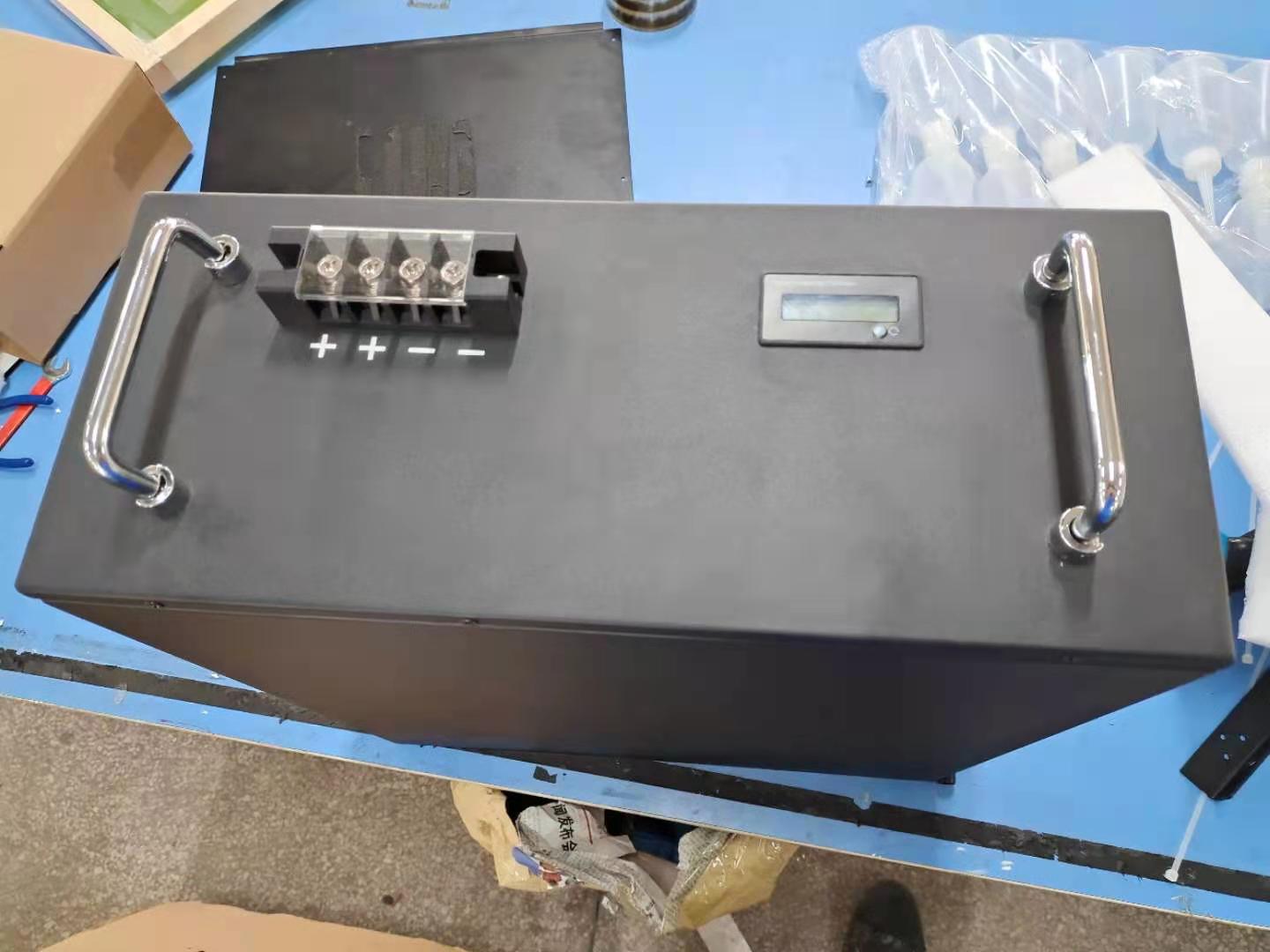
The solar battery supplier should explain what “usable” means for the proposed chemistry and temperature. Request the power curve, working state-of-charge window, throughput and calendar limits, warranty conditions, protective functions, and commissioning record. Name the inverter and firmware. Then name the integrator who will connect battery management to the meter, generator, fire controls, and site SCADA. Otherwise, every vendor can assume that interface belongs to someone else.
Compare lifecycle service, not only purchase price. Discuss remote diagnostics, spare parts, module replacement, firmware support, capacity testing, and the evidence required for a warranty claim. If the proposed product will be discontinued, how will a compatible replacement be handled?
Treat mounting and balance of system as design work
The mounting structure transfers wind, snow, equipment weight, and maintenance loads into the building or ground. It also touches the waterproofing system and defines how modules are clamped. A catalogue picture cannot answer those responsibilities.
Send the solar mounting system supplier the module drawing and real site information, not a generic roof photograph. Location, layout, roof or soil build-up, design-code basis, and exposure all matter. The reply should carry calculations and connection drawings alongside material, fastener, corrosion, and tolerance details. Only the responsible structural engineer can say what the existing building will accept.
A metal roof needs its exact profile, sheet thickness, purlins, and fastening method on record; the roof warranty may add another condition. A membrane roof shifts attention toward load spreading, penetrations, drainage, and the party who restores waterproofing. Ballast avoids some holes but adds weight and never removes the need for wind analysis. On the ground, soil, grading, water flow, erosion, and foundation behaviour replace the roof questions.
Give the balance of system its own schedule. Start at the module connector and follow the route to the switchboard, naming cable, trays or conduit, isolation, fuses or breakers, surge protection, earthing, meters, labels, and communications on the way. Add combiners, weather instruments, and spares where the design uses them. Every row needs a rating, standard, enclosure, quantity, and either a named product or a controlled equivalent.
Connector discipline is particularly important. Mating connectors from unverified families can create reliability and warranty problems even when they fit physically. The design and installation records should identify the approved pair, tools, preparation method, and inspection.

Understand what the quoted cost includes
There is no useful single answer to “What is commercial solar system cost?” until the scope and site are known. A price per watt may include equipment only, delivered equipment, full EPC work, or an even wider package with permits, grid studies, financing, and long-term service.
Ask for equipment to be separated from project work. The equipment side covers modules, inverters, batteries where used, mounting, and electrical BOS. The project side begins with surveys and engineering, then moves through approvals, factory or third-party tests, packing, freight, insurance, and local handling.
Site work should stand on its own. Access, lifting, temporary works, labour, supervision, safety measures, switchboard changes, grid application, meter work, protection tests, commissioning, and training are not one invisible allowance. Finish the breakdown with monitoring, communications, spares, warranty service, maintenance options, taxes, currency basis, validity, milestones, and exclusions. A buyer should be able to point to each boundary without asking what the word “complete” meant that week.
Before ranking, move the offers onto common ground. Use one currency date and one delivery point. Align the Incoterm, equipment boundary, warranty, energy basis, and schedule. A total that omits the structural review or medium-voltage work cannot sit honestly beside a total that pays for both.
Look behind the totals at quantities. Survey work may change cable metres, trench length, reinforcement, switchgear alterations, crane time, or the connection route. Mark what remains provisional and agree on unit rates. Later evidence can then change a quantity without turning the whole contract back into a blank sheet.
Lifecycle analysis needs transparent assumptions. Record energy tariff and escalation, export value, degradation, availability, maintenance, inverter replacement, battery augmentation or replacement where relevant, curtailment, financing, tax treatment, and discount rate. Run sensitivities. A payback shown to one decimal place is not accurate if the roof capacity and tariff path are still unknown.
A capable solar equipment supplier should state its boundary clearly. When several product families appear on one quotation, ask who checks their interfaces and who supports the buyer during commissioning. Bundled supply can simplify communication, but only if responsibilities are written.
Request a design package another engineer can review
A proposal ought to leave enough of a trail for another engineer to follow. At concept stage, that trail begins with the design basis and open assumptions, then passes through the layout, equipment schedule, energy estimate and losses, preliminary single line, and architecture note. As the job matures, calculations, cable schedules, settings, structural details, communications, installation drawings, method statements, test plans, and commissioning sheets join it. The documents grow with the decision risk.
Revision control matters. Put a number and date on drawings and schedules. When the module, inverter, roof area, or connection point changes, update the related documents rather than allowing several conflicting versions to circulate in email.
Ask for a deviations list. The supplier should identify every place where the proposal differs from the RFQ, including model, quantity, standard, warranty, schedule, or commercial scope. A silent deviation is much harder to manage than an openly discussed one.
For energy estimates, request monthly production, expected self-consumption or export, clipping, curtailment where relevant, and the loss assumptions. For storage, request an example operating day and state-of-charge profile. For backup, request a power-flow diagram for normal grid operation, outage transition, battery depletion, generator operation, and grid return.
These documents make technical review possible before equipment is ordered. They also become the reference for testing and handover.
Build commissioning and handover into the purchase order
Commissioning is not simply switching the inverter on. Define the tests while the contract is still being negotiated. The scope may include visual and torque inspection, polarity, insulation resistance, continuity and earthing, string measurements, inverter setup, protection tests, meter checks, communication checks, emergency-stop or shutdown functions, export control, battery functional tests, generator interaction, and monitored operation.
Name the person bringing each instrument and the person witnessing each result. Put the acceptance value on the form, with a place for defects and closure. Batteries and controls must also be tested as a system. Let the grid disappear and return. Create a demand peak, a low state of charge, a lost communication link, and an alarm. The owner needs to see the plant respond, not merely a row of powered devices.
At handover, build an index before filling the folder. File the approved as-builts, data sheets, serials, test results, settings, firmware, monitoring access, warranties, certificates, manuals, spares, training record, maintenance plan, and contact route behind it. Keep a controlled copy in an owner-managed location. One employee's inbox is not an archive.
Train the operating team on ordinary questions. Which alarms require an immediate shutdown? Who may reset a trip? How is an inverter isolated? What battery conditions require emergency action? How are tickets opened, and which screenshots or measurements should be attached? Good training shortens the first real incident.
Keep design decisions from disappearing between teams
Commercial solar projects cross several desks. The facility team knows operating restrictions. Finance owns the tariff and investment rule. The structural engineer understands the roof. The electrical designer owns protection and connection. Procurement negotiates the order, while an EPC or installer eventually has to build it. A decision made in one meeting can easily vanish before it reaches the person affected.
Use a short decision register. For each open point, record the question, options, owner, due date, chosen answer, reason, and documents that must change. A decision such as “reserve the north roof for future HVAC” should appear in the layout revision, energy model, equipment quantity, and price. If it lives only in meeting notes, one of those items will remain wrong.
Create the same visibility for assumptions. Early proposals may assume a sound roof, an available breaker, unrestricted working hours, or permission to export. Give every assumption an expiry point: structural survey, switchboard inspection, construction plan, or utility reply. When evidence arrives, close or replace it. An assumption that survives quietly into the contract becomes a dispute waiting for a date.
Interface ownership needs names, not departments. Who provides the revenue meter signal to the export controller? Who confirms battery-to-inverter communication? Who designs the roof penetrations and protects the waterproofing warranty? Who supplies settings to the protection-testing engineer? Who provides internet access for monitoring? Put each interface beside a responsible party and required date.
Manage changes through their consequences. A new module may alter string length, clamp spacing, pallet count, lifting plan, certificate scope, and energy forecast. A different inverter may alter the single line, cable size, protection settings, monitoring, and grid submission. Approving the product name alone is not enough; the related documents need revision and another check.
Hold one design freeze before major equipment is released. The freeze does not claim that construction will never uncover a detail. It confirms that the load basis, architecture, principal equipment, layout, connection point, protection concept, battery duty where used, and commercial boundary are consistent enough to purchase. List any controlled exceptions.
None of this administration is glamorous. It does, however, prevent cancelled orders, emergency freight, stranded equipment, recycled drawings, and arguments on the roof. It also leaves behind the reason a choice was made—often the first thing a future operator needs and the last thing a departed project team remembers to explain.
Use an RFQ that makes differences visible
Begin the RFQ with the business objective, site, architecture, preliminary size, grid condition, load information, schedule, and procurement boundary. Attach the data pack. Then request a compliance response beside each requirement.
The technical return should identify the design basis, assumptions, open information, and every deviation. It should name the proposed PV, inverter, battery, mounting, and BOS models and attach current documents. Ask for the layout, single line, production estimate and loss table, plus string loading, battery duty and control description where they apply.
The same return must show standards and grid evidence, the split of local approval duties, and the structural and electrical calculation scope. Inspection, testing, commissioning, training, and handover should be visible before the commercial pages. Those pages then state quantities, price, Incoterm, taxes, payment, validity, dates, and exclusions. End with the warranty issuer, claim route, service and spares, software support, and references that actually resemble the proposed architecture and environment.
Give bidders a question period. A supplier that identifies missing interval data or an uncertain transformer rating is improving the procurement process. Record answers and issue them consistently if several bidders are involved.
Score technical compliance before commercial preference. Then compare design quality, evidence, delivery, commissioning, warranty, service, and normalized cost. Keep the scoring notes. They explain why a proposal with a higher headline price may carry a lower project risk—or why a simpler offer is sufficient.
Questions a buyer should settle before requesting a firm price
How much daytime load is actually present? Is export allowed, limited, or uncompensated? Which loads must survive an outage, for how long, and with what starting demand? Has a structural engineer reviewed the roof? Where can inverters and batteries be installed? What connection voltage and switchboard capacity are available? Which approvals are the owner’s responsibility, and which belong to the supplier or EPC?
Also decide what “complete” means. Equipment supply is not the same as a commissioned plant. A quote may stop at the destination port while the buyer expects roof delivery. It may include battery cabinets but exclude fire integration. It may include a monitoring portal but not the site network. Put the boundary on one page.
Finally, list the decisions that may wait until survey and the decisions that cannot. A concept proposal can carry assumptions. A purchase order for major equipment should not carry an unresolved system voltage, module format, battery duty, or connection point.
Turn the site data into a responsible commercial proposal
Send the destination, electricity bills, interval data if available, tariff, site drawings, roof or land photographs, electrical single line, operating schedule, export rule, critical loads, battery objective, target date, and expected supply boundary. Mention future expansion and any preferred models or standards.
THLink Power can then discuss modules, inverters, batteries, mounting, and the interfaces between them. The first response should make assumptions visible so the buyer can correct them. That is how a preliminary number becomes an engineering conversation and, later, a quotation that both sides understand.
Send Your Load and Site Data for a Commercial Solar Proposal